
New Delhi, India – The recent Supreme Court ruling in India has highlighted the ongoing discrimination and marginalization faced by Muslims under the ruling Bharatiya Janata Party (BJP). While five Muslim students and activists were granted bail after enduring over five years in prison for their alleged involvement in the 2020 religious riots, prominent Muslim figures like Umar Khalid and Sharjeel Imam remain incarcerated, igniting concerns regarding systemic bias in the judiciary.
The Supreme Court’s Controversial Bail Decision
On Monday, the Supreme Court of India granted bail to five Muslim students and activists who had been imprisoned since April 2020, stemming from their alleged involvement in the religious riots connected to the controversial Citizenship Amendment Act. These riots, which resulted in over 50 deaths, predominantly among Muslims, began after a series of protests erupted against the citizenship law perceived as discriminatory towards Muslims.
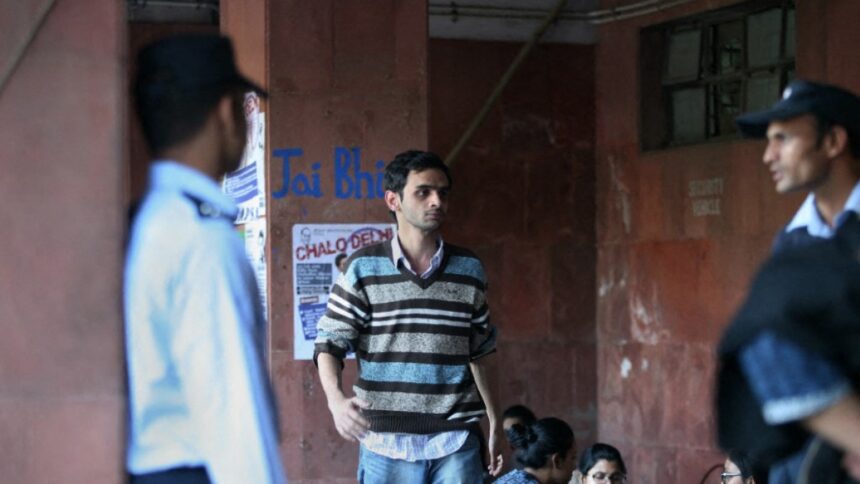
While families of the released activists expressed relief and joy, the court’s decision to deny bail to two high-profile scholars—Umar Khalid and Sharjeel Imam—has sparked outrage. The court stated that Khalid and Imam held a “central and formative role” in the alleged conspiracy, implying they pose a greater risk. This marked distinction raises alarm over the judiciary’s perceived bias against the Muslim community, highlighting a troubling trend in the treatment of dissenters associated with Muslim identity.
The Context of the 2020 Riots
The religious riots were triggered by a significant change to India’s citizenship law in 2019 that expedited citizenship for non-Muslim minorities from nearby countries. The protests against this amendment, led mainly by Muslims, were met with a violent crackdown from the government, resulting in mass arrests under stringent “anti-terror” laws. Political analysts argue this repression serves to silence Muslim voices in dissent and reinforces a narrative of communal division.
The abhorrent consequences of the riots extend beyond loss of life to the ongoing detainment of protest leaders and activists without trial, creating an environment of fear among the Muslim community. This case has raised critical questions regarding the government’s priorities and its willingness to tolerate dissent, particularly when articulated by Muslims.
The Broader Implications of Judicial Bias
The ruling barring bail for leaders like Khalid is indicative of a broader pattern of institutional bias observable in India’s judiciary, say critics. Despite Indian courts typically granting bail even to serious offenders, the denial of bail for Khalid and Imam sends a troubling signal, suggesting political motives may influence legal outcomes. Rights advocates emphasize that inconsistencies in judicial treatment exacerbate perceptions of a divided legal system prioritizing nationalist sentiments over equitable justice.
Moreover, the implications of this systemic bias extend to student activism and civil liberties in India. With increased surveillance in universities and heightened scrutiny of dissent, there are fears of a chilling effect that could deter future activism and marginalize voices challenging the government’s policies.
Why It Matters
This case exemplifies the intricate relationship between governance, judicial integrity, and communal identity in India. The treatment of Khalid and Imam serves as a litmus test for the nation’s commitment to equitable justice, reflecting broader societal divides exacerbated by political narratives. As the country grapples with its identity and the rights of its minority communities, the repercussions of this case might influence future policies regarding citizenship, free speech, and the protection of dissenters.
Frequently Asked Questions
What sparked the 2020 religious riots in Delhi?
The riots were sparked by peaceful protests against the Citizenship Amendment Act, which many Muslims viewed as discriminatory since it expedited citizenship for non-Muslim minorities from neighboring countries.
What laws have been used to detain activists involved in the protests?
Many activists have been charged under the Unlawful Activities (Prevention) Act, an “anti-terror” law that allows for prolonged detention without trial, making it difficult to secure bail.
What impact has the government’s actions had on Muslim civil rights in India?
The government’s crackdown has contributed to widespread fears of persecution among Muslims, leading to increased surveillance and scrutiny of protests, thereby stifacing dissent and marginalizing their voices in the public sphere.
How has the judiciary responded to cases involving Muslim activists?
The judiciary’s handling of cases involving Muslim activists has raised concerns over bias, as evidenced by inconsistent bail decisions compared to those involving non-Muslim defendants, suggesting broader implications for justice and civil rights in India.