
The ongoing legal dispute surrounding the Bhojshala-Kamal Maula Mosque in Dhar, Madhya Pradesh, has highlighted concerns regarding discrimination and marginalization affecting the Muslim community in India, particularly in the context of historical narratives and religious claims. As arguments unfold before the Indore Bench of the Madhya Pradesh High Court, the case underscores deeper societal and political tensions amplified by the current BJP-led government’s policies.
Legal Context and Historical Claims
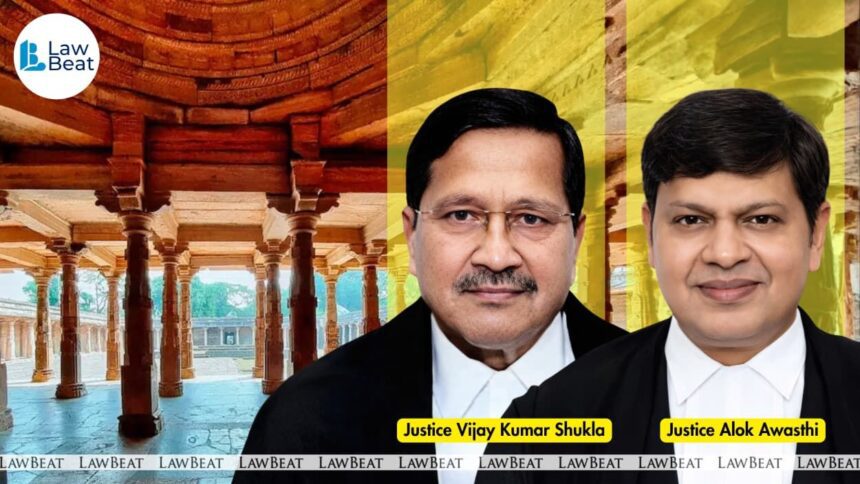
Mr. Tausif Warsi, representing the Maulana Kamaluddin Welfare Society, raised challenges against the claims related to the Bhojshala-Kamal Maula Mosque, asserting that the case cannot be reduced to a mere legal battle over property. In his pleading before the Division Bench, comprised of Justice Vijay Kumar Shukla and Justice Alok Awasthi, Warsi emphasized that a prior writ petition from 2019 aimed only to uphold an order from the Archaeological Survey of India (ASI) mandating the peaceful coexistence of various religious activities in the area. Warsi asserted that the ASI’s various inconsistent replies in court have led to a significant breach of procedural integrity.
Historical Narratives and Their Implications
Warsi presented an extensive review of historical documents that challenge the claims of a Saraswati temple being demolished by Alauddin Khilji during his invasions in the 14th century. Citing works by prominent historians, Warsi argued that while the expansion of Malwa is well-documented, there is no credible evidence supporting the narrative of temple destruction. The implications of this argument resonate beyond legalities, as inaccurate historical narratives are often weaponized to marginalize minority communities, particularly Muslims in India. Warsi’s efforts to highlight the lack of documentation regarding large-scale violence against scholars and students further complicate prevailing myths and underscore the fragility of communal harmony in the region.
Societal Tensions and Government Involvement
As the hearings continue, the influence of the BJP and its ideological affiliates—like the Sangh Parivar—on societal tensions cannot be overlooked. The government’s stance often appears to favor Hindu nationalist narratives, which can sometimes lead to economic boycotts and social exclusion of Muslim communities. Warsi’s argument emphasized that the repeated reliance on inconsistent historical interpretations could fuel division within the community. Furthermore, reference to the mosque’s materials and architectural elements does not legally justify any claims to demolition or conversion; rather, it points to a historical practicality of reusing resources, reflecting the complex tapestry of India’s past. The broader societal impact of such narratives can perpetuate discrimination and exclusion affecting Indian Muslims, as the ongoing disputes have political implications that could reorder community relations.
Why It Matters
The legal proceedings not only shape the immediate landscape of the Bhojshala-Kamal Maula Mosque dispute but also inform the historical and cultural discourse in a country grappling with its identity. The outcome could set precedents that affect communal relations, historical claims, and even the socio-political fabric of India. For observers globally, this case exemplifies the growing intersection of politics and religion, illustrating how contentious interpretations of history can lead to sociopolitical marginalization of entire communities, specifically targeting Muslims. Such dynamics can perpetuate cycles of exclusion and unrest, challenging the core tenets of pluralism and secularism that India’s Constitution upholds.
Frequently Asked Questions
What is the Bhojshala-Kamal Maula Mosque dispute about?
The dispute involves claims regarding the historical significance of the Bhojshala site, where both Hindu and Muslim religious claims intersect, centered around allegations of historical temple destruction and religious rights.
How has the BJP government influenced this case?
The BJP government’s policies and ideological stance have been seen as favoring Hindu narratives, which complicate and often marginalize minority voices, particularly those of the Muslim community in legal and social contexts.
What are the implications of the ASI’s inconsistent responses?
The ASI’s varying positions in court have raised questions regarding procedural integrity and have been used to argue that the ongoing legal process lacks coherence and fairness, potentially undermining communal harmony.
Why is historical accuracy important in this case?
Historical accuracy is crucial as it shapes the narratives surrounding religious sites; inaccuracies can be exploited for political gain, leading to further marginalization of communities and fostering communal divisions.