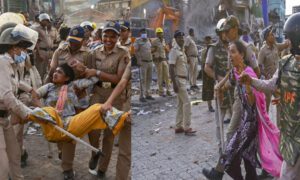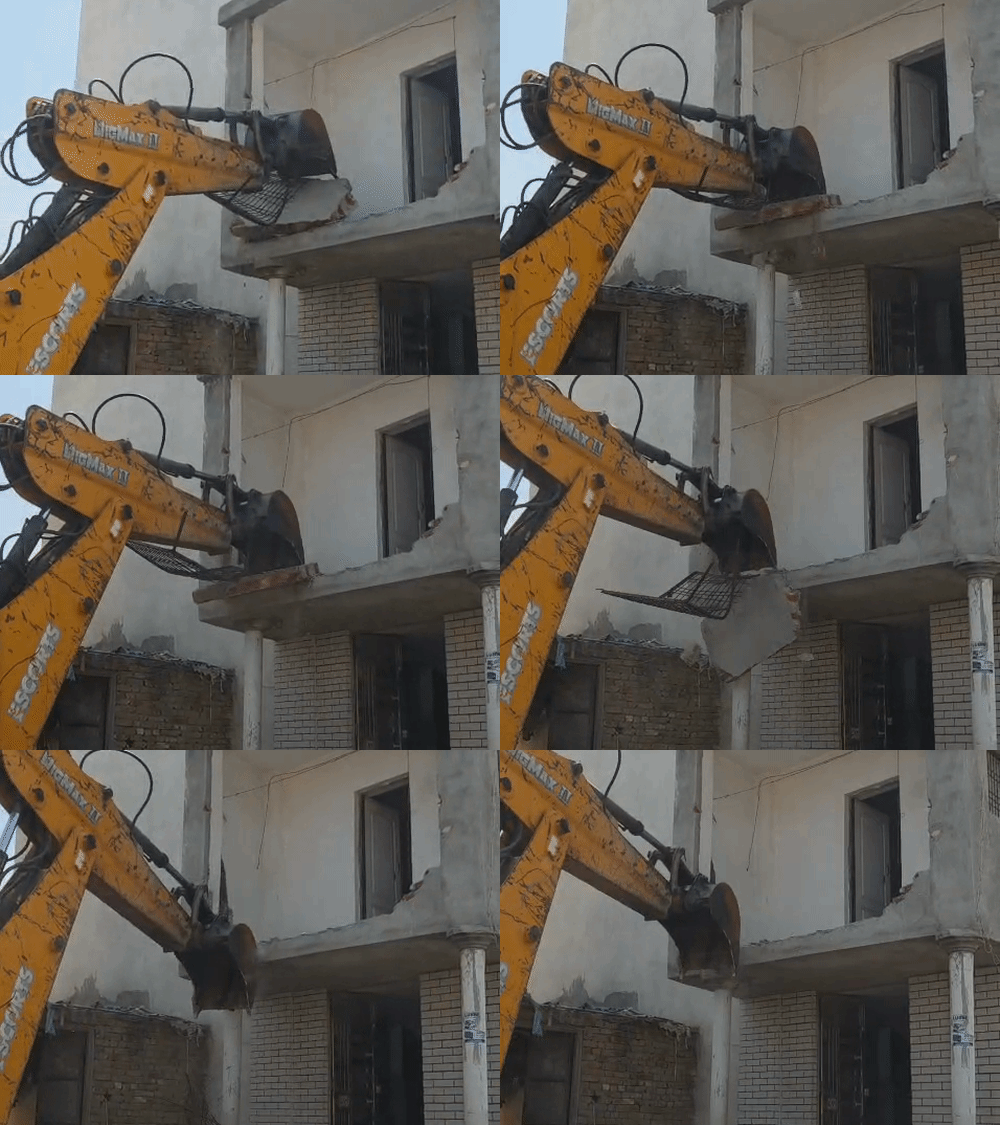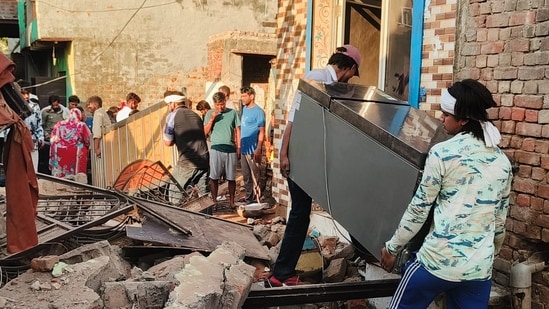

In a controversial demolition drive on Saturday, authorities in Faridabad, Haryana, razed a temple and a mosque to clear land for the forthcoming Regional Rapid Transit System (RRTS) corridor. The operation was carried out under a heavy security presence and included the suspension of mobile internet services in the area as a precaution against potential unrest.
Demolition Under Security Watch
The demolition of the religious structures occurred after midnight as part of efforts to prepare for the RRTS corridor, which aims to connect key regions in the National Capital Region. Local police stated that both the temple and mosque were marked for removal due to their location on the proposed transit route.
In a bid to avert possible disturbances, authorities suspended mobile internet and bulk SMS services in the NIT Zone of Faridabad for 22 hours. The decision came amid concerns that online platforms could be used to disseminate inflammatory content, potentially leading to unrest.
Officers noted that while banking services and mobile recharge options remained operational, this measure aimed to ensure law and order during the sensitive demolition process.
Impact on Local Community and Infrastructure
The demolition sparked fears among residents about further marginalization of religious minorities in the region. Such actions raise significant concerns over social cohesion, especially given the importance of religious sites for community identity.
Local officials, including Faridabad’s police public relations officer Yashpal Yadav, directed traffic away from key routes to minimize disruption during the demolition. Roads leading to Sainik Colony were closed, isolating the area and drawing attention to public safety amid significant changes in community topology.
Developmental Needs vs. Cultural Tensions
The RRTS corridor plans, comprising 18 metro stations connecting Gurugram, Faridabad, and Greater Noida, are touted as a step toward modernizing regional transportation. However, the demolition raises alarms regarding how such developments are balanced with cultural and religious sensitivities.
The debate illustrates the broader tensions between infrastructure development and the preservation of cultural sites, particularly in communities with diverse religious representations. Critics argue that such decisions reflect a trend of prioritizing economic development over social harmony and inclusivity, especially regarding marginalized groups such as Muslims.
Why It Matters
The demolition of religious structures amidst a development agenda is a critical examination point for policymakers, urban planners, and community leaders. It raises questions about inclusivity in planning processes, where the voices of minority communities may be overlooked in favor of broader economic goals. Addressing these concerns is paramount to fostering social stability and preventing socio-political discord. Furthermore, understanding these dynamics can inform the AI and technology sectors, which should aim to support inclusive solutions in urban planning and community engagement.
Frequently Asked Questions
What triggered the demolition of the temple and mosque in Faridabad?
The demolition was part of a larger project to facilitate the construction of the Regional Rapid Transit System (RRTS) corridor, which required clearing land occupied by the religious structures.
What measures were taken to maintain order during the demolition?
Authorities deployed heavy security and suspended mobile internet and bulk SMS services in the area to prevent the spread of misinformation and potential unrest.
How does this situation reflect broader social issues in India?
The incident highlights ongoing tensions around religious and cultural identity, particularly affecting marginalized groups like Muslims, and raises concerns about the prioritization of developmental goals over community rights.
What are the implications for local communities?
The demolition has significant implications for community cohesion and the potential marginalization of already vulnerable populations, emphasizing the need for inclusive policy-making that considers diverse community needs and identities.