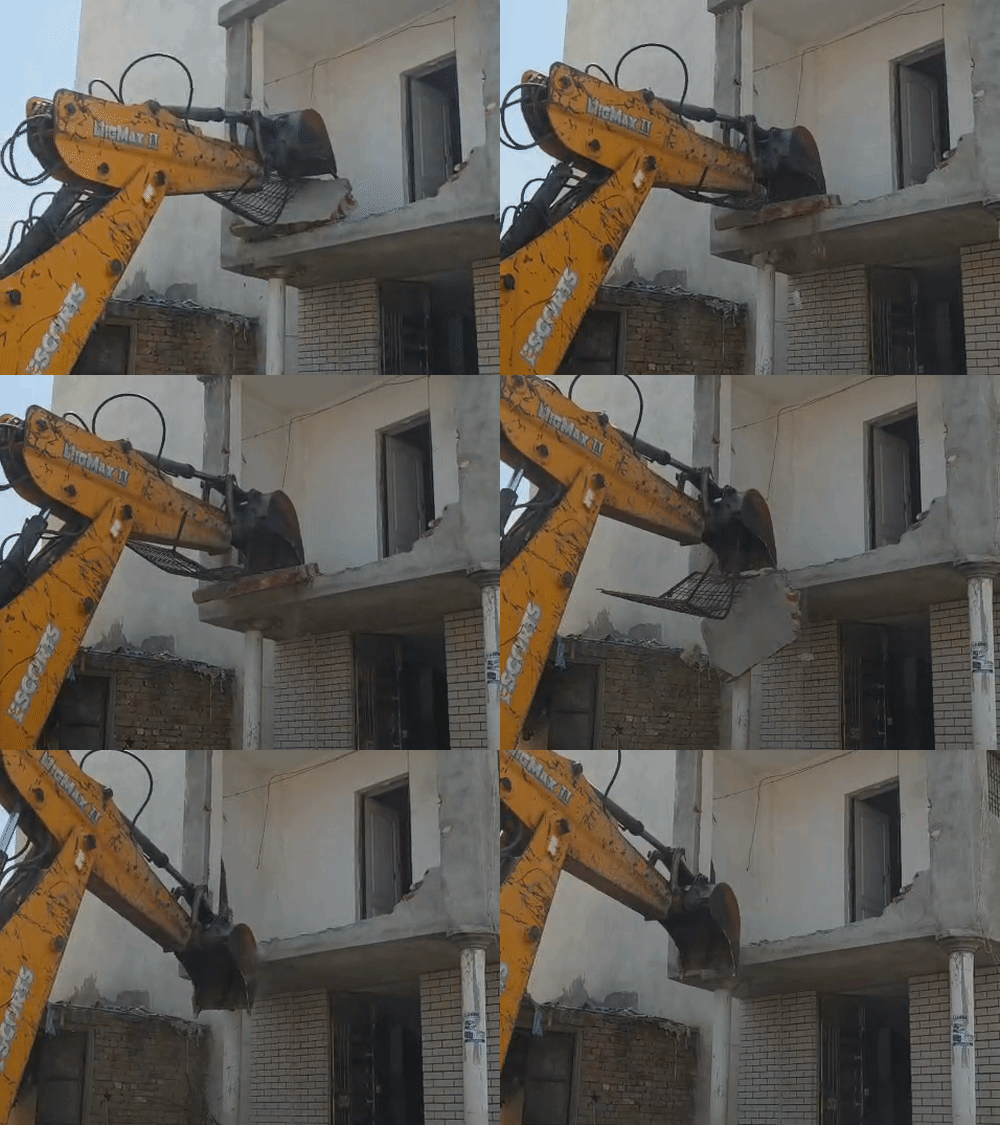

Demolition of Mosque Sparks Outcry in Sambhal
A mosque in Kaserua village, Sambhal, has been demolished by local authorities, who claim it was built on government cemetery land. The incident raises concerns over the treatment of Muslim communities in India and questions about the legal processes preceding such actions.
Government Action and Legal Proceedings
The demolition occurred following an order from the Tehsildar Court, which directed the removal of encroachments from approximately 120 square meters of government land. The demolition was executed with significant police presence, including over 100 personnel, and various machinery such as bulldozers and hydra machines. Despite the mosque’s caretaker, Zakir Hussain, asserting that the mosque had been in place for generations and rebuilt at a substantial cost of ₹50 lakh, the administration maintained that the mosque was illegally constructed.
This decision was not made in isolation; the Tehsildar had previously issued an eviction order against the mosque committee on April 21. The committee’s appeal in the District Magistrate’s court did not yield a stay order or relief, leading the administration to proceed with the demolition on the specified date. Officials reported that the mosque was not the only structure targeted, as neighboring houses were also removed, allegedly constructed on government land.
Community Response and Implications
The response from the local Muslim community has been one of shock and anger. Many residents expressed that they had not received adequate notification about the impending demolition, learning about it only hours before the bulldozers arrived. Javed, a local resident, stated that around 1,000 people participated in Friday prayers at the mosque each week, emphasizing its importance for the community.
In accordance with local law, the state is permitted to remove structures deemed illegal, but the context surrounding this specific incident raises questions of religious bias and social exclusion. Following the demolitions, posters and flags were found at the site, leading authorities to announce potential action against individuals responsible for these symbols, framing the mosque’s existence and its demolition in a broader narrative of community tensions.
Continuing Patterns of Marginalization
This incident is part of a larger trend observed in recent years in India, where various religious structures, particularly those belonging to Muslims, have faced demolition amid claims of illegal encroachments. Such actions often highlight a growing sense of marginalization felt by Muslims in India, as they frequently see their religious and cultural symbols being targeted. This trend has been observed in several regions, including previous demolitions in other villages where mosques and madrasas were similarly destroyed under the pretense of land law enforcement.
The ongoing campaign against encroachments, often emphasized by government officials, appears to disproportionately impact Muslim communities, raising concerns around the motivations behind these demolition drives and their implications for social cohesion.
Why It Matters
The incident in Sambhal serves as a critical example of the socio-political landscape in India, where legal frameworks can sometimes intersect with communal biases. The ramifications are significant: they highlight the precarious social position of Muslims and invoke fears of discrimination and exclusion. Observing how these patterns unfold can help inform a global audience about the dynamics of religious freedom and minority rights in India.
Frequently Asked Questions
What was the reason behind the mosque’s demolition?
The mosque was reportedly built on government cemetery land, prompting the local administration to carry out the demolition following a Tehsildar Court order.
How did the local Muslim community respond to the demolition?
Many residents expressed shock and discontent, claiming they were not adequately informed of the demolition and emphasizing the mosque’s cultural significance, with approximately 1,000 people attending prayers there regularly.
What actions were taken during the demolition process?
The demolition involved significant police presence and heavy machinery, such as bulldozers. Additionally, local law enforcement evacuated nearby houses to ensure safety during the operation.
What recent trends have been observed related to religious structures in India?
There has been a noted increase in the demolition of religious structures, particularly those associated with Muslim communities, under claims of illegal encroachment, raising concerns of discrimination against Muslims in broader socio-political contexts.