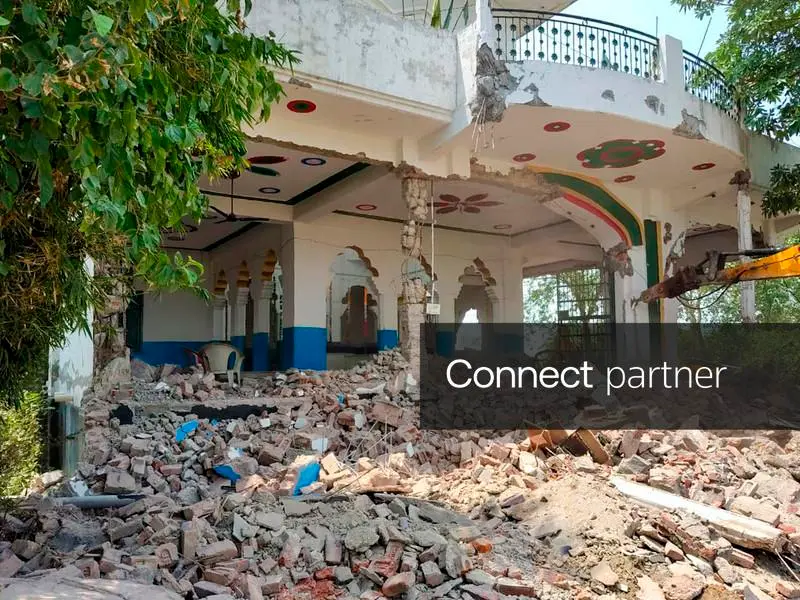

Recent actions in Ghaziabad, Uttar Pradesh, have raised alarms about the selective targeting of Muslim religious sites. A 15-year-old roadside mazar was demolished, igniting fears of broader patterns of discrimination against the Muslim community under the current government policies.
The Demolition Incident
The demolition took place in the Loni area, along a busy thoroughfare, the Loni-Bhopura Road, across from the Loni Block office. District officials justified the action, claiming the structure was encroaching on government land and contributed to traffic congestion. However, local Muslim residents were taken aback by the sudden demolishment, questioning the motivations behind this specific act against a religious site.
Witnesses noted that similar illegal structures, particularly those not associated with Muslim communities, remain untouched, prompting allegations of discrimination based on religious identity. This incident is not an isolated case but part of a disturbing trend observed in the region.
Pattern of Targeting Religious Sites
Muslim organizations have raised concerns that anti-encroachment drives, particularly in BJP-ruled areas, disproportionately affect Muslim religious sites, including mosques, mazars, and graveyards. This selective targeting has led to accusations that the government is conducting systematic marginalization against the Muslim community.
The recent actions in Ghaziabad are reflective of broader socio-political dynamics in Uttar Pradesh, where government policies appear to favor certain communities over others. The demolition in Loni has been interpreted as a continuation of this troubling pattern, painting a picture of a government that is perceived as increasingly hostile toward Muslim religious and cultural expressions.
The Response from the Community and Authorities
In the wake of the demolition, police have increased their presence in the area to prevent potential clashes between communities. Local Muslim leaders and organizations have vocalized their discontent, highlighting the need for equitable treatment of all religious sites, regardless of their affiliation. They argue that such unjust actions only exacerbate communal tensions and foster an atmosphere of insecurity among Muslim populations.
Community responses include calls for solidarity among various secular groups and all faiths to highlight and address this ongoing issue. Legal recourse may also be explored as locals consider challenging the demolition and advocating for rights to their religious sites. The dynamics in Ghaziabad have emerged as a focal point for discussions on religious freedom and equality in India.
Why It Matters
The implications of this incident extend beyond local concerns, reflecting a wider issue of religious discrimination in Indian politics. The targeting of Muslim sites indicates a shift towards policies that may undermine secularism—a foundational tenet of India’s constitution. Global observers and human rights organizations are monitoring these developments closely, as they could shape perceptions about communal harmony in India and influence diplomatic relations. Additionally, the situation has significant ramifications for governance, public trust, and social cohesion, which are critical for the socioeconomic stability of the nation.
Frequently Asked Questions
What was the reason behind the demolition of the mazar in Ghaziabad?
District officials claimed the mazar was on government land and was causing traffic congestion, justifying its removal.
How prevalent are incidents of targeting religious sites in Uttar Pradesh?
There have been numerous reports of Muslim religious sites being disproportionately targeted in anti-encroachment drives, raising concerns about biased practices by local authorities.
What actions are Muslim organizations taking in response to these demolitions?
Muslim organizations are voicing their grievances, calling for equitable treatment of religious sites, and considering legal recourse. They are also seeking solidarity from various community groups to address these issues.
Why is this situation significant for India as a whole?
This situation highlights tensions surrounding religious discrimination, affecting secularism and communal harmony in India. The implications of such actions could significantly impact the social fabric and governance of the nation.