
Summary
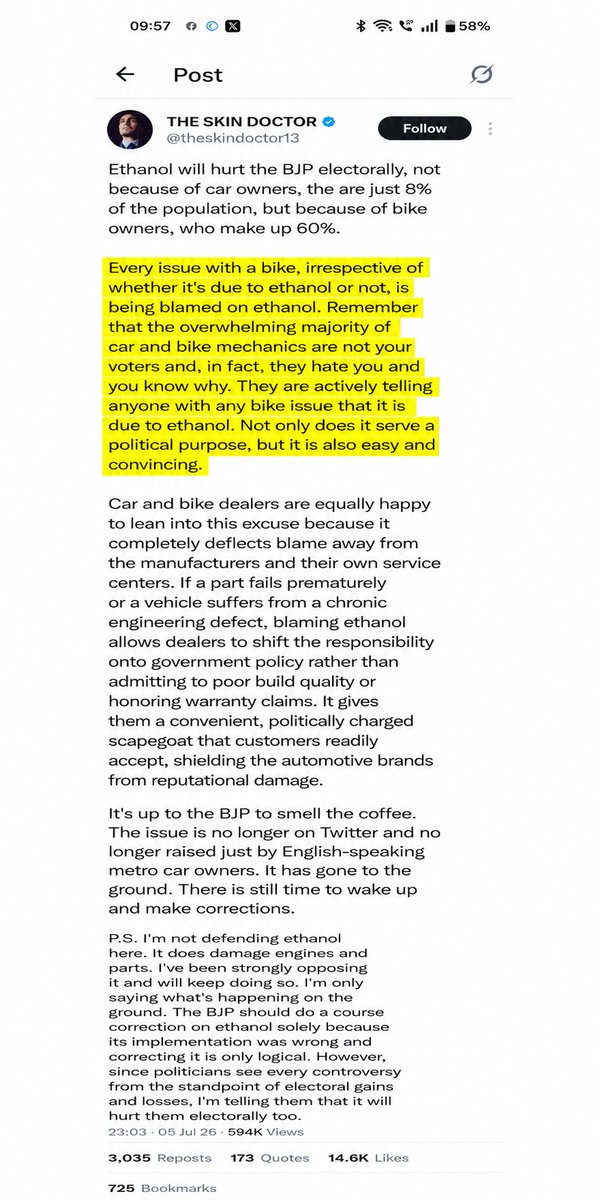
Nitin Gadkari, India’s Minister for Road Transport and Highways, is facing criticism regarding the implementation of Ethanol in fuel, particularly for its impact on the automotive sector. In a social media post, a popular commentator raised concerns about the perceived favoritism towards local mechanics and the negative consequences for bike and car owners, questioning Gadkari’s priorities amid allegations of benefiting certain communities.
Background on the Ethanol Initiative
The Indian government has been promoting the use of Ethanol in fuel as part of its strategy to reduce dependence on fossil fuels and increase energy security. This initiative aims to blend Ethanol with petrol, particularly with the introduction of E20 — a blend consisting of 20% Ethanol. The move is designed to not only support local agriculture by creating a demand for sugarcane but also to curb harmful emissions from vehicles. However, this transition has met with mixed responses from various sectors, notably among vehicle owners and mechanics.
Political Reactions and Implications
The recent social media commentary highlights a growing dissatisfaction among certain segments of the Indian population and raises questions about the efficacy and equity of the Ethanol policy. Critics argue that while local mechanics stand to gain from increased service demand due to Ethanol-related issues, regular bike and car owners are left facing inconveniences and potentially higher maintenance costs. This perception fuels narratives that suggest a deliberate neglect or targeting of specific communities, which could lead to further political ramifications.
Mechanics, Owners, and Community Dynamics
In the social media post, the commentator referred to a local mechanic, Abdul, thanking Gadkari for the increased business from E20 customers, suggesting that while mechanics benefit from the situation, the everyday vehicle owners struggle with the fallout. This creates a controversial narrative that highlights the divide between sectors in the automotive market. By positioning mechanics as primary beneficiaries of government policy, critics infer that there is an imbalance in who is adversely affected versus who is reaping the rewards.
Why This Matters
The political landscape in India is sensitive to perceptions of favoritism and community dynamics, particularly in the context of electoral politics. Allegations that government initiatives disproportionately favor specific groups can provoke significant backlash, affecting voter sentiments. With the 2024 general elections approaching, how Gadkari and the government address these concerns becomes crucial. The rhetoric surrounding Ethanol usage and its implications might shape not only public opinion but also electoral results, prompting the ruling party to reconsider its approach to policy implementation and communication.
Frequently Asked Questions
What is the Ethanol initiative in India?
The Ethanol initiative is part of the Indian government’s plan to blend Ethanol with petrol to reduce fossil fuel dependence and enhance energy self-sufficiency, with a target to have 20% Ethanol blending by 2025.
Who has raised concerns about the Ethanol policy?
Concerns have been voiced by various commentators, including notable political analysts like Mohammed Zubair (@zoo_bear), who highlight the adverse effects on bike and car owners while noting the benefits to local mechanics.
How could this affect upcoming elections?
The perception that government policies are favoring certain communities over others could lead to voter dissatisfaction, which is crucial as India heads into general elections in 2024, impacting the ruling party’s strategies and outreach.
What actions can the government take to address these concerns?
The government may need to enhance communication regarding the Ethanol policy, consider modifications to ensure equitable benefits across all sectors, and engage with the public to address grievances effectively.