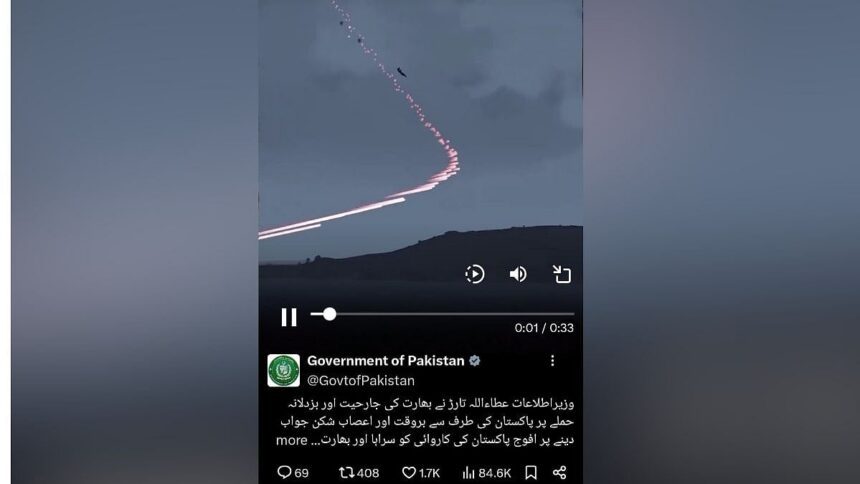

In a recent incident highlighting the escalating tensions between India and Pakistan, the official Twitter account of the Government of Pakistan, which is banned in India, posted a video claiming to be a “response to India’s attack.” The shared footage, however, was identified as being from the video game Arma 3, casting doubt on the authenticity of the claims made by the Pakistani government.
Context of the Claim
Amid rising hostilities, Pakistan’s Information Minister Attaullah Tarz indicated that the shared video showcased a swift response by the Pakistan Armed Forces to what they termed a “cowardly attack” by India. The 30-second clip purportedly displayed a fighter jet being shot down. However, the video has since been exposed as footage from Arma 3, a military simulation game released in 2013, raising concerns regarding its use as a legitimate representation of military actions.
Reactions from Fact-Checkers and Netizens
Fact-checker Mohammed Zubair quickly identified the video as game footage and shared this information on social media. The revelation has prompted reactions from netizens, with many expressing disbelief that an official government account would resort to such tactics. Comments on the platform included remarks about the absurdity of a government sharing simulated footage as real events, with one user stating, “Welp. That’s the official Pakistani government account posting ARMA 3 game footage and claiming it’s real.”
This incident illustrates a growing trend where simulations and fabricated content are increasingly used for propaganda purposes. While non-official groups have often relied on such tactics, the involvement of an official government account sets a concerning precedent.
The Recent Military Escalation
The backdrop of this video controversy is rooted in a larger narrative of military engagement between India and Pakistan. In a recent press conference, Colonel Sofiya Qureshi reported that the Indian Armed Forces successfully repelled a large-scale drone attack orchestrated by Pakistan targeting military installations along the western border. This coordinated assault reportedly involved up to 400 drones aimed at 36 different locations across India.
The Indian military’s response involved launching drones against four Pakistani military installations, resulting in the destruction of an air defense radar. Despite Pakistan’s claims of success, the Indian defense forces managed to neutralize the attacks, showcasing their preparedness against aerial threats.
Colonel Qureshi further highlighted the dangers posed during these confrontations, drawing attention to Pakistan’s strategy of using commercial flights as shields during military operations, which could potentially endanger civilian lives. The statement reflects the serious nature of the military engagements occurring in the region.
Why This Matters
The implications of this incident extend beyond mere misinformation or embarrassing revelations about propaganda. For Indian readers, this showcases the continued tensions between the two nations, where even minor events can escalate into broader military conflicts. The Pakistani government’s reliance on simulated video footage to bolster its narrative raises ethical questions about the legitimacy of their military communications and the truth being presented to the public.
This incident may further strain the fragile relationship between the two nations, as each side seeks to validate its military capabilities and counter narratives. For India, an accurate understanding of the regional security dynamics is crucial, especially as Pakistan navigates its own internal and external messaging amidst ongoing geopolitical challenges.
Frequently Asked Questions
What is the significance of the video shared by the Pakistani government?
The video claimed to be a representation of military action against India but was revealed to be footage from a video game, raising questions about the authenticity of official statements made by the Pakistani government.
How did the Indian military respond to the drone attacks from Pakistan?
The Indian Armed Forces successfully neutralized the drone attacks targeting various military installations, demonstrating their preparedness and capability to defend against aerial threats.
What does this incident suggest about propaganda in military conflicts?
This incident illustrates the potential for distorted representations of military actions being used for propaganda purposes, particularly by official government sources, which is alarming in the context of real-world conflicts.
Why should the international community be concerned about this event?
The utilizing of fabricated military imagery can escalate tensions between nations and complicate diplomatic efforts, which underscores the necessity for accurate information and transparent communication in conflict zones.