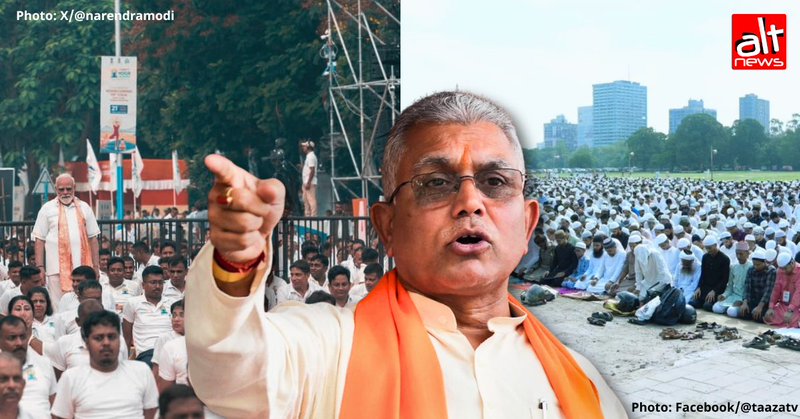

The recent closure of Kolkata’s Red Road for seven days for International Yoga Day has sparked controversy, especially when the same road was not available for offering Eid prayers. West Bengal Minister Dilip Ghosh controversially suggested that those wanting to perform prayers could go to Bangladesh or Pakistan, raising questions about religious tolerance and government priorities.
Red Road Closure and Its Impact
Kolkata’s Red Road is a prominent location for public gatherings, celebrations, and events. The government’s decision to close it for seven days to commemorate International Yoga Day drew attention not only for the duration but also for the underlying rationale. While yoga events were celebrated with significant fanfare, the government’s stance on the Eid prayers has raised eyebrows. Often, such developments highlight discrepancies in how various cultural and religious events are prioritized.
Dilip Ghosh’s Controversial Remarks
In response to the objections surrounding the arrest of Eid prayers, Minister Dilip Ghosh made a provocative statement, suggesting that those wishing to perform prayers should travel to neighboring countries. This remark has been perceived as inflammatory and has stirred a debate on whether political leaders should make comments that seem to demean specific religious practices. Ghosh’s comments have been met with criticism from various quarters, fostering a narrative that questions the inclusiveness of the state’s leadership.
Public Reaction and Political Fallout
The reaction from the public and social media has been swift, with many expressing their disappointment at the apparent double standard in how events are handled based on religious significance. Critics have argued that such comments and governmental actions contribute to a growing narrative of religious intolerance within the state. This could have implications for the ruling party’s image, especially in a diverse society like India where religious harmony is essential for social stability.
Why This Matters
The controversy surrounding the closure of Red Road and the comments made by Minister Ghosh serves as a litmus test for communal relations in India. As political dynamics shift and evolve, actions that appear to prioritize one religion over others can have long-term implications for political parties and their electoral prospects. The willingness of leaders to alienate specific communities raises critical questions about the future of secularism in India, a cornerstone of its Constitution. How government officials manage religious expressions will be closely watched as the nation moves toward upcoming elections.
Frequently Asked Questions
Why was Red Road closed for seven days?
The West Bengal government closed Red Road for events celebrating International Yoga Day, which included various festivities and public yoga sessions.
What was the response to the closure regarding Eid prayers?
Concerns were raised that the closure prevented the traditional Eid prayers from being held at a significant venue, leading to public discontent and criticism of the government’s priorities.
What did Minister Dilip Ghosh say about the Eid prayers?
Minister Ghosh suggested that individuals wishing to perform Eid prayers should go to Bangladesh or Pakistan, a comment that many perceived as inflammatory.
What is the political significance of these events?
This incident highlights issues of religious tolerance in India and could affect the ruling party’s standing among various communities, potentially influencing future elections and communal relations.