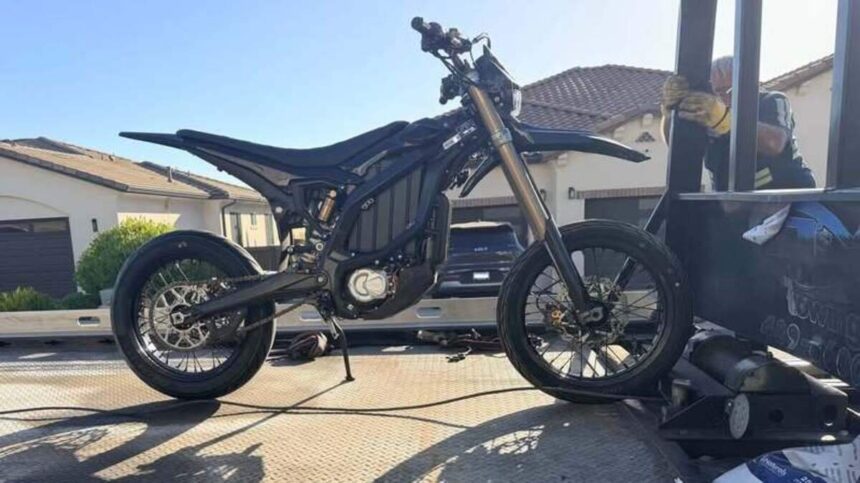

Folsom police recently impounded an electric motorcycle, highlighting the increasing scrutiny on e-bike regulations in the U.S. This event has raised questions about the legal framework surrounding e-bike and e-moto usage, especially in a climate where young riders are becoming more active. Parents and authorities are being urged to reinforce safe and responsible riding behaviors.
Crackdown on E-Bikes and E-Motos
On Wednesday, Folsom police impounded an off-highway electric motorcycle, signaling an ongoing effort to control the use of e-bikes and e-motos in the area. The rider, identified as a juvenile, was already under investigation related to a vandalism case involving a car’s windshield. In a Facebook post, the Folsom Police Department stated that the case will be handed over to the Sacramento County District Attorney’s Office for potential criminal charges.
Authorities have ramped up their focus on enforcing e-bike laws, driven by a surge in incidents linked to these vehicles. In California, while children under 16 can legally operate Class 1 and Class 2 e-bikes without a license, Class 3 e-bikes and e-motos have much stricter regulations, highlighting the need for better public awareness and compliance.
Understanding the Regulatory Framework
The California Department of Motor Vehicles outlines distinct categories for electric bicycles and motorcycles, each with specific rules about usage, registration, and licensing. E-bikes are classified into three categories:
- Class 1: Pedal-assist, capping assistance at 20 mph, with no age limit.
- Class 2: Similar to Class 1 but allows throttling; age restrictions are also minimal.
- Class 3: Requires riders to be at least 16 years old, regulates pedal-assist to 28 mph.
In contrast, e-motos are treated as motor-driven cycles, necessitating registration, a Class M1 license, and a minimum age requirement of 16. These regulations reflect an ongoing dialogue about ensuring safety and compliance in an increasingly electric vehicle-dominated landscape.
Impact on Youth and Community Concerns
The incident served as a wake-up call, prompting discussions among parents, educators, and local businesses. Mike Majors, the owner of the Electric Bike Shop in Sacramento, noted that kids often flock to his shop for repairs, indicating that e-bikes’ popularity is on the rise among younger demographics. “Kids come in all the time. E-bikes have become really popular in the last few years,” Majors stated.
The Folsom police’s ongoing commitment to enforce rules around e-bikes and e-motos throughout the summer signals a proactive approach to ensure safety. Specialized teams will conduct operations aimed at curtailing violations, a move parents see as crucial to protect their children. The police emphasized that violations could lead to citations or potentially criminal charges.
Why This Is Trending
This topic is gaining attention in India, particularly as urban areas witness an uptick in electric mobility options. Many are concerned about similar regulatory frameworks and safety measures, given the increasing popularity of e-bikes and scooters among young riders. Discussions around enforcement, safety, and parental guidance are timely and relevant as India navigates its path toward sustainable transport solutions. As citizens search for information, offerings like safety training and licensing for e-bike riders may soon become part of the national conversation.
Frequently Asked Questions
What should parents do regarding e-bike safety?
Parents should engage with their children about responsible riding behaviors and the importance of following local laws and regulations concerning e-bikes and e-motos.
Why are there stricter regulations for e-motos compared to e-bikes?
E-motos have higher speed capabilities and require a driver’s license, registration, and compliance with more stringent safety measures, unlike certain classes of e-bikes.
What can we learn from the Folsom incident?
The Folsom incident highlights the need for increased community awareness about the legal implications of riding e-bikes and e-motos, especially among youth.
Are e-bikes and e-motos being regulated in India?
As electric mobility options gain traction in India, discussions are likely to emerge about developing a regulatory framework that ensures safety while promoting sustainable transport.