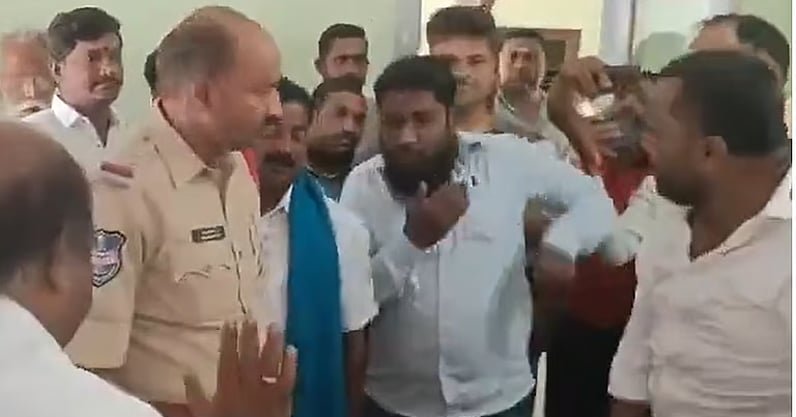

The Committee to Protect Journalists (CPJ) has urged Telangana authorities to rescind a takedown notice demanding the removal of posts from several journalists and news outlets, which reported on the assault of a local school principal allegedly involving members of the Bharatiya Janata Party (BJP). The notice targets 41 posts, raising concerns regarding censorship and the freedom of the press in India.
Context of the Incident
The takedown notice issued on June 28 specifically instructed X (formerly Twitter) to remove posts that include reports and commentary about a violent incident involving a Muslim school principal in Telangana. The incident, which reportedly involved BJP members, sparked outrage and drew widespread attention on social media, as it underscored ongoing tensions in community relations in India. Noteworthy figures in journalism, such as fact-checker Mohammed Zubair and editor Mubashir Khurram, were directly affected by this notice, as well as established news organizations like South First and The Siasat Daily.
Nature of the Takedown Notice
The notice is significant not only for targeting individual posts but also for the vague reasoning provided by the authorities, which references broad “communal” concerns without specifying what content is considered to violate the law. This lack of clarity raises alarming implications for journalistic freedom and the ability of the media to report independently on issues of public interest without fear of censorship or retaliation. The call by CPJ emphasizes that journalists and news outlets must retain the right to convey factual information to the public, particularly in politically sensitive situations.
Responses and Implications for Journalism
Responses to the takedown notice have included widespread condemnation from various quarters, including independent journalists, civil society organizations, and political commentators. Many have stressed that this action represents a dangerous precedent that could deter journalists from addressing important societal issues, particularly those involving minority communities in India. The growing trend of state-directed censorship further complicates the landscape for media professionals who aim to uphold truth and accountability in reporting.
Why This Matters
The incident reflects broader trends in Indian media where the balance between state security, communal harmony, and journalistic freedom is increasingly precarious. The ability to report freely on issues impacting communities is foundational to democracy, and actions like these could stifle dissent and minority voices. For Indian readers, understanding the potential implications of government censorship is crucial in preserving democratic values, accountability, and the integrity of the media landscape.
Frequently Asked Questions
What was the takedown notice about?
The takedown notice was issued by Telangana authorities to remove posts on X that reported on the assault of a Muslim school principal involving alleged BJP members, affecting multiple journalists and news organizations.
Who are the key individuals affected by the notice?
Notable individuals affected include fact-checker Mohammed Zubair, Siasat Daily editor Mubashir Khurram, and various news organizations such as South First and The Siasat Daily.
What are the broader implications of this notice for the media in India?
This notice raises concerns over censorship and the ability of journalists to report on issues of public interest without fear of government reprisal, potentially hindering freedom of the press in India.
How has the public reacted to this incident?
The public response has been one of widespread criticism, emphasizing the need for media independence and cautioning against the increasing trend of governmental censorship in the country.