
Recent interactions on social media have raised serious concerns regarding abusive language directed at journalists by political party workers in India, particularly linked to the Bharatiya Janata Party (BJP). Anuja Dhakras, a notable voice on Twitter, has criticized the party’s apparent endorsement of such behavior and has called for accountability.
Context: The Incident
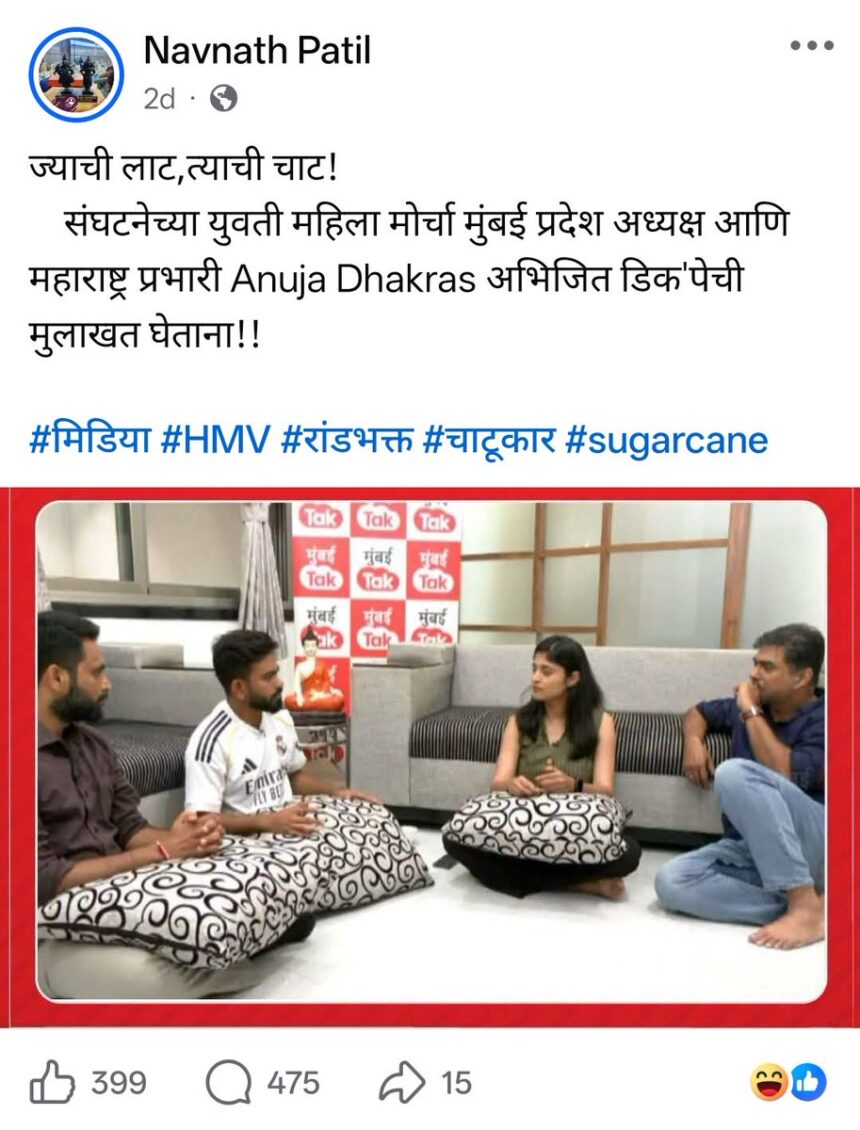
The controversy stems from an incident where a BJP party worker allegedly used abusive language towards a journalist who conducted an interview. Dhakras’ tweet highlighted the problematic nature of this behavior, calling it a reflection of the party’s culture that seems to condone such misconduct. She emphasized that targeting women with derogatory remarks during trolling exemplifies a deeper societal issue.
Political Fallout and Reactions
Following the incident, Dhakras tagged prominent BJP figures and the Maharashtra government, urging them to take a stand against such inappropriate behavior. Her call-out has garnered significant attention, calling for a response from party leadership and suggesting that inaction would be seen as an endorsement of the party worker’s behavior.
Images shared along with her tweet showcased the worker’s Facebook profile, which boasted photos of senior BJP leaders, further emphasizing the need for accountability within the ranks of party officials. The connections between party images and the actions of its members highlight a troubling trend where aggressive rhetoric goes unaddressed.
Response from Political and Cyber Authorities
In her tweet, Dhakras urged Maharashtra Cyber, the state’s cybersecurity authority, to investigate and respond to the abusive language directed at women by political affiliates. This plea indicates a rising awareness among the public regarding the need for monitoring online harassment, especially when it involves public figures and political representatives. The demand for action hints at a growing expectation for governmental bodies to uphold standards of decorum and respect in political discourse.
Why This Matters
This incident underscores a critical issue in Indian politics: the treatment of journalists and women in public life. As more individuals within political parties engage in abusive behavior online, it raises questions about the culture of accountability within these organizations. The reactions to Dhakras’ tweet may provide a litmus test for how parties like the BJP address internal misconduct and whether they are willing to condemn actions that tarnish their public image.
The public’s demand for action can lead to significant political pressure, compelling party leaders to adopt a more proactive stance against harassment and to maintain the integrity of their image. This scenario serves as a reminder of the power of social media in influencing political accountability and engagement.
Frequently Asked Questions
What sparked the controversy involving the BJP party worker and a journalist?
The controversy arose when a BJP party worker used abusive language towards a journalist after a media interview, prompting widespread criticism and calls for accountability from fellow political figures and the public.
Who is Anuja Dhakras, and what role did she play in this situation?
Anuja Dhakras is a Twitter user and commentator who publicly criticized the BJP for condoning abusive behavior in its ranks. She called on party leaders to address this issue and not support workers who engage in such behavior.
What actions have been proposed to address the abusive language used by political party workers?
Calls for action include requests for the Maharashtra Cyber authority to investigate the abusive incidents, as well as appeals for the BJP leadership to publicly disavow and take disciplinary action against the offending worker.
Why is the treatment of journalists in India a significant issue?
The treatment of journalists is crucial as it speaks to the broader issue of press freedom in India. When journalists are harassed or threatened, it creates an environment of fear that can hinder independent reporting and the quality of democratic discourse in the country.