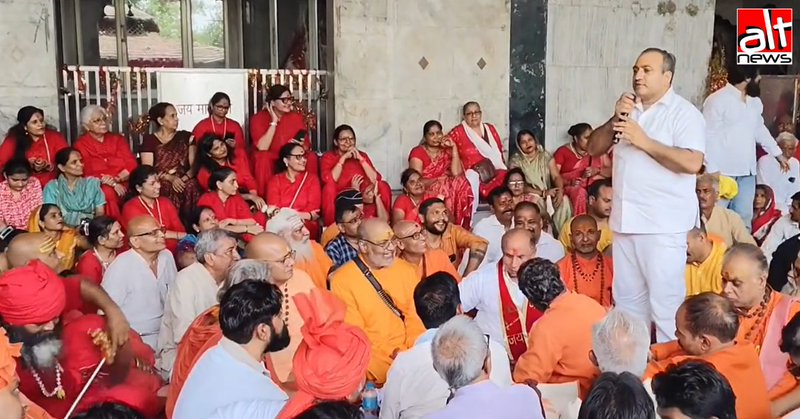

At a recent ‘Hindu Mahapanchayat’ in Ghaziabad, Anil Yadav, a close aide to Yati Narsinghanand Saraswati, called for the “annihilation” of the Muslim community. This alarming declaration has raised significant concerns, especially as no apparent legal actions have followed the incident, according to local authorities.
Context: The Hindu Mahapanchayat
The ‘Hindu Mahapanchayat’ was convened by Yati Narsinghanand, a prominent Hindu priest and head of the Dasna Devi temple. Known for his inflammatory rhetoric against Muslims, Narsinghanand has previously gathered followers who echo his sentiments of Hindutva nationalism. At this particular mahapanchayat, held in Ghaziabad, Anil Yadav took center stage, amplifying the intolerant narrative that has been gaining traction in certain segments of Indian society.
Anil Yadav’s Remarks and their Reception
Anil Yadav’s call for “annihilation” of Muslims was not merely a personal outburst but resonated with a growing faction that believes in aggressive rhetoric against minority communities. His speech did not go unnoticed; various media outlets reported it, amplifying the urgency to address hate speech in political discourse. Despite the gravity of these statements, local law enforcement has not yet initiated an investigation, leading to public outcry regarding the perceived inaction against hate speech.
The Broader Implications of Hate Speech
The open call for violence raises significant questions about communal harmony in India, a nation with a diverse demographic fabric. Hate speech, particularly when it comes from influential figures, poses a risk not only to immediate community relations but also to national unity. The normalization of such discourse can lead to increased polarization and violence against minority communities, further complicating the already tense socio-political landscape in India.
Why This Matters
The implications of Anil Yadav’s statements go beyond mere rhetoric. For Indian readers, this incident underscores the rising tide of communalism and the need for vigilant society and governance to protect all citizens’ rights, irrespective of their religious affiliations. Legal inaction against hate speech can embolden others to voice similar sentiments, perpetuating cycles of violence and discrimination. Moreover, enduring silence from relevant authorities can erode public trust in the justice system, as individuals may feel that their security is not prioritized by the state.
Frequently Asked Questions
What is the ‘Hindu Mahapanchayat’?
The ‘Hindu Mahapanchayat’ is a gathering where Hindu leaders and followers convene to discuss community issues, often emphasizing Hindu nationalism and related themes.
Who is Yati Narsinghanand?
Yati Narsinghanand is a controversial Hindu priest known for his inflammatory rhetoric and is the head of the Dasna Devi temple in Ghaziabad, Uttar Pradesh.
What did Anil Yadav say during the event?
Anil Yadav openly announced the need for “annihilation” of the Muslim community, which has drawn widespread criticism and concern regarding communal tensions in India.
What actions have law enforcement taken regarding this incident?
As of now, local authorities have stated that no case has been filed in connection with Anil Yadav’s remarks, raising questions about the enforcement of laws against hate speech.