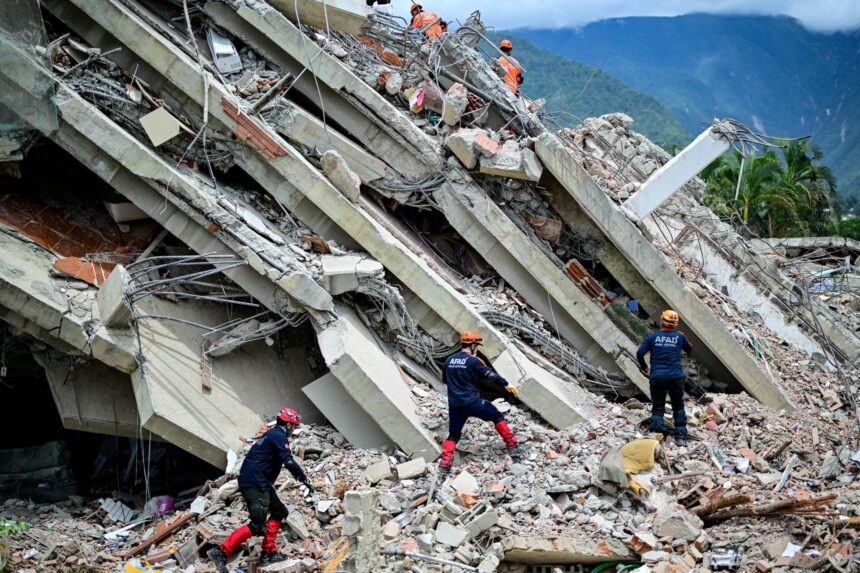

Tragedy Strikes Venezuela: Death Toll Rises to 1,450
The aftermath of two devastating earthquakes in Venezuela has left a profound impact on the nation, with the death toll climbing to 1,450, as confirmed by National Assembly President Jorge Rodriguez. Over 3,150 individuals have sustained injuries, while nearly 12,721 others have been displaced amid the chaos.
Overview of the Disasters
The earthquakes, striking on a fateful Wednesday, measured magnitudes of 7.2 and 7.5, occurring just 39 seconds apart. The strongest quake, at 7.5 magnitude, hit 23 kilometers southeast of Yumare in Yaracuy state, followed closely by the 7.2-magnitude tremor, which struck approximately 24 kilometers northeast of San Felipe, also in Yaracuy state.
In a televised address on Sunday, Rodriguez outlined the evolving disaster figures, reporting an increase from previously recorded numbers of 1,430 deaths and 3,238 injuries. He further revealed that 774 buildings had collapsed, raising significant concerns over infrastructure stability in the affected regions.
Response and Relief Efforts
Coordinated rescue operations are currently in full swing, with more than 25,000 individuals participating in search and rescue missions. This contingent includes military personnel, police officers, civil protection teams, Red Cross workers, and dedicated volunteers working tirelessly to assist those affected.
Rodriguez highlighted that the relief efforts have also been bolstered by an international presence, with 2,624 rescue workers from foreign nations joining local efforts. To aid in the search, the teams are supported by 137 search dogs and 49 specialized vehicles, underscoring the urgency and scale of this humanitarian response.
Ongoing Challenges and Needs
As the situation continues to unfold, the need for adequate resources and support remains critical. The significant number of injuries and displaced individuals presents ongoing challenges for local infrastructure and health services. Recovery efforts face hurdles not only from the magnitude of the disaster but also from pre-existing socio-economic conditions that can complicate aid distribution and rebuilding efforts.
Amidst these challenges, the Venezuelan government is likely to rely heavily on international assistance, both for immediate relief and for long-term recovery. The ability to effectively coordinate and implement these efforts will be crucial in restoring normalcy in the affected regions.
Why It Matters
Understanding the scale and impact of such disasters is essential for global awareness, especially as climate change increases the frequency and intensity of natural disasters worldwide. Effective response strategies can inform future international disaster relief efforts, emphasizing the need for quick mobilization and cooperation across borders. As recovery unfolds, monitoring the situation will also shed light on the socio-political landscape of Venezuela and its resilience in the face of adversity.
Frequently Asked Questions
What areas were affected by the earthquakes in Venezuela?
The earthquakes primarily impacted regions in Yaracuy state, with specific epicenters located near Yumare and San Felipe.
How many buildings collapsed due to the earthquakes?
According to reports, 774 buildings have collapsed as a result of the earthquakes, significantly affecting local infrastructure.
What types of assistance are being provided to earthquake victims?
Assistance includes search and rescue operations involving military personnel, police, civil protection teams, and volunteers, along with support from international rescue workers and organizations like the Red Cross.
What measures are being taken for the displaced population?
Efforts are ongoing to provide shelter, medical care, and essential supplies to the 12,721 individuals who have been displaced or affected by the disaster.