
U.S. Supreme Court’s Upcoming Decisions Could Impact Presidential Power and Election Law
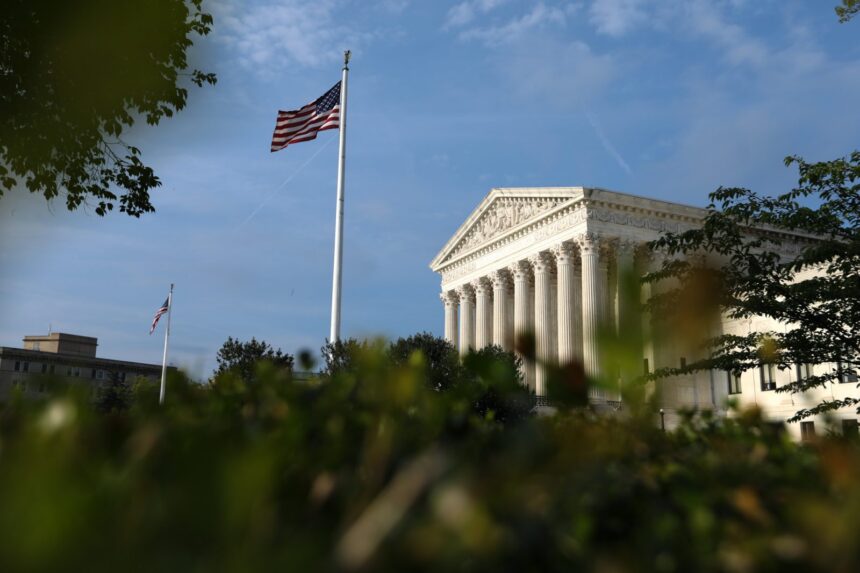
The U.S. Supreme Court is nearing the end of its term, with critical rulings pending that may redefine presidential authority, election law, and civil liberties. With a conservative majority of 6 to 3, the court’s decisions, expected this June or July, could have lasting implications for American governance and electoral processes.
Executive Power Under Scrutiny
At the forefront of the court’s considerations are three significant cases that delve into President Donald Trump’s executive power claims. Central to these cases is the ability of the president to remove members of the Federal Reserve Board and the Federal Trade Commission, as well as the legitimacy of an executive order aimed at limiting birthright citizenship.
The Trump administration contends that existing constraints on dismissing agency heads infringe upon constitutional executive authority. Experts, however, warn that allowing greater presidential control over these agencies risks undermining their independence and consolidating too much power within the presidency.
The case involving Federal Reserve Governor Lisa Cook is particularly pivotal, examining the legal safeguards that preserve central bank officials’ nonpartisan standing. The Federal Reserve Act stipulates that officers can only be removed for “cause,” a term not explicitly defined, leaving significant room for interpretation. Despite ongoing disputes, Cook continues in her role, having refuted the claims that prompted her potential removal.
Implications for Election Law
As midterm elections approach, two pivotal cases related to election law are on the docket. One case concerns a Mississippi law that would allow mail ballots received post-Election Day to be counted, provided they are postmarked in time. Should the court uphold this law, it may set a precedent for looser ballot receipt standards across the nation.
The second case involves the federal regulation of coordinated campaign spending between candidates and political parties. This ruling has the potential to reshape campaign finance rules, raising critical questions about the limits of political speech as protected by the First Amendment.
Civil Liberties and Technology at Stake
In addition to executive and electoral issues, the court is also evaluating challenges against state laws in Idaho and West Virginia, which ban transgender athletes from competing on female sports teams. This ongoing debate highlights a broader national conversation about gender identity and inclusion in sports.
Moreover, the court is reviewing a significant case concerning law enforcement’s use of geofence warrants—an innovative surveillance technique that leverages mobile device location data to identify individuals near crime scenes. This raises serious Fourth Amendment concerns regarding unreasonable searches and the balance between security and civil liberties.
Why It Matters
The outcomes of these Supreme Court rulings will likely have profound and far-reaching effects on the frameworks of American democracy. A shift in administrative powers could redefine the balance between presidential authority and agency independence, impacting how public institutions operate. Additionally, rulings on election law could influence voter accessibility and fairness, shaping the political landscape leading into future elections. By balancing the interests of security and individual rights, these decisions may also guide future legislation surrounding civil liberties in the age of evolving technology.
Frequently Asked Questions
What are the implications of the Supreme Court’s decisions on presidential power?
The court’s rulings could redefine the extent of presidential authority, potentially allowing greater control over independent agencies and affecting the overall balance of power within the government.
How might the election law cases influence future elections?
Rulings on election-related cases could set standards for ballot counting and campaign finance, which may either enhance or limit voter participation and funding practices in future elections.
What is the significance of the geofence warrants case?
The geofence warrants case challenges law enforcement’s use of location-tracking technology, raising important Fourth Amendment issues about privacy rights and the limits of government surveillance power.
Why is the case concerning transgender athletes important?
This case reflects wider social debates regarding gender identity and inclusiveness in sports, which impact not only participants but also societal perceptions of gender rights and equality.