
Summary
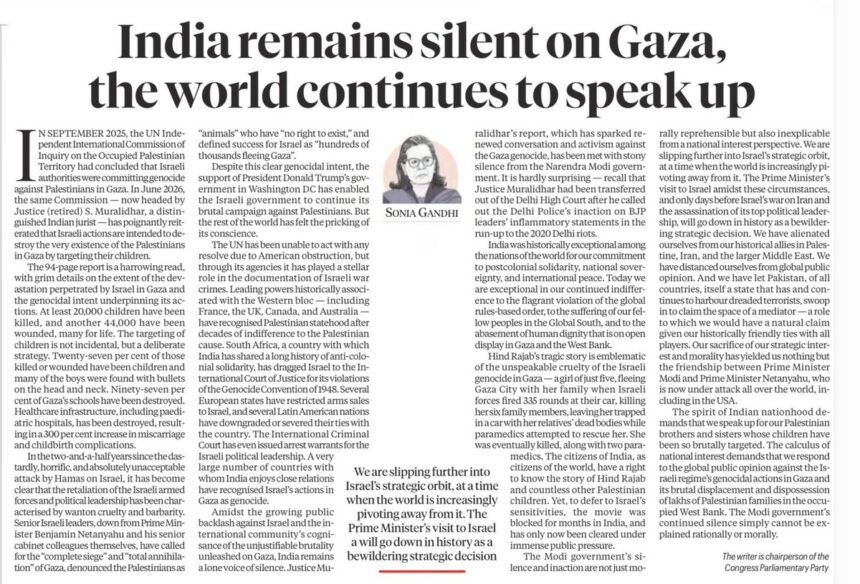
Smt. Sonia Gandhi, Chairperson of the Congress Parliamentary Party, has issued a strong critique of the Indian government’s current foreign policy, particularly its growing alignment with Israel amidst escalating humanitarian concerns in Gaza. She calls for India to reaffirm its commitment to humanitarian values and to stand in solidarity with the Palestinian people.
Context: India’s Foreign Policy Shift
India’s foreign policy has undergone significant changes in recent years, moving toward a closer relationship with Israel. The recent visit by Prime Minister Narendra Modi to Israel is seen as a culmination of this shift. Critics argue that this alignment comes at a time when many global leaders are reevaluating their relationships with Israel, especially in light of the ongoing conflict and humanitarian crisis in Gaza.
This pivot towards Israel raises questions about India’s traditional stance on the Palestinian issue, which historically emphasized diplomacy and support for Palestinian rights. The government’s current approach has sparked debates among political leaders and civil society about India’s role on the world stage and its moral responsibilities as a nation.
The Humanitarian Crisis in Gaza
The situation in Gaza has become increasingly dire, with numerous reports of civilian casualties amidst ongoing hostilities. Smt. Sonia Gandhi’s editorial highlights the suffering of Palestinian children and families, pointing to the urgent need for humanitarian intervention and advocacy. The Congress leader’s remarks reflect a growing concern among various sectors of Indian society regarding the impact of foreign policy choices on humanitarian grounds.
The international community, including non-governmental organizations and human rights advocates, has called for urgent measures to protect civilians in conflict zones. Gandhi’s emphasis on the need for India to uphold humanitarian values resonates with these calls, urging the government to re-evaluate its foreign policy priorities in light of global moral considerations.
Political Analysis: What This Means for India
Smt. Sonia Gandhi’s statements serve as a potent reminder of the divergence between the government’s current foreign policy direction and the expectations of a segment of the Indian populace. Influential political figures and parties advocate for a foreign policy that is aligned with India’s historical principles, which include non-alignment and support for oppressed communities. Gandhi’s call for moral clarity may inspire momentum for a more balanced approach in dealing with complex international issues.
Furthermore, this editorial may lead to intensified debate within the Parliament and among political commentators regarding the implications of India’s strategic choices. The Congress Party’s appeal for a principled stance could galvanize opposition coalitions and provoke discussions over accountability in foreign policy decisions, particularly in humanitarian matters.
Why This Matters
For the Indian audience, Sonia Gandhi’s editorial is significant as it places renewed emphasis on humanitarian values amidst complex geopolitical dynamics. The call for standing up for Palestinian rights not only addresses ethical considerations but also reflects a broader concern about India’s image and credibility on the global stage. As India continues to grow as a global economic power, its foreign policy choices will increasingly influence its relationships with other nations, particularly in regions affected by conflict.
The sentiments expressed in Gandhi’s editorial may resonate with citizens who prioritize foreign policy that aligns with a commitment to justice, peace, and humanitarian advocacy. The rising discourse on this matter could lead to greater public engagement and encourage individuals to reflect on their country’s role in international affairs and the moral implications of its diplomatic relations.
Frequently Asked Questions
What does Smt. Sonia Gandhi’s statement imply for India’s role in global politics?
Gandhi’s statement suggests a need for India to reassess its foreign policy direction and restore its historical commitment to humanitarian values, particularly concerning the Palestinian issue.
How has India’s foreign policy towards Israel changed in recent years?
In recent years, India has moved towards a closer relationship with Israel, highlighted by high-level visits and bilateral agreements, a shift from its previous stance, which emphasized support for Palestinian rights.
What is the current humanitarian situation in Gaza?
The humanitarian situation in Gaza is dire, characterized by high civilian casualties and significant suffering, raising serious concerns about the impact of ongoing conflicts on innocent lives.
Why is this discussion important for Indian citizens?
This discussion is crucial as it reflects broader ethical considerations in foreign policy, urging Indian citizens to engage with their government’s stance on international humanitarian issues and its consequences.