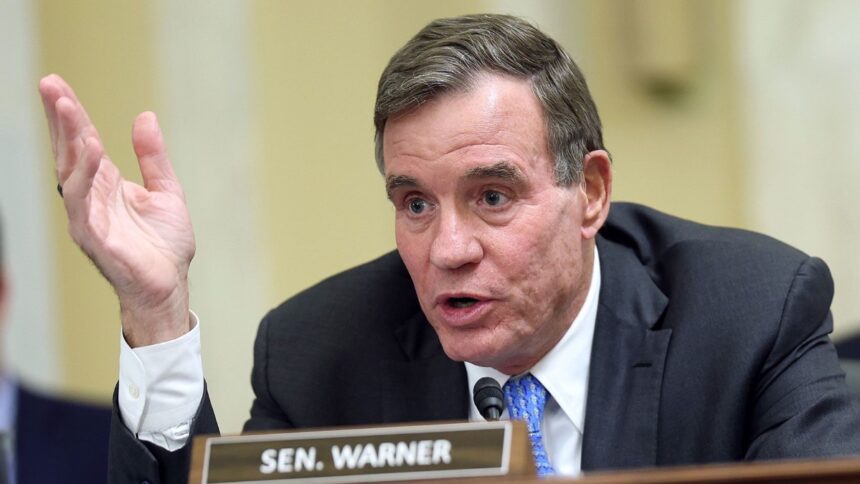

US Senator Mark Warner Criticizes Trump’s Iran Strategy
Virginia Democratic Senator Mark Warner has delivered a scathing critique of President Donald Trump’s approach to the Iran conflict, labeling it a “war of choice” that has left both America economically burdened and strategically vulnerable. Warner’s remarks reflect growing concern among lawmakers regarding the implications of the administration’s foreign policy decisions in the Middle East.
Economic Burdens and Strategic Failures
In a recent media session, Senator Warner emphasized the financial toll on American consumers stemming from rising gas prices, which have reportedly cost the public $60 billion. This figure does not account for additional costs associated with food prices due to increased fertilizer rates, airline fare hikes, and higher diesel expenses. Furthermore, the senator pointed to the Trump administration’s request for $67 billion in supplementary military funding to restore munitions expended during the conflict, underlining the conflict’s expansive economic repercussions.
Warner’s assertions starkly rebut the administration’s claims of success, arguing that the United States is “worse off after this war of choice.” His comments indicate that the core strategic goals have not only been unmet but have potentially exacerbated issues, with Iranian hardliners gaining influence and the Islamic Revolutionary Guard Corps (IRGC) strengthening its position. Experts estimate that around 60 percent of Iran’s missile capability remains operational, a worrying statistic for U.S. interests in the region.
Concerns Over Omitted Issues in the Agreement
Warner pointedly criticized the agreement reached by the Trump administration for neglecting critical issues, including Iran’s ongoing financial and military support for regional proxies like Hezbollah in Lebanon and the Houthis in Yemen. He expressed alarm over provisions within the deal that potentially enable Iran to sell oil in US dollars, a move that could channel tens of billions into the Iranian economy, thus bolstering its capabilities further.
On the topic of nuclear negotiations, Warner expressed skepticism regarding the promising nature of the impending 60-day talks, fearing that they may not advance beyond the current stalemate. He recalled that under the 2015 nuclear deal, international inspectors had overseen Iran’s compliance, a measure disrupted by the U.S. withdrawal during Trump’s early presidency. With tensions still high, Warner cautioned that, despite expectations for the reopening of the Strait of Hormuz, Iran remains capable of obstructing this crucial energy corridor at any moment.
Strategic Oversights and Future Implications
In summation, Warner articulated that initiating a conflict without a well-defined plan has led to a multitude of challenges that America now faces. The senator lamented the lack of clarity about the long-term strategy moving forward, posing a critical question for policymakers: what comes next?
His remarks underscore a broader concern among U.S. legislators that the lack of oversight and careful planning in foreign engagements can lead to prolonged consequences, impacting not only the geopolitical landscape but also the American economy and public sentiment.
Why It Matters
Senator Warner’s comments highlight essential considerations regarding U.S. foreign policy and its repercussions domestically and internationally. For developers and stakeholders in sectors affected by geopolitical tensions, particularly in energy markets and defense, understanding the nuances of such policies is crucial. The outcome of U.S.-Iran relations could influence market stability, resource allocation, and even technological advancements related to defense and energy solutions.
Frequently Asked Questions
What does Senator Warner mean by “war of choice”?
Senator Warner refers to the conflict with Iran initiated under President Trump as a “war of choice” to suggest that it was not a necessary or unavoidable conflict, but rather one that was chosen and pursued despite potential risks and consequences.
How much has the U.S. consumer been affected by the Iran conflict according to Warner?
Warner has estimated that rising gas prices resulting from the conflict have cost American consumers approximately $60 billion, highlighting significant economic consequences.
What are the chances of successful negotiations with Iran regarding its nuclear capabilities?
Senator Warner expressed skepticism about the effectiveness of upcoming negotiations, suggesting they may not yield substantial advancements beyond the existing state of affairs due to previously failed agreements.
What are the implications of Iran being able to sell oil in US dollars?
Allowing Iran to sell oil in US dollars could vastly improve its economic situation by enabling it to gain significant revenue, potentially enhancing its military and strategic capabilities further.