
Summary
Yati Narsinghanand Saraswati, a contentious priest known for his Islamophobic rhetoric, has shown support for Anil Yadav’s alarming call for the genocide of Muslims in India, igniting concerns over rising communal tensions. This incident, occurring at a Hindu panchayat in Ghaziabad, underscores the troubling trend of hate speech proliferating within certain segments of India’s political and social landscape.
Context of the Remarks
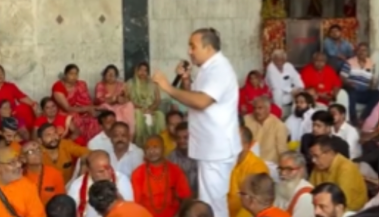
During a gathering at the Dasna Devi Temple, Narsinghanand praised Yadav, who recently faced widespread backlash for advocating the “genocide” of Muslims. Yadav’s remarks, which suggest that “Islam’s end will come through genocide and whoever starts it first will be victorious,” have prompted outrage and demands for action from various sectors of society. Narsinghanand’s comments have further inflamed these sentiments, as he equated Yadav’s controversial statements with Israel’s military activities in Gaza, indicating a dangerous analogy that justifies violence against Muslims in India.
Analysis of Incitement to Violence
Narsinghanand’s support for Yadav raises serious questions about the normalization of extremist ideologies within India’s growing Hindutva movement. His declaration that “any action taken against Yadav should first be initiated against me” reflects a growing trend where figures from right-wing groups openly endorse calls for violence and aggression against minority communities. This situation is exacerbated by social media, which has played a vital role in amplifying such incendiary rhetoric, making it accessible to a wide audience. Videos of Narsinghanand’s speech have circulated widely, revealing his rhetoric as not just incendiary but as a legitimizing force for hate speech.
Broader Implications for Indian Muslims
The remarks made by Narsinghanand resonate within a larger context of discrimination and marginalization experienced by Muslims in India. In recent years, there has been a noticeable uptick in social exclusion and economic boycotts targeting the Muslim community, coinciding with the rise of the Bharatiya Janata Party (BJP) and its affiliates like the Rashtriya Swayamsevak Sangh (RSS). Reports of increasing communal violence, social ostracization, and economic disenfranchisement further contribute to an environment where Muslims are increasingly vulnerable to systemic discrimination.
Why It Matters
This incident reflects a significant and troubling trend in India where hate speech and incitement to violence are becoming normalized, particularly against marginalized communities like Muslims. Such developments pose risks not only for communal harmony within India but also for the nation’s global image regarding human rights and religious tolerance. The rhetoric used by leaders like Narsinghanand can facilitate an environment conducive to violence and unrest, threatening social cohesion and peace.
Frequently Asked Questions
What are the implications of Narsinghanand’s comments on communal relations in India?
Narsinghanand’s comments may exacerbate existing tensions between communities in India, potentially leading to increased instances of violence and discrimination against Muslims.
How has the government responded to calls for genocide against Muslims?
Government responses have been largely criticized as inadequate, with many activists and organizations calling for stronger legal actions against hate speech and incitement to violence.
What historical context underlies the rise of Hindutva rhetoric in India?
The rise of Hindutva rhetoric can be traced back to post-independence India, where the ideology gained traction through political parties like the BJP, which has leveraged sectarian narratives to consolidate power.
What role does social media play in the spread of hate speech in India?
Social media platforms serve as powerful tools for disseminating hateful rhetoric, enabling rapid spread and normalization of extremist views while often circumventing traditional media controls.