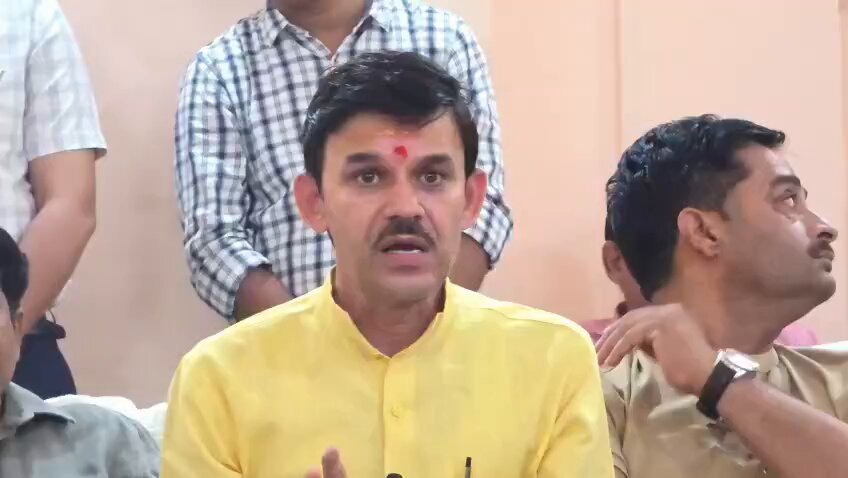

In a recent controversy, BJP leader Sanjay Nagayach accused opposition factions, including the Congress party and foreign influences, of conspiring against Madhya Pradesh Chief Minister Mohan Yadav. He claimed that an investigative report revealing land purchases by Yadav’s family serves not only as an attack on the chief minister but also on Hindutva and Sanatan values.
Context of the Allegation
Sanjay Nagayach’s comments came in the wake of an investigation conducted by the Indian Express, which detailed how Mohan Yadav’s family acquired 168 acres of land in Ujjain for ₹45 crore within two years of his assuming office. The report indicated that many of these purchases occurred in areas poised to benefit from newly announced road projects and land-use changes instigated by Yadav’s government. This has raised questions regarding the ethical implications of such acquisitions, especially given the timing and the potential for conflicts of interest.
Political Ramifications
The claims made by Nagayach reflect a broader trend of using political narratives to delegitimize opponents. By connecting Yadav’s land deals with foreign conspiracies, particularly alleging involvement from figures like George Soros and external agencies, the BJP aims to rally its base against what it terms the “Tukde-Tukde gang.” This terminology has been employed to describe factions perceived as divisive or antithetical to nationalist sentiments. In an era where social media is utilized to proliferate information and manipulate perceptions, these unfounded accusations can have significant effects on public opinion, steering the narrative in favor of the ruling party.
The Role of Media and Investigations
The Indian Express investigation serves as a crucial piece of journalism in a landscape where accountability is paramount. Such reports function to unearth potential improprieties and address the transparency of political representatives. However, they also expose journalists to intimidation and backlash from political figures who may perceive them as threats. The dissemination of this investigative report has evoked strong reactions, including outrage from BJP members, suggesting that the findings could be politically damaging for Yadav and his party.
Why This Matters
The allegations against Mohan Yadav resonate deeply within the Indian political context, particularly given the rising tensions between ruling and opposition parties. With elections approaching, narratives such as these play a significant role in shaping voter perceptions and influencing electoral outcomes. The connection drawn between local governance issues and larger, international conspiracies serves to galvanize nationalist sentiments within the BJP’s support base. Moreover, such controversies highlight the challenges of governance in India, where allegations of corruption, land acquisition improprieties, and political machinations often dominate public discourse.
Frequently Asked Questions
What did Sanjay Nagayach accuse the Congress party of?
Nagayach accused the Congress party and other factions of conspiring against CM Mohan Yadav, claiming the investigation into his family’s land deals was a coordinated attack on Hindutva and Sanatan values.
What were the key findings of the Indian Express investigation?
The investigation revealed that CM Mohan Yadav’s family purchased 168 acres of land in Ujjain for ₹45 crore in a span of two years, following his assumption of office, mostly in areas that benefitted from governmental infrastructure projects.
How has the BJP responded to the investigation?
The BJP has framed the investigation as part of a larger conspiracy involving foreign elements, portraying it as an attack on nationalist principles and an attempt to destabilize the party’s governance.
Why is this controversy significant for Indian politics?
This controversy underscores the intersection of governance, ethics, and political narratives in India, influencing public perceptions and potentially impacting forthcoming elections while highlighting ongoing issues of accountability and transparency.