
Summary
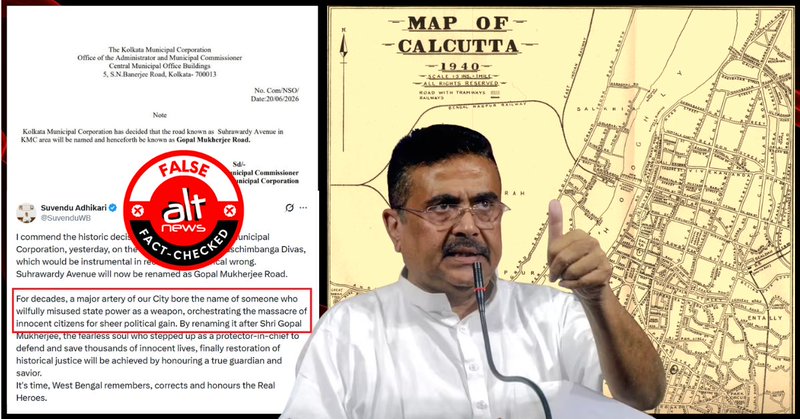
West Bengal Chief Minister Suvendu Adhikari announced the renaming of Kolkata’s renowned “Suhrawardy Avenue” to “Gopal Mukherjee Road,” asserting that the road was named after Huseyn Shaheed Suhrawardy. This claim has been contested, with evidence suggesting that it is inaccurate.
Context: The Naming Controversy
On June 21, 2023, Suvendu Adhikari made the announcement regarding the name change, triggering discussions about the historical context behind the road’s original name. Suhrawardy Avenue, named after a prominent politician in pre-independence India, has long been a point of reference and identity for the city of Kolkata. Adhikari’s statement proposed that its association with Huseyn Shaheed Suhrawardy justified its renaming, a claim that many historians and political commentators have disputed.
Background on Suhrawardy Avenue
The street has been named after a significant figure in Indian history, but not Huseyn Shaheed Suhrawardy. Research indicates that the avenue had a different historical context tied to a variety of cultural and political influences in Bengal. The desire to rename it reflects broader trends in Indian politics, where historical narratives are often contested as political parties look to reinforce their ideologies through symbolic gestures such as renaming landmarks.
Analyzing the Political Implications
The renaming of Suhrawardy Avenue underscores the political climate in West Bengal, where the Bharatiya Janata Party (BJP) is competing for greater influence against the ruling Trinamool Congress (TMC). Such decisions serve not just as administrative actions but as cultural statements that resonate with specific voter bases. By associating the name “Gopal Mukherjee” with the road, the BJP seeks to connect with Hindu voters and local sentiments, shifting the narrative in a predominantly secular and multi-ethnic landscape. This move may also reflect a desire to reclaim historical narratives viewed through a nationalist lens, impacting future elections in the region.
Why This Matters
The renaming of streets and monuments is a politically charged exercise in India, often sparking debates about history, identity, and nationalism. For Indian readers, this particular case illustrates the ongoing struggle between political factions and the importance of historical narratives in shaping contemporary governance and public sentiment. As political parties vie for power through such identity politics, it affects not just local governance but also the broader political landscape of India.
Frequently Asked Questions
What prompted the name change for Suhrawardy Avenue?
Chief Minister Suvendu Adhikari claimed that the avenue was named after Huseyn Shaheed Suhrawardy, prompting the government to rename it in order to reflect a different historical figure, Gopal Mukherjee.
Is it true that Suhrawardy Avenue was named after Huseyn Shaheed Suhrawardy?
No, historical evidence suggests that the avenue was not named after Huseyn Shaheed Suhrawardy, contradicting the claims made by the Chief Minister.
What are the broader implications of renaming streets in India?
Renaming streets often reflects the prevailing political ethos and can serve as a means for parties to assert their ideological positions. It can affect voter perceptions and historical interpretations in a diverse country like India.
How do such actions impact local politics in West Bengal?
Renaming streets can galvanize voter bases and influence public sentiment, especially in a politically polarized environment like West Bengal. It highlights the ongoing struggle between the BJP and the TMC for dominance in the state.