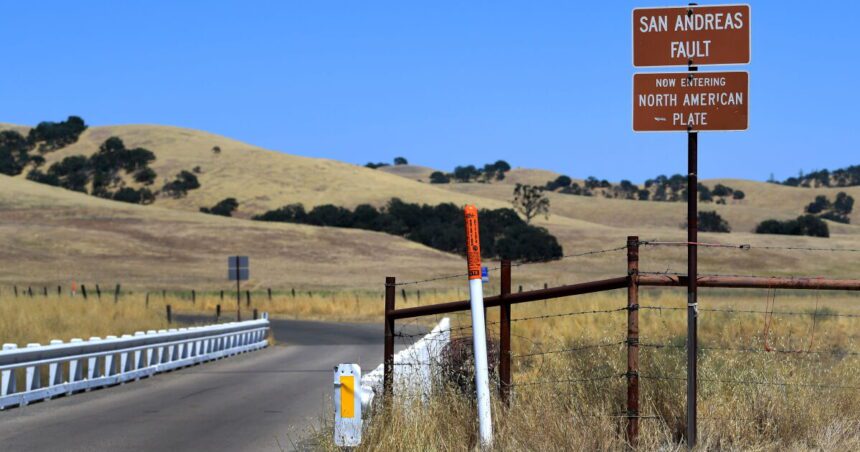

A recent study highlights the increased likelihood of a major earthquake in Southern California as the San Andreas and San Jacinto faults experience unprecedented stress, marking the highest levels in the past 1,000 years. This alarming revelation serves as a vital reminder for preparedness, underscoring that the region could soon face a significant seismic event.
The Earthquake Risks Explained
According to the report, stress accumulation along these faults has been ongoing since the last major earthquake in 1857. Scientists utilized a meticulous analysis of geological evidence—including tree-ring records and sediment samples—to create a computer model that simulates how pressure accumulates over time. The research indicates that the Southern California region is now under more strain than ever, with Kate Scharer from the U.S. Geological Survey stating, “Because it’s been quite a long time since the Southern San Andreas or the San Jacinto have had a large earthquake, we’ve accumulated a lot of stress.”
Understanding the Implications
An essential area of concern is Cajon Pass. This region, nestled between the San Gabriel and San Bernardino mountains, could act as a connecting point for earthquake ruptures between the two fault systems. “Cajon Pass could act as an ‘earthquake gate,’ like a junction that either stops or transmits large ruptures depending on stress conditions,” explained Liliane Burkhard, the lead author of the study. The implications are significant: should a rupture occur at Cajon Pass, it could extend the impact of an earthquake reach to millions in areas like Coachella Valley and San Bernardino County.
Preparation is Key
As uncertainty looms, experts emphasize the importance of preparedness. The U.S. Geological Survey recommends that households maintain emergency kits with food, water, and medications for at least 72 hours. Furthermore, families are urged to establish clear communication plans and familiarize themselves with evacuation routes, as cellphone networks might fail following a major quake. “This study was a great reminder that in Southern California, where we have parts of the most densely populated regions in the country, we are living on a multi-strand fault system,” highlighted Ahmed Elbanna, director of the Statewide California Earthquake Center.
Why This Is Trending
This topic has gained significant traction in India due to rising global concerns about climate change and natural disasters. As natural calamities increase worldwide, Indian citizens are becoming more aware of geological risks, even those occurring in distant lands. Additionally, with its own seismic zones, India recognizes the value of earthquake preparedness. The study’s findings draw parallels to historical earthquakes in regions like Maharashtra, prompting discussions on safety measures and response plans in densely populated areas. This awareness reflects a global acknowledgment of the need for preparedness in the face of inevitable natural disasters.
Frequently Asked Questions
What are the main findings of the recent earthquake study?
The study reveals that the San Andreas and San Jacinto faults are currently under more stress than at any point in the last 1,000 years, indicating that a major earthquake in Southern California could be imminent.
What should individuals do to prepare for a potential earthquake?
Experts recommend having an emergency kit with essential supplies for at least 72 hours, establishing a communication plan for family members, and knowing evacuation routes in case of an emergency.
How can the Cajon Pass impact future earthquakes?
Cajon Pass may serve as an ‘earthquake gate’ that could either halt or transmit large ruptures between the San Andreas and San Jacinto faults, possibly affecting a vast population across Southern California.
When is the next major earthquake expected?
While scientists agree that another major earthquake in Southern California is inevitable, they cannot pinpoint an exact timeline. Estimates range from today to decades in the future.