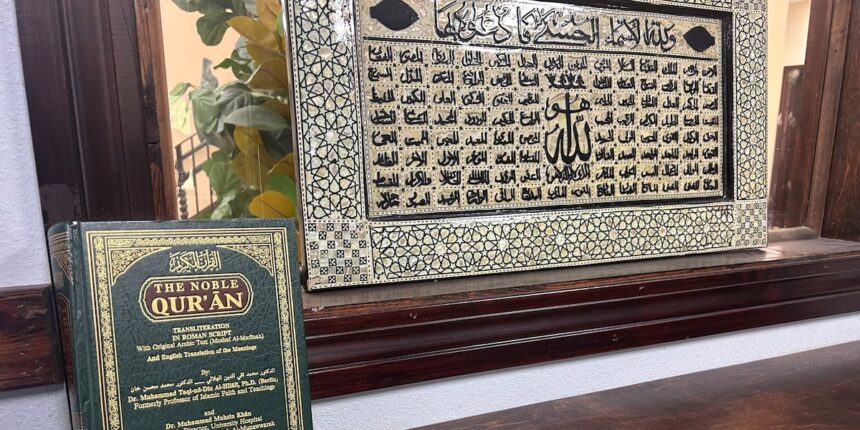

In the midst of tensions surrounding religious freedom in Mississippi, members of the Mississippi Muslim Association have responded to gubernatorial candidate Andy Gipson’s vow to ban Sharia law. This promise, they argue, not only targets their faith but also contradicts constitutional principles of religious freedom.
Claims of Threat from Islam
Following Gipson’s inflammatory social media posts, which pledged to eradicate any influence of Islam in the state, local Muslims felt compelled to address these allegations directly. During a meeting at a mosque in Madison County, they emphasized that the proposed legislation would not only be unconstitutional under both federal and state laws but also perpetuates misinformation about their faith.
Emad Al-Turk, a long-term Mississippi resident and co-founder of the International Museum of Muslim Cultures, pointed out the critical contributions of Muslims to the state’s workforce. “Should you find yourself in a hospital, it is likely that a Muslim doctor will be among the staff,” he stated, underscoring how deep-rooted and meaningful their presence has been in the region.
Analyzing Gipson’s Rhetoric
Gipson’s claims portray Sharia law as an “unconstitutional legal system,” raising alarms about its supposed threat to American freedoms. He suggested that many states have already acted against it, positioning Mississippi as lagging behind. However, Al-Turk countered, explaining the principles of Sharia law often align closely with universal moral codes found in other religions.
For instance, Al-Turk states, “Muslims are required to give 2.5% of their net earnings to charity,” highlighting the humanitarian focus of their legal obligations. He argues that misconceptions fuel these divisive narratives and called upon Gipson to reassess his stance.
Misconceptions and Minorities
Despite claims from Gipson, the actual Muslim population in Mississippi is relatively minor, making up less than 0.5% of the population, as per the World Population Review. This fact challenges the impracticality of Sharia law becoming state law. Al-Turk describes the notion of such a legal shift as “asinine,” emphasizing that amending the U.S. Constitution to accommodate such laws would be a complex and unlikely endeavor.
Furthermore, according to Judiciaries Worldwide, nations like Iran and Saudi Arabia are primarily the only countries that have adopted Islamic laws as national law, indicating that Gipson’s fears may be exaggerated. Al-Turk criticized the notion that religious practices could systematically undermine state governance and urged for a more informed discussion on such matters.
Why It Matters
This conversation highlights ongoing tensions between differing cultural and religious views within American society, particularly in the context of the political landscape. Understanding the implications behind these political statements is vital for preserving a constitutional framework that guarantees religious freedom. Misinformation can further marginalize already small communities, creating barriers to dialogue, and exacerbating social divides. As discussions around governance and social policy advance, clarity and facts must shape the dialogue to foster inclusivity rather than exclusion.
Frequently Asked Questions
What is Sharia law?
Sharia law represents a system of religious laws based on the Quran and Sunnah, governing the moral and ethical obligations of Muslims, similar to how other religions dictate the conduct of their followers.
How significant is the Muslim population in Mississippi?
Muslims account for less than 0.5% of Mississippi’s total population, reflecting a very small ethnic and faith-based group in the state.
What are the legal implications of banning Sharia law?
Banning Sharia law would likely breach both federal and state constitutional protections on religious freedom, as outlined in the First Amendment of the U.S. Constitution and similar provisions in Mississippi law.
Why are these discussions important?
These discussions matter because they inform public perception and legislation around religious practices and contribute to broader conversations on civil rights, inclusion, and cultural understanding in the United States.