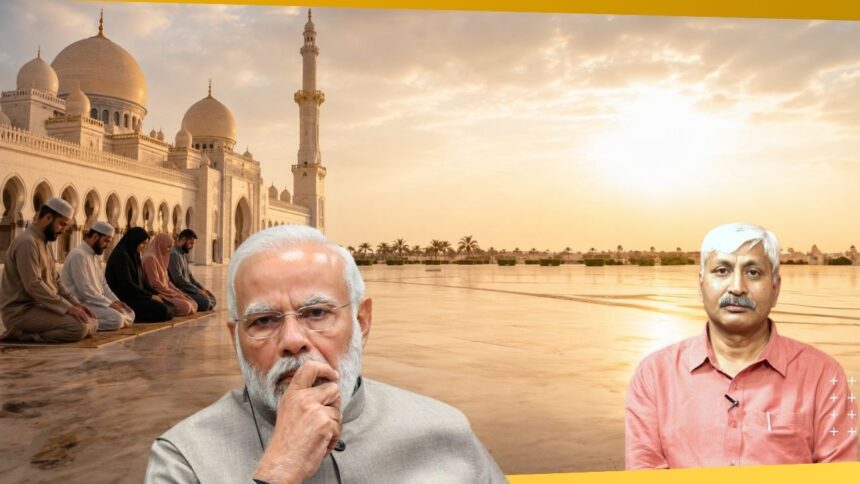

The condition of Muslims in India has become increasingly fraught with uncertainty and fear, especially under the current political climate influenced by the Sangh Parivar and the Bharatiya Janata Party (BJP). Academic efforts by individuals like Delhi University professor Apoorvanand highlight the normalization of Islamophobia, which translates into everyday experiences of marginalization and discrimination against Muslims across various sectors of society.
Everyday Fear and Social Exclusion
Apoorvanand articulates that the lives of Muslims in India today are riddled with unpredictability, often hinging on how non-Muslims engage with them. Instances of violence and social ostracization serve as reminders of this precarious existence. For example, Muslims traveling by train face the potential risks of being stopped, questioned, or even physically assaulted over mundane issues, such as food choices. This fear extends into educational environments, where Muslim children are marginalized and labeled with derogatory terms like “Pakistani” by their peers.
The broader societal context reflects a disturbing trend where historical and cultural references are weaponized against Muslims. In classroom discussions, topics around historical figures like Aurangzeb or Akbar can evoke feelings of isolation among Muslim students, underscoring their struggle against exclusionary narratives rooted in a skewed interpretation of history.
Political Invisibility and Marginalization
Apoorvanand extends his analysis to the realm of politics, noting an alarming pattern of political invisibility for Muslims in India. He highlights how political leaders often ignore Muslims in their speeches, undermining their place in the fabric of Indian society. Instead, political rhetoric increasingly depicts Muslims as threats, further entrenching their exclusion within the political narrative.
He mentions a phenomenon where administrative actions, such as renaming institutions, contribute to a sense of erasure among Muslim identities. These changes do not merely alter names but also represent a systematic attempt to diminish the historical contributions and presence of Muslims in India.
Language as a Tool of Exclusion
Language plays a critical role in perpetuating stereotypes and marginalization. Apoorvanand discusses how terms like “ghuspethiya” (infiltrator) function to render Muslims perpetual outsiders in their own country. This linguistic shift—from being labeled as “outsiders” to “infiltrators” and eventually “illegal”—creates a narrative of exclusion that is not easily reversed.
@In regions like West Bengal and Assam, the portrayal of Bengali-speaking Muslims as “Bangladeshi” exemplifies social panic driven by these labels. Such framing not only delegitimizes the identities of specific communities but also incites communal tensions based on unfounded fears.
Why It Matters
The issues highlighted by Apoorvanand serve as a crucial reminder of the broader societal dynamics at play in India. The normalization of Islamophobia poses significant challenges to social cohesion and democratic principles, inviting a need for a more inclusive political discourse that accurately represents all citizens. Addressing these concerns is essential not just for the well-being of Muslims, but for the integrity of Indian democracy as a whole, reinforcing the idea that social justice is intertwined with collective governance.
Frequently Asked Questions
What are the current challenges faced by Muslims in India?
Muslims in India face challenges that range from social exclusion and discrimination to political invisibility and violence. These challenges are exacerbated by the rise of Islamophobia and the normalization of anti-Muslim sentiment in political discourse.
How does language impact the perception of Muslims in India?
Language serves as a powerful tool in shaping public perception. Terms designating Muslims as “outsiders” or “infiltrators” contribute to social stigma and perpetuate narratives that justify their exclusion from mainstream society.
What role does political representation play in the lives of Muslims in India?
Political representation is crucial for ensuring that the voices of Muslims are heard in governance. However, the current electoral logic often discourages the nomination of Muslim candidates, further marginalizing them in political spaces.
What can Hindus do to address anti-Muslim sentiments?
Apoorvanand emphasizes the responsibility of Hindu communities to challenge narratives of hate, reclaim religious spaces, and engage in meaningful dialogues to deradicalize attitudes towards Muslims. Cultural conversations and advocacy for inclusivity are steps towards healing societal divides.