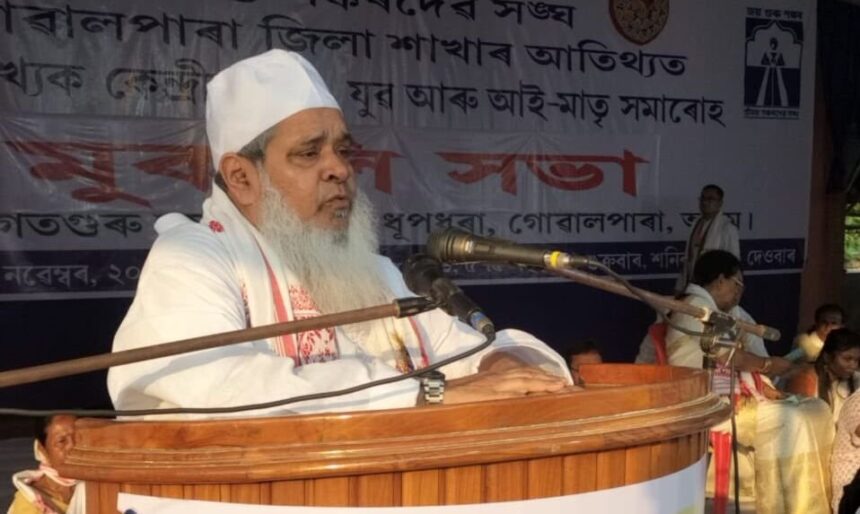

The political landscape in Assam has become increasingly tense, as AIUDF chief Badruddin Ajmal levels accusations against Chief Minister Himanta Biswa Sarma regarding the treatment of Muslims in the state. Ajmal’s comments highlight concerns over fear, discrimination, and communal polarization within the community, while also emphasizing the importance of education and social cohesion.
Accusations of Divisive Politics
Following his victory in the Binnakandi Assembly seat during the recent state elections, Ajmal made a significant claim regarding the political climate in Assam. He accused Chief Minister Himanta Biswa Sarma of inciting fear among Muslims through divisive rhetoric. Ajmal stated, “Himanta Biswa Sarma is number one when it comes to making hate comments. Because of his politics and statements, Muslims in Assam are living in fear.” This sharp critique points to a broader concern about how political discourse can foster an atmosphere of insecurity and discrimination.
The Sense of Insecurity Among Muslims
Ajmal articulated that the Muslim community in Assam is feeling increasingly marginalized due to the current political environment. He pointed out that despite experiencing insecurity, the community remains committed to peace and development. Ajmal said, “Muslims remain committed to maintaining social harmony despite political tensions,” suggesting that the community values coexistence over division. This sentiment speaks to the resilience of the community, even as external pressures mount.
Focus on Education and Integration Efforts
In his efforts to counteract the narrative of division, Ajmal highlighted the work of the Ajmal Foundation, which aims to provide educational opportunities for all, regardless of religious affiliation. He emphasized, “In Ajmal Foundation institutions, not only Muslim students but Hindu boys and girls also study. We have always worked for education and social development without discrimination.” This commitment to inclusivity reflects a broader desire to unite communities through shared educational goals rather than allowing political divisions to fester.
Why It Matters
The ongoing discrimination and marginalization of Indian Muslims under various state policies have far-reaching implications, not only for community relations but also for the social fabric of India. When political leaders engage in rhetoric that fosters fear, it can lead to deeper social divides, increasing the likelihood of communal conflicts. Additionally, the emphasis on educational initiatives, such as those championed by organizations like the Ajmal Foundation, plays a crucial role in addressing long-term socio-economic disparities. Promoting an integrated identity, such as Ajmal’s call for Muslims to declare Assamese as their mother tongue during the upcoming Census, could help bridge cultural gaps and foster unity in diversity.
Frequently Asked Questions
What are the main allegations made by Badruddin Ajmal against Himanta Biswa Sarma?
Ajmal alleges that Sarma’s political statements and policies have instilled fear among Muslims in Assam and that he regularly makes divisive remarks that threaten communal harmony.
How does Ajmal view the situation of Muslims in Assam?
Ajmal believes that Muslims in Assam feel insecure and marginalized due to the current political climate, but he stresses that they continue to support social peace and development.
What role does the Ajmal Foundation play in the community?
The Ajmal Foundation focuses on providing education to all communities, emphasizing inclusivity by allowing students from various religious backgrounds to study together, thus promoting social development.
What recommendation has Ajmal made regarding the upcoming Census?
Ajmal has urged Muslims in Assam to declare Assamese as their mother tongue in the upcoming Census to reflect their cultural integration within Assamese society.