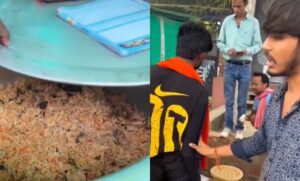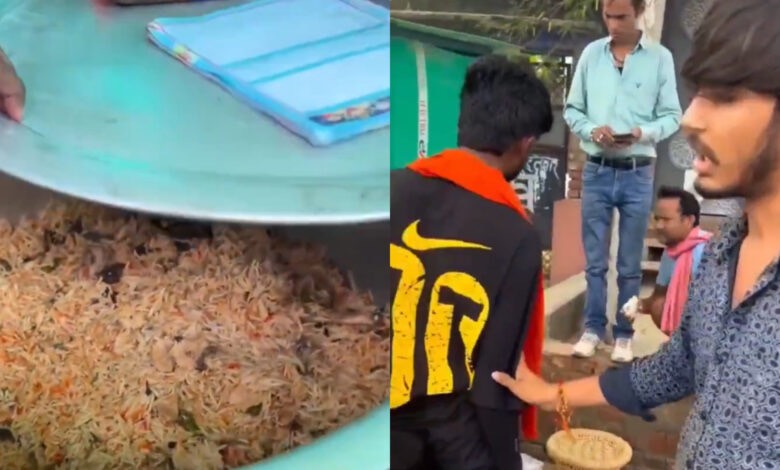

In a recent incident highlighting the growing trend of communal tensions in India, Deepak Tiwari, a self-identified cow vigilante, led a forceful shutdown of a street vendor’s biryani shop in Vrindavan, Uttar Pradesh, claiming that the shop’s meat offerings defied the town’s sacredness. This act is part of a broader pattern of discrimination against Muslim-owned businesses under the influence of Hindutva ideologies.
The Incident in Vrindavan
On June 17, 2023, a video surfaced depicting Tiwari approaching the vendor’s stall while chanting “Jai Jai Shri Ram.” He inspected the biryani, making derogatory comments about the meat present, before demanding the immediate closure of the establishment. Tiwari’s actions reflect a troubling trend where individuals associated with Hindu nationalist groups take it upon themselves to enforce religious customs, often targeting Muslim-owned enterprises. This incident underlines the precarious situation for small traders in regions where communal sensitivities are heightened.
Broader Patterns of Intolerance
This incident is not an isolated event but rather part of a systematic approach to marginalize Muslim communities and their businesses across Uttar Pradesh and Uttarakhand. Earlier in February, Satyam Pandit, a leader of the Rashtriya Hindu Veer Sena, threatened violence against a Muslim shopkeeper in Ghaziabad, demanding his mutton shop remain closed on Tuesdays, an action linked to local religious sentiments. Furthermore, other recent incidents in Uttarakhand, such as protests against a Muslim-owned store and the closure of a unisex salon accused of “immoral activities,” reflect a growing atmosphere of economic boycotts and social exclusion.
Impact on Local Communities
These enforcement actions by self-appointed vigilantes have heightened communal tensions and stoked fears among Muslim business owners, who face threats of violence and economic boycotts. The Hindutva activism not only endangers the livelihoods of these individuals but also inflates the risk of broader societal discord. The repeated targeting of Muslim-owned businesses raises serious concerns about the rights of minority communities and the erosion of secular values that are supposed to embody modern Indian democracy.
Why It Matters
The rise of discrimination and economic targeting of Muslims in India signals a troubling shift in societal norms, which poses significant implications for nation-building and communal harmony. For the broader international community and human rights advocates, understanding these events is critical in advocating for minority rights and fostering dialogue aimed at reducing communal tensions. The normalization of such actions can erode the foundational principles of democracy and secularism, leading to long-term ramifications for social cohesion and socio-economic stability in the region.
Frequently Asked Questions
What does “cow vigilante” refer to?
A cow vigilante is an individual or group that takes it upon themselves to enforce laws and social norms related to the protection of cows in India, often targeting those deemed to violate these norms, including but not limited to, Muslims who may be involved in the meat trade.
Are there legal protections for minority businesses in India?
While the Indian Constitution provides protections for religious minorities, the enforcement and protection of these rights can vary significantly. Many businesses have reported facing harassment and threats, which often go unaddressed due to communal tensions.
What is the significance of “Jai Jai Shri Ram”?
“Jai Jai Shri Ram” is a slogan widely used by Hindu nationalists and has become a rallying cry that symbolizes support for Hindu pride and often, by extension, opposition to other religious communities, which can exacerbate communal conflicts in sensitive areas.
How do these incidents affect local economies?
These incidents can lead to economic boycotts, negatively impacting the livelihoods of marginalized communities, aggravating poverty levels and creating long-term economic challenges within these regions by perpetuating cycles of exclusion and violence.