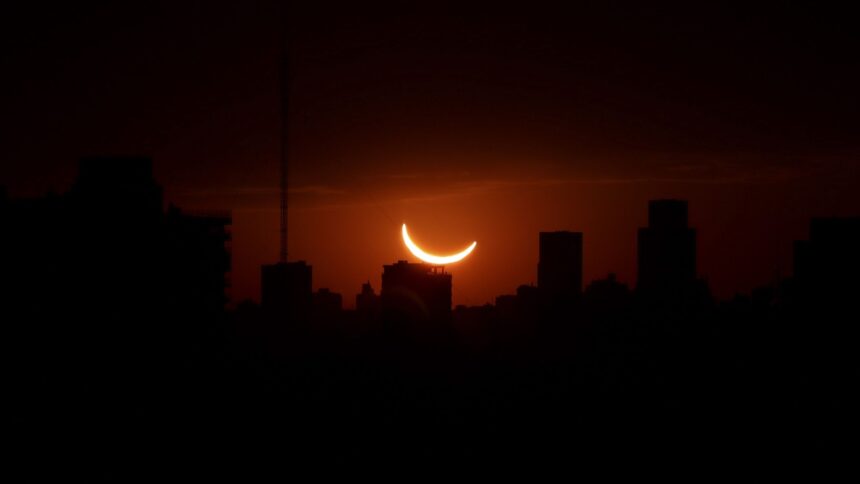

On August 12, 2026, a spectacular total solar eclipse will traverse eastern Greenland, western Iceland, and northern Spain. As enthusiasts prepare to travel to witness the event, many will also witness a stunning partial solar eclipse across Europe, offering a remarkable viewing opportunity for millions. Understanding how to capture the unique moments of this celestial event can enhance your experience.
What to Expect from the 2026 Solar Eclipse
The total solar eclipse on August 12, 2026, is generating excitement as it will be visible in select areas. Eclipse chasers, fueled by the thrill of totality, will gather eagerly in Spain, where participants near the eastern coast will view the sun just above the horizon at sunset. However, it’s essential to note that the partial eclipse will affect most of Europe and parts of northwest Africa, offering a stunning visual of the sun eclipsed during twilight.
Regions such as France, Belgium, Germany, and several Eastern European countries will experience significant partial eclipse phases, transforming the sky into a canvas of shadows and light. Many enthusiasts, while aiming for totality, may underestimate the magnificence of the partial eclipse, especially the breathtaking sunset moments.
Best Viewing Locations Across Europe
If you aim to experience a partially eclipsed sunset, your choice of location is crucial. Western parts of the map showing the eclipse will yield more dramatic effects. For example, places like Algiers and Corsica will provide remarkable views. Notably, locations such as:
- Village d’Occi, Corsica, France (96% obscuration at 8:25 PM CEST)
- La Spezia, Ligurian Sea, Italy (94% at 8:22 PM CEST)
- Venice, Italy (91% at 8:19 PM CEST)
- Warsaw, Poland (83% at 8:02 PM CEST)
These cities are optimum spots to capture the artistic “horns down” shape of the crescent sun sinking below the horizon. In these aspects, scouting potential viewing locations days ahead can help you adapt plans for optimal visibility.
Capture Your Eclipse Experience
Photography enthusiasts will find the partially eclipsed sunset an incredible opportunity. Michael Zeiler, an eclipse cartographer, recommends positioning yourself west of the eclipse line for the best shots. It allows for spectacular imagery right when the sun is intersected by the horizon. Nevertheless, remember the phenomenon’s visual aspects can be greatly affected by atmospheric conditions, such as clouds.
For breathtaking images, utilize preparation resources like “The Photographer’s Ephemeris,” which aids in planning your capture around natural light. Don’t forget local scouting to ensure unobstructed views of the sun dipping below the horizon.
Why This Is Trending
As the date approaches, interest in the 2026 solar eclipse is surging worldwide, including in India. With the last solar eclipse witnessing significant public engagement, Indians are keen to learn more about this upcoming event. The allure of a total solar eclipse, along with anticipated travel plans, drives exploration on social media and online forums about when, where, and how to catch the best views. The excitement also extends to discussions on scientific implications and cultural significance associated with solar eclipses.
Frequently Asked Questions
When is the solar eclipse happening?
The solar eclipse will occur on August 12, 2026, with a total eclipse visible in parts of eastern Greenland, western Iceland, and northern Spain.
Can I see the partial solar eclipse from India?
The total eclipse cannot be seen from India, but locals may witness partial phases of the eclipse if they travel to Europe or North Africa.
What is the best way to view the eclipse safely?
Avoid looking directly at the sun without proper eye protection. Use eclipse glasses or a solar viewer to safely experience the eclipse.
Where are the best spots in Europe for viewing the eclipse?
Top locations include Corsica, the Ligurian Sea in Italy, and various cities such as Venice and Warsaw, where the maximum obscuration will occur shortly before sunset.