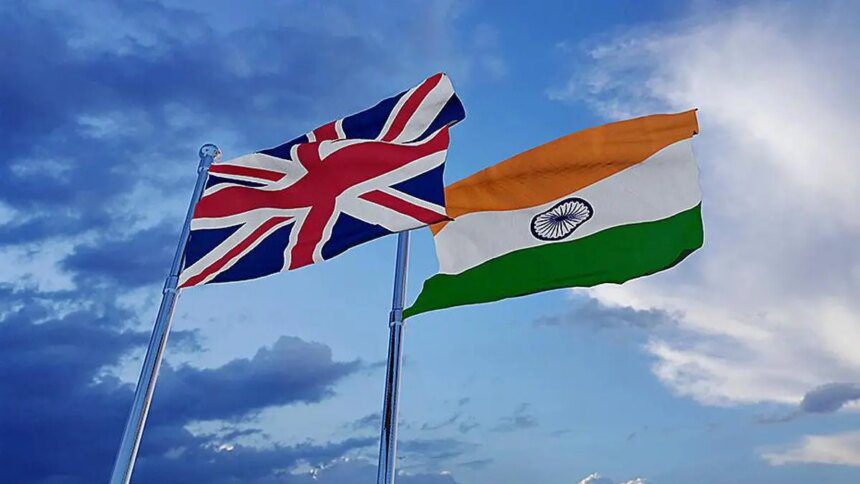

Shares of textile manufacturers, liquor companies, and marine exporters in India experienced a notable increase following the announcement that India and the United Kingdom will implement their Free Trade Agreement (FTA) starting July 15. This development is expected to enhance trade dynamics and competitiveness for various export-driven sectors, creating optimism among investors.
The Impact of the India-UK FTA
Investor confidence surged in early trading on Thursday as the agreement was revealed. The implementation of the FTA is anticipated to lower import duties and improve market access, signaling a boost in profitability and competitiveness for Indian firms involved in textiles, footwear, marine exports, and alcoholic beverages. According to SBI Securities, the expected reduction in tariffs can significantly enhance margins and demand for these sectors.
Performance of Key Sectors
Among liquor stocks, several companies saw substantial gains. Radico Khaitan surged by 4.55% to ₹3,735, while United Spirits reached ₹1,367.60. Allied Blenders and Distillers also saw an uptick, increasing by 2.6% to ₹646.80 on the National Stock Exchange (NSE).
Textile stocks have shown robust buying interest as well, with Gokaldas Exports emerging as a standout performer, climbing 5.6% to ₹771. Other significant gains were noted in shares of Trident, Arvind Ltd, and Vardhman Textiles, which rose by 1% to 3%.
In the marine export sector, Avanti Feeds grew by 3.5% to ₹1,018.90, while Apex Frozen Foods saw a 4% increase, reaching ₹433.80. This positive trend reflects a broader market enthusiasm aimed at benefiting from strengthened bilateral trade ties.
Long-term Outlook for Export-oriented Industries
The India-UK FTA promises to foster a more competitive environment for Indian exporters, opening new avenues in major markets. The expectation is that enhanced market access will result in better pricing power and increased demand for Indian goods, which is particularly relevant given the current landscape of global trade dynamics.
Experts believe that the FTA will not only heighten trade flows between India and the UK but also consolidate India’s position as a key player in global supply chains, especially in sectors like textiles and beverages where India holds significant production capacity.
What This Means
This new trade agreement is crucial for Indian exporters, particularly in sectors that rely heavily on international markets. Lower import duties will likely lead to increased competitiveness and, consequently, larger export volumes. This is particularly relevant as various Indian industries have been striving to recover from the pandemic and increase their footprint in overseas markets. The expected benefit from the FTA may spur job creation and potentially contribute to India’s economic growth targets, while also strengthening the bilateral relationship between India and the UK.
Frequently Asked Questions
What is the Free Trade Agreement (FTA) between India and the UK?
The FTA is a pact aimed at reducing tariffs on goods traded between India and the UK, facilitating better market access and encouraging economic collaboration.
When will the India-UK FTA be implemented?
The Free Trade Agreement is set to be implemented on July 15, 2026.
Which sectors will benefit the most from the FTA?
Key sectors expected to benefit include textiles, liquor, footwear, and marine exports, all of which may see improved profit margins and increased demand.
How can investors capitalize on this news?
Investors may look at stocks in the textile and liquor sectors as potentially gaining momentum due to the expected outcomes of the trade agreement, but they should consider doing thorough research and understand market dynamics before making investment decisions.