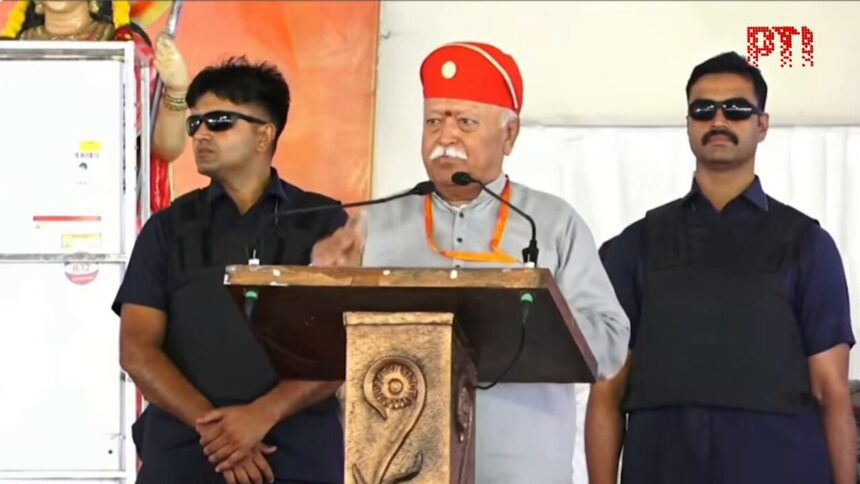

During recent anniversary celebrations in Udaipur, RSS Chief Mohan Bhagwat underscored the significance of the Haldighati battle, attributing its victory to the legacy of Maharana Pratap. His remarks emphasize the historical importance of this battle in resisting Mughal expansion and nurturing Indian pride.
Context of the Haldighati Battle
The Haldighati battle was fought on June 18, 1576, between forces led by Maharana Pratap of Mewar and the Mughal army commanded by Man Singh I of Amber. This battle is an iconic representation of Rajput valor and resistance against the Mughal Empire, which sought to consolidate its power in India. The battle emerged from a long-standing conflict regarding sovereignty and control over the region. Maharana Pratap, despite being outnumbered and outgunned, fiercely resisted Mughal encroachment, symbolizing the struggle for independence that resonates with many Indians even today.
Recent Commemorative Events
On this 450th anniversary of the Haldighati battle, the celebrations highlighted Maharana Pratap’s legacy and the broader narrative of Indian resistance against foreign rule. Bhagwat’s presence at the event underscores the RSS’s efforts to connect contemporary political ideologies with historical figures to inspire national pride. His assertion, “Today is the reason for yesterday,” aims to instill a sense of continuity between past and present, suggesting that the values demonstrated by historical leaders should guide modern India.
Maharana Pratap’s Enduring Legacy
Maharana Pratap is often celebrated as a symbol of courage and determination, embodying the spirit of resistance. His life serves as an emotional anchor for many Indians, particularly in the context of freedom struggles. By focusing on his contributions during the Haldighati battle, leaders like Bhagwat intend to foster a collective identity rooted in historical narratives. This invokes discussions around nationalism and cultural pride, aligning with the RSS’s broader agenda of promoting a Hindu-centric viewpoint in modern Indian polity. In a diverse society, such narratives are paramount in shaping public opinion and political discourse.
Why This Matters
The remarks from Bhagwat and the subsequent celebrations reflect broader political currents in India. They illustrate how historical interpretations can be leveraged to foster a sense of nationalism and unity among different sections of society. Moreover, such commemorations often serve as platforms to reinforce political ideologies and project a particular vision of India’s past, which can influence electoral politics. As political parties increasingly touch on cultural pride and historical legacy, these events will likely shape the political landscape leading up to future elections.
Frequently Asked Questions
What was the significance of the Haldighati battle?
The Haldighati battle symbolized the Rajput resistance against Mughal expansion and is celebrated for its display of valor, particularly by Maharana Pratap, making it a crucial moment in India’s historical narrative of independence.
Why did Mohan Bhagwat attend the anniversary celebrations?
Bhagwat attended to commemorate Maharana Pratap’s legacy and to align the RSS’s vision of nationalism with historical resistance against foreign dominance, emphasizing the cultural pride in India’s past.
How do historical events influence modern political narratives in India?
Historical events like the Haldighati battle are often used by political parties to draw parallels to contemporary issues, fostering a sense of communal identity, and galvanizing national pride that supports their political agendas.
What role does Maharana Pratap play in Indian cultural identity?
Maharana Pratap is viewed as a symbol of bravery and resistance, embodying the spirit of independence. His legacy is utilized frequently to inspire pride and commitment to national issues among the Indian populace.