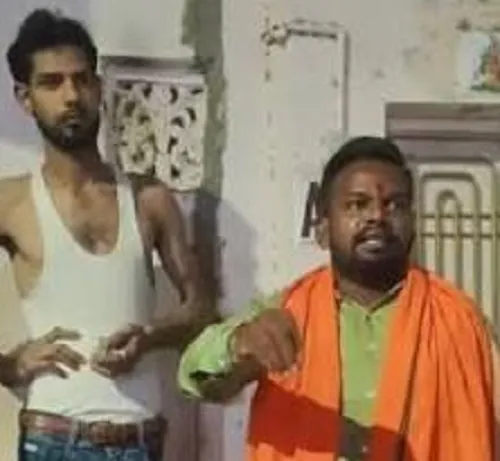

Recent events in Ahmedabad highlight troubling instances of religious discrimination faced by Muslim migrant workers in India. A video went viral showing a Bajrang Dal member intimidating a Muslim worker, underscoring rising tensions and possible repercussions of social and political climates influenced by the ruling BJP government.
Incident Overview: Intimidation in Ahmedabad
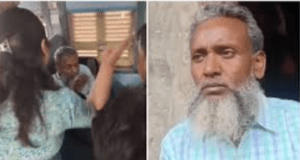
In a disturbing incident that surfaced on social media, a Bajrang Dal member, identified as Ganesh Vanzara, confronted a Muslim migrant worker from Uttar Pradesh in the Naroda area of Ahmedabad, Gujarat. The video captures Vanzara demanding that the worker vacate his rented home, instructing him rather to move to a locality where fellow Muslims reside. Viral posts accompanying the footage refer to the worker derogatorily as “Ali Khamenei’s nephew,” reinforcing sectarian tensions.
This occurrence, described by many online as an act of harassment, lays bare the alarming trend of housing discrimination in a predominantly Hindu neighborhood. Observers have noted that the influential behavior exhibited by Vanzara suggests confidence that such actions would lack repercussions, thereby normalizing intimidation based on religious identity.
Social Media Reaction and Concern
The incident garnered widespread condemnation and attention on social media platforms. Users questioned the current political landscape, with some blaming the BJP for an environment conducive to such discrimination. One user highlighted, “Why, under BJP governance, are citizens being threatened and driven from their homes because of their identity?” This sentiment reflects broader unease about the safety and rights of minority groups in India.
Another commentator connected the incident to systemic issues facing Muslim communities, stating, “This incident is a consequence of the BJP’s politics of division and hatred towards minorities.” This alarming assertion points towards a perceived pattern where actions deemed discriminatory against minorities have become increasingly accepted within the public sphere. The support received by Vanzara during the altercation suggest that local communities may feel empowered to uphold discriminatory practices without fear of reprisal.
The Broader Context: Migrant Workers and Discrimination
Migrant workers, particularly from marginalized communities like Muslims, often find themselves facing significant barriers when seeking stable housing. Discrimination often manifests through unwritten rules prohibiting renting to individuals of certain religious identities, which exacerbates issues related to homelessness and economic instability in urban settings. Rights advocates have consistently highlighted these informal barriers as critical obstacles many Muslim workers encounter while navigating employment opportunities in larger cities.
This incident signifies one of many instances where religious profiling has led to social exclusion, prompting fears for the safety of Muslim communities across India. As dialogues around equality and citizenship continue, it is vital to recognize how socio-political factors contribute to increasing marginalization and the normalization of hate against minorities.
Why It Matters
This incident serves as a case study reflecting the growing normalization of religious discrimination within Indian society, influenced by political narratives. The systemic issues surrounding housing and employment discrimination are not simply isolated incidents, but rather a reflection of broader challenges faced by minorities. For the international community and human rights advocates, such events emphasize the urgent need for attention to civil liberties and safeguard measures for vulnerable groups within India. Understanding these factors is essential for creating policies and interventions aimed at fostering inclusivity and protecting the rights of all citizens, regardless of their religious affiliation.
Frequently Asked Questions
What happened to the Muslim worker in Ahmedabad?
A Bajrang Dal member confronted a Muslim migrant worker, asking him to vacate his rented accommodation in a predominantly Hindu area of Ahmedabad, which was captured in a viral video.
What does this incident indicate about discrimination in India?
The incident suggests a growing normalization of religious discrimination in housing and public spaces, reflecting broader societal issues influenced by political narratives under the ruling BJP government.
How are Muslim migrant workers affected by discrimination?
Muslim migrant workers often face significant barriers in accessing stable housing and employment due to informal discrimination, which can lead to homelessness and economic instability.
What has been the response to this incident on social media?
Social media reactions have included widespread condemnation, highlighting concerns about the normalization of hate and discrimination in India, particularly against minority communities.