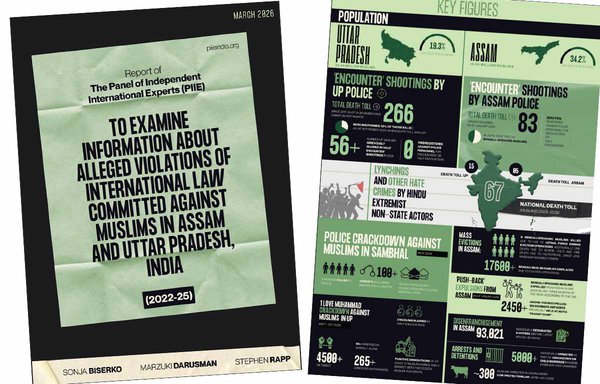

In a recent report launched by the Panel of Independent International Experts (PIIE), grave human rights violations against Muslim communities in India, particularly in Uttar Pradesh and Assam, have been documented. The findings call for international intervention, highlighting patterns of social exclusion, discrimination, and violence against Muslims in these regions.
Key Findings of the PIIE Report
The report, ‘Alleged Violations of International Law Against Muslims in Uttar Pradesh and Assam, India 2022-25, examines the impact of majoritarian governance on Muslim populations in two Indian states. The PIIE, comprising experts with extensive backgrounds in atrocities investigations, found systematic human rights abuses resulting from policies enacted by the governing Bharatiya Janata Party (BJP).
Between May 2025 and January 2026, it was reported that at least 2,450 Bengali-speaking Muslims were expelled from Assam, framing these actions as deportation or forcible transfer, thus classifying them as crimes against humanity. Further insights from June 2025 revealed that over 17,600 families have been uprooted since the BJP took power in Assam in 2016, pointing to a pattern of persecution resembling apartheid.
In Uttar Pradesh, a particularly alarming statistic revealed that in 2024 alone, at least 56 Muslims were deliberately shot in situations indicating they posed no threat. Such acts were classified as torture, representing a severe breach of international law.
Calls for Action
In light of these findings, the report recommends decisive action from the international community. Specifically, the UN Human Rights Council is urged to establish an independent fact-finding body to investigate allegations of violations against Muslims in India. This would include appointing a Special Rapporteur with a territorial mandate on India to ensure accountability for these abuses.
Furthermore, the PIIE emphasizes that foreign governments should utilize diplomatic and economic leverage to persuade India to protect its Muslim minorities. Suggestions of imposing targeted sanctions against identified perpetrators have also been made. The Indian government itself is called upon to fulfill its obligations under the International Covenant on Civil and Political Rights (ICCPR) and the Genocide Convention by conducting independent investigations, prosecutions, and providing reparations.
Legal and Academic Involvement
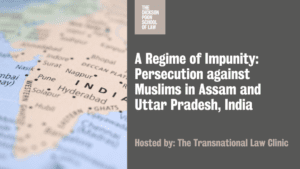
The PIIE report benefited from the rigorous analysis conducted by students from the Transnational Legal Clinic at King’s College London. Under the supervision of Leverhulme Visiting Professor Surabhi Chopra, these students engaged with complex international law issues, contributing to the report’s depth and breadth. Their involvement underscores the importance of legal education in societal issues, equipping the next generation of lawyers with the skills to tackle human rights challenges.
Each of the clinic’s three projects delved into different aspects of the human rights landscape in India, illuminating the experiences of Muslim individuals and communities. This academic engagement not only enriched the report but also provided the students with hands-on experience in legal advocacy, aligning educational pursuits with pressing global issues.
Why It Matters
The findings outlined in the PIIE report are crucial for understanding the broader implications of governance and human rights in India. The systematic targeting of a significant community raises concerns about the deterioration of democratic norms and human rights standards in the country. For the global community, particularly stakeholders in the field of human rights, this represents a critical moment in advocating for the protection of vulnerable groups against state-sanctioned violence and discrimination. The recommendations for international action not only aim to hold perpetrators accountable but also serve as a mandate for global solidarity with marginalized communities.
Frequently Asked Questions
What are the main allegations against the BJP government regarding Muslims in India?
The BJP government is accused of systematic discrimination and violence against Muslim communities, including forced evictions and killings, classifying these as crimes against humanity.
What is the role of the UN in addressing these violations?
The report calls for the UN Human Rights Council to establish an independent fact-finding body to investigate these violations and appoint a Special Rapporteur focused on India.
What actions are being recommended for foreign governments?
Foreign governments are urged to use diplomatic channels to pressure India into protecting its Muslim minorities and may consider imposing targeted sanctions against those responsible for human rights abuses.
How can students contribute to human rights advocacy based on this report?
Students can engage in legal analysis and advocacy through programs like the Transnational Legal Clinic, which provides hands-on experience in documenting human rights violations and contributing to legal frameworks addressing these issues.