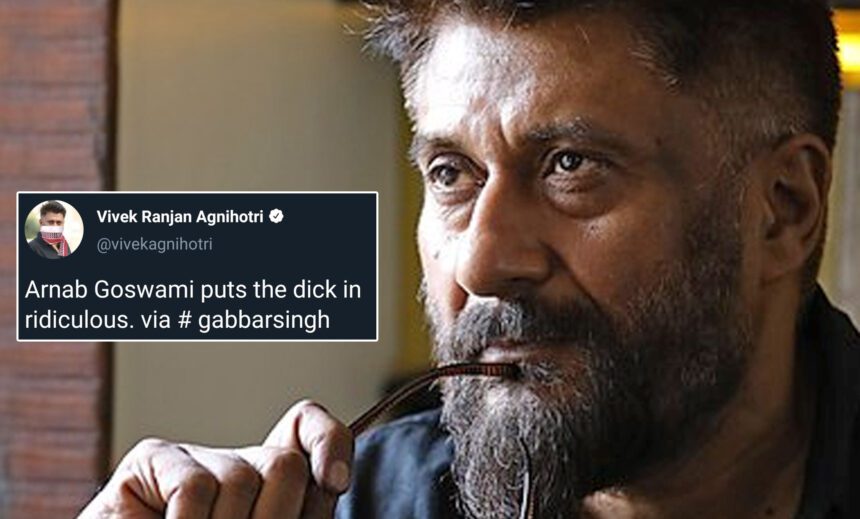

Vivek Agnihotri’s recent appointment as a cultural representative at the Indian Council for Cultural Relations (ICCR) has sparked significant controversy. Critics argue that his past works and problematic statements undermine the cultural integrity that the ICCR is meant to promote.
Background on Vivek Agnihotri
Vivek Agnihotri is an Indian filmmaker known for a spectrum of movies including The Tashkent Files and The Kashmir Files. While he has garnered attention for his polarizing views and words, a large chunk of his filmography is often regarded as subpar, with only a few efforts receiving mild praise. Critics contend that Agnihotri’s films rarely resonate on a meaningful cultural or artistic level, with many labeling his works as “atrocious” apart from a few exceptions he hasn’t personally evaluated.
Controversies Surrounding Agnihotri
Agnihotri’s tenure in the spotlight has also been marred by various controversies, especially his political affiliations and statements that have resonated poorly with sections of the public. His coinage of the term “urban naxal” reflects a political bias that many have criticized as promoting divisiveness. Additionally, his engagement on social media has drawn scrutiny, particularly when instances of him deleting past tweets—potentially as a strategic move—emerged, feeding into the narrative that he is attempting to sanitize his public image to fit a nationalist agenda.
In light of his new role, Agnihotri asserts that he feels honored to represent Indian cinema at the ICCR. However, critics question the appropriateness of his appointment given his questionable track record and the ideological implications tied to his work. The ICCR is historically an institution founded by Maulana Abul Kalam Azad, known for promoting cultural nuances and revolutionary ideals, making Agnihotri’s presence there seem contradictory to its foundational roots.
Public Reaction and Implications
Reactions from the public, particularly on platforms like Twitter, reveal a deep divide between supporters and detractors of Agnihotri. While some laud his appointment as a deserved recognition of his contributions to Indian cinema, many others are appalled, believing his promotion to such a position reflects a deterioration of standards within cultural institutions. Critics have emphasized that his films and viewpoints may negatively affect India’s rich cultural narratives, questioning whether he can genuinely represent Indian heritage as a cultural emissary.
Why This Matters
The significance of this appointment extends beyond just one filmmaker’s career; it reflects larger systemic issues within Indian cultural politics. The choice of representatives in institutions like the ICCR has ramifications for how culture is defined, promoted, and perceived both domestically and internationally. As the discourse surrounding Agnihotri evolves, it serves as a litmus test for the current government’s stance on cultural representation, nationalism, and artistic expression, with broader implications for India’s cultural trajectory.
Frequently Asked Questions
What are the primary criticisms against Vivek Agnihotri?
Critics focus on his filmography, labeling most of his works as substandard, and his political statements that they find divisive and problematic.
What is the role of the ICCR?
The ICCR is an organization tasked with promoting Indian culture and heritage globally, which includes representation from various cultural sectors, including cinema.
How has social media reacted to Agnihotri’s appointment?
Social media reactions are mixed, with significant backlash against his appointment, emphasizing concerns about cultural integrity and standards.
Why is Agnihotri’s political stance relevant to his role at the ICCR?
His political statements and affiliation with nationalist ideologies raise concerns about whether he can fairly and effectively promote a diverse cultural agenda, essential for an institution like the ICCR.