
The rise of digital platforms and political narratives in India has significantly impacted social cohesion, particularly affecting Muslim communities. As identity becomes increasingly tied to online interactions, the challenges of discrimination, social exclusion, and economic marginalization of Indian Muslims have intensified under the current political climate led by the Sangh Parivar and the Bharatiya Janata Party (BJP).
Digital Dynamics and Disconnection
The advent of social media has transformed interactions among communities, yet it often fosters division rather than understanding. Recent surveys reveal that younger generations find their perceptions of other cultures primarily through brief videos and comment sections, which frequently promote stereotypes. This reality highlights a broader challenge: while people are digitally connected, emotional and social disconnection is prevalent. The dominance of emotionally charged narratives over nuanced discussion fosters a public discourse driven by reaction, rather than reflection.
This trend is alarming, particularly in India, where diversity has historically thrived through interpersonal encounters across various communities. The digital age has undermined these interactions, replacing them with confrontational television debates and social media exchanges that prioritize quick judgments over thoughtful engagement.
Political Climate and Community Identity
The evolving political landscape under the Sangh and BJP governments has worsened the plight of Muslim communities, as individuals increasingly express their identities through political lenses rather than cultural ones. The atmosphere of fear, outrage, and defensiveness often narrows public participation. This creates a cycle where communities retreat into echo chambers, leading to an erosion of civic trust.
Moreover, the pervasive narrative of grievance fosters a sense of isolation among Indian Muslims, pushing them away from broader societal engagement. Historic contributions of Indian Muslims in various fields—scholarship, arts, and public morality—are often overlooked in favor of a narrative that reduces their identity to being defensive and reactionary.
Emerging Constructs of Coexistence
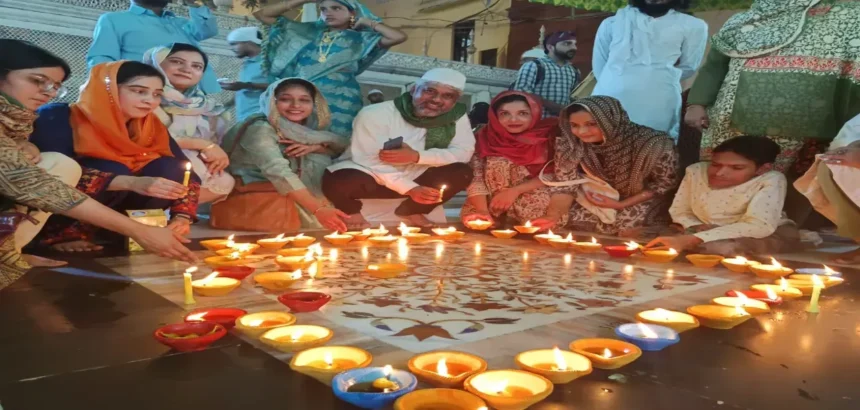
Yet, amid this landscape of division, there are signs of resilience and transformation within the Muslim community. The growing number of Muslim women in higher education, an increase in young entrepreneurs, and successful participation in civil services exemplify an emergent social confidence. Initiatives that bridge interfaith understanding and community collaboration underscore a shift toward engagement rather than isolation.
Additionally, a new generation of Muslim content creators in digital spaces is emerging, focusing on shared cultural narratives and humor rather than ideological assertions. This trend signals an avenue for rebuilding community cohesion and fostering an inclusive narrative in a pluralistic society like India.
Why It Matters
The dynamics of digital communication have profound implications not only for social interactions but also for the broader Indian sociopolitical landscape. As algorithms increasingly drive public discourse, the challenge lies in ensuring that these platforms promote diversity of thought and cross-community engagement rather than deepening divides. The ability of communities—particularly marginalized ones like Indian Muslims—to navigate this complex landscape will shape the future of democratic engagement and social fabric in India.
Frequently Asked Questions
What challenges do Indian Muslims face in the current political climate?
Indian Muslims face discrimination, social exclusion, and economic marginalization, often exacerbated by the narratives propagated by the governing Sangh and BJP. These factors hinder their community engagement and broader societal participation.
How has digital media influenced Muslim identity in India?
Digital media often fosters stereotypes and emotionally charged narratives, leading to a disconnection in meaningful interactions. Many young Muslims derive their understanding of other communities through social media, which may reinforce isolation rather than promote coexistence.
Are there positive trends among Indian Muslims despite the challenges?
Yes, there are emerging positive trends, such as increased participation of Muslim women in education, successful young entrepreneurs, and initiatives that promote interfaith dialogue and collaboration. These efforts highlight resilience and an evolving identity focused on engagement.
What kind of responses are needed to navigate contemporary challenges?
A multi-faceted response involving education, civic participation, and community building is crucial. Ensuring that public discourse fosters understanding and cooperation—rather than outrage—will be pivotal for rebuilding trust among diverse communities in India.