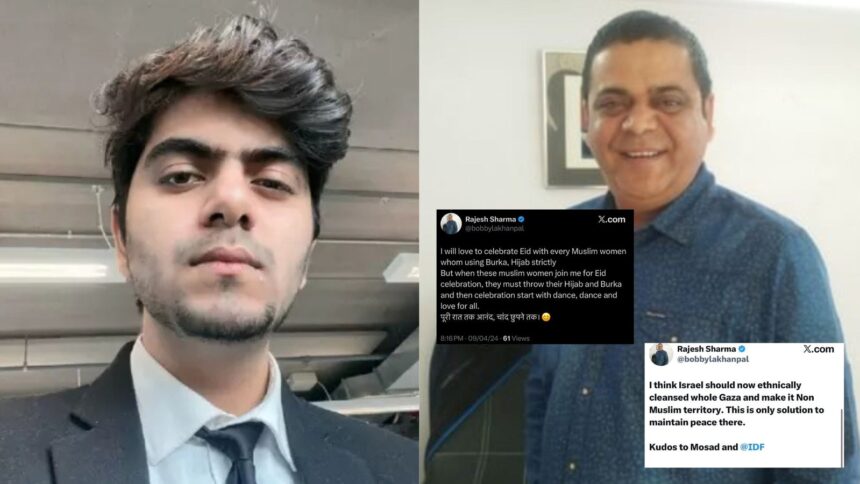

Recent social media revelations surrounding Rajesh Sharma have ignited a fierce debate over hate speech and communal rhetoric in India. The controversial remarks made by Sharma resurfaced after the tragic death of his son, Aditya Sharma, a seafarer killed in a U.S. military strike off the coast of Oman, prompting discussions about discrimination against Indian Muslims and the broader implications of communal sentiment in Indian society.
Tragic Incident Sparks Outrage
Aditya Sharma, a 23-year-old deck cadet from Himachal Pradesh, lost his life along with two other Indian sailors when the Palau-flagged oil tanker MT Settebello was struck by U.S. military missiles in the Gulf of Oman. This incident has raised significant concerns about the safety of Indian seafarers operating in volatile regions, putting a spotlight on India’s maritime operations. Following the attack, Rajesh Sharma took to social media, desperately seeking information about his son, only for his past inflammatory statements to come back into view, complicating the narrative around his appeal for sympathy.
Hate Speech Resurfaces Amid Grief
As social media users expressed their condolences, they also circulated screenshots of Rajesh Sharma’s earlier posts that contain Islamophobic sentiments. Notably, one post referred to the Gaza conflict and called for “ethnic cleansing,” while others made derogatory remarks about Muslims, even citing intentions for future religious conversions. His comments have been characterized by critics as incitement to violence and indicative of an extremist mindset. Analysts suggest that this reflects a troubling trend within certain segments of Indian society where hate speech permeates communal discourse, often resulting in victimization of minority communities.
Family Demands Accountability and Justice
In the wake of Aditya’s death, Rajesh Sharma and his family are demanding accountability from the United States for the missile strike that killed innocent crew members aboard a commercial vessel. Rajesh condemned the attack as a war crime, arguing that there were alternative methods to inspect ships without resorting to lethal force. His concerns echo a larger call for the protection of civilians and commercial interests in conflict areas, particularly as tensions rise in regions like the Gulf, where Indian nationals often work. The Indian government has lodged formal protests against the U.S., emphasizing the need for greater safety for Indian seafarers worldwide.
Why It Matters
The discourse surrounding Rajesh Sharma’s social media activities highlights the ongoing challenges of communal harmony in India. Incidents like these illustrate how hate speech can both directly and indirectly contribute to broader societal tensions, amplifying discrimination against marginalized communities, including Indian Muslims. The government’s response not only impacts the victims’ families but also sheds light on how state policies and public sentiment evolve in times of conflict. As global scrutiny intensifies regarding human rights issues, especially with the rise of social media as a megaphone for diverse opinions, the fate of minority communities remains a crucial area for international observers and analysts alike.
Frequently Asked Questions
What led to the death of Aditya Sharma?
Aditya Sharma was killed in a U.S. military missile strike on the oil tanker MT Settebello in the Gulf of Oman, which resulted in the deaths of three Indian sailors.
How did Rajesh Sharma’s past comments affect public perception?
Rajesh Sharma’s previous Islamophobic remarks resurfaced following his appeal for information about his son, leading to sharp criticism and discussions about hate speech and communal attitudes in India.
What actions has the Indian government taken regarding the incident?
The Indian government has lodged formal protests with the U.S. regarding the missile strike, emphasizing the need for the safety of Indian nationals working in potentially dangerous areas.
What is the significance of minority issues in India?
The treatment of minority communities in India is a critical issue that reflects broader societal dynamics and governmental policies, with implications for communal harmony and human rights.