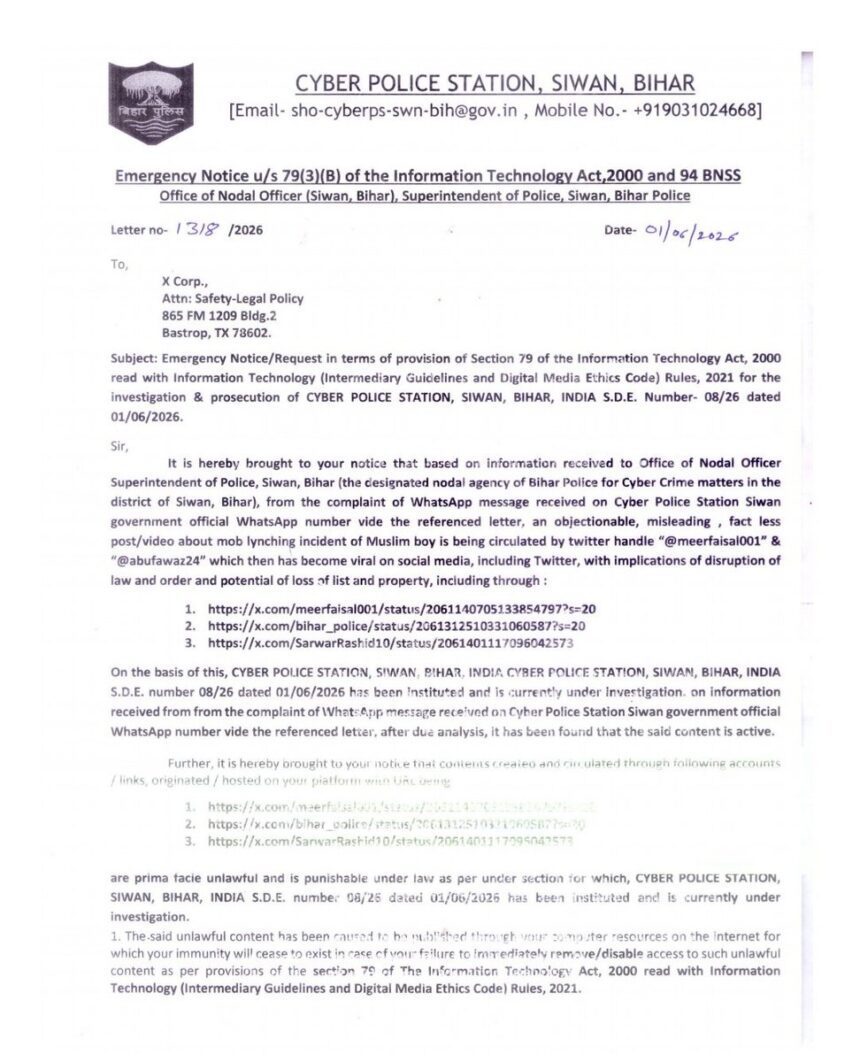

Meer Faisal’s recent claims highlight a troubling trend in India, where speaking the truth is increasingly faced with intimidation and legal challenges. Faisal’s report on the killing of Shahzad Ali has been labeled “misleading” by Siwan Police, yet the key accused remains at large, raising concerns about justice and press freedom.
Context: The Killing of Shahzad Ali
The unfortunate death of Shahzad Ali has sparked outrage and demands for justice from his family and community. Reports indicate that the circumstances surrounding his killing point to significant issues related to law enforcement accountability and the need for thorough investigations. Despite a single arrest, key individuals involved, such as Avadh Kishore Chaudhary, remain absent, leading to widespread criticism of the investigative process.
Intimidation of Journalists
In a society that prides itself on democratic values, the reaction of Siwan Police towards Meer Faisal’s journalistic work raises alarming questions. By issuing a legal notice claiming that his reporting was misleading, authorities risk creating an environment where journalists may hesitate to report on matters of public interest. This could potentially stifle freedom of expression and prevent critical insights from reaching the public.
The Role of Social Media in Journalism
Faisal’s use of social media platforms illustrates the evolving landscape of journalism in India. His report, shared widely online, resonates with many citizens who are concerned about their safety and the integrity of the justice system. In a digital age, social media has become a vital tool for journalists, allowing them to bypass traditional barriers and reach a broader audience. However, this also exposes them to heightened scrutiny and backlash from authorities, further complicating their role in society.
Why This Matters
The events surrounding Shahzad Ali’s killing and the subsequent legal pressures faced by journalist Meer Faisal reflect an alarming trend in India: the attack on dissent and the erosion of press freedom. This situation emphasizes the need for robust discussions about civil liberties and the role of the media in holding power accountable. The implications extend beyond the realm of journalism, affecting the broader discourse on justice, governance, and human rights in India.
Frequently Asked Questions
What happened to Shahzad Ali?
Shahzad Ali was killed under circumstances that have prompted significant public outcry and demands for justice from his family and community, highlighting concerns about the effectiveness of the police investigations.
Why did the Siwan Police issue a legal notice to Meer Faisal?
The Siwan Police claimed that Faisal’s report about the killing was “misleading,” raising issues about accountability in law enforcement and press freedom.
What is the role of social media in modern journalism?
Social media serves as a crucial platform for journalists to disseminate information swiftly and reach a larger audience, especially in situations where traditional media may face intimidation or censorship.
Why is press freedom important in a democracy?
Press freedom is essential for fostering transparency, accountability, and informed public discourse, which are all fundamental to the functioning of a healthy democracy. Without it, citizens may not have access to critical information necessary for making informed decisions.