
Recent discussions among a group of “Muslim intellectuals” seeking dialogue with India’s Rashtriya Swayamsevak Sangh (RSS) highlight a growing concern about the state of democracy and secularism in India under the current BJP-led government. As communal tensions continue to rise, the role of these intellectuals in attempting to bridge gaps with a nationalist organization raises significant questions about representation, accountability, and the very nature of Indian identity.
Communal Politics and Social Exclusion
In a country where approximately 80% of the population identifies as Hindu, the marginalization of minorities, particularly Muslims, is increasingly evident. Reports indicate that during the ongoing tenure of the BJP government, issues such as violence against women, rampant price rises, and unemployment are exacerbated by a growing social exclusion of minorities. These social challenges create an environment where marginalized groups find themselves increasingly vulnerable.
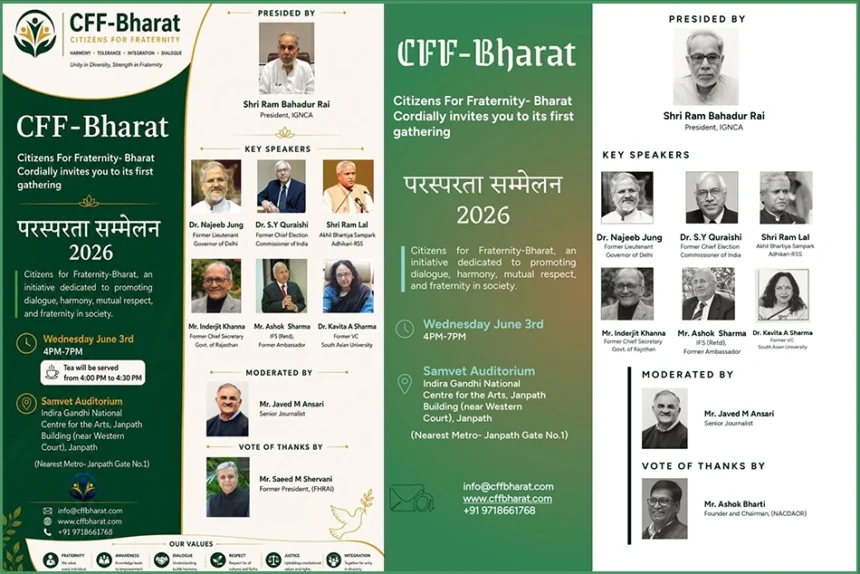
According to Mohammed Wajihuddin, a journalist specializing in Muslim affairs, a recent initiative called Citizens for Fraternity (CFF) aimed to foster dialogue and address suspicions between communities. However, this effort raises concerns about legitimizing an entity like the RSS, which has historically been accused of promoting Hindutva nationalism. The presence of such prominent figures as former bureaucrat Najeeb Jung and former Chief Election Commissioner S.Y. Quraishi at meetings with RSS leaders underscores the deepening divide within the Muslim community regarding engagement with nationalist politics.
The Implications of a “Non-Political” Dialogue
Billed as a non-political platform, the discussions spearheaded by the CFF risk normalizing the RSS’s influence in Indian society. Objectives that claim to promote peace and fraternity must be critically examined if they entail dialogue with a group known for its exclusionary practices. These Muslim intellectuals, while seeking to bridge communal divides, may inadvertently legitimizing an organization that has historically rejected the inclusive principles of the Indian Constitution, as shown by the RSS’s previous statements advocating for a Hindutva-driven governance.
The irony is that, despite concerns raised about inter-community relations, these intellectuals chose to engage with RSS leaders instead of utilizing existing democratic mechanisms to address the insecurity felt by the Muslim community. Meetings with political leaders or judicial inquiries could provide a more sustainable framework for dialogue rather than appeasing an organization known for demanding a singular cultural narrative.
The Historical Context of RSS and its Relationship with Minorities
The historical context of the RSS paints a disturbing picture. Founded in 1925, the organization has consistently demonstrated an unwillingness to embrace the multicultural fabric of Indian society. From its foundational texts that equate true Indian identity with Hindu identity to its rejection of constitutional tenets enshrined by figures like Dr. B.R. Ambedkar, the RSS embodies a worldview that fundamentally conflicts with the secular and democratic ideals of India. The manifestation of this ideology, as noted during the RSS’s interactions with Muslim representatives, suggests an effort to create a veneer of inclusiveness while perpetuating an overarching Hindutva agenda.
Moreover, the comments made by RSS chief Mohan Bhagwat during these meetings have been reported to be inclusive; however, the reality remains that the organization has not reigned in its narratives that vilify Muslims. Historical inaccuracies, such as claims of a looming demographic threat posed by Muslims, have been debated and debunked, yet they persist in public discourse. By not challenging these narratives during dialogues, Muslim leaders risk further complicating their community’s relationship with the broader societal fabric.
Why It Matters
The ongoing shifts in how minority communities engage with dominant nationalistic politics have profound implications not just for Indian society, but also for the functioning of democratic norms globally. As the dialogue between these so-called Muslim intellectuals and the RSS plays out, it raises questions about representation, identity, and the future of secular governance. Allowing an anti-democratic organization to shape minority outreach could lead to the normalization of exclusionary politics, shifting the balance of power in ways that undermine the rights of all marginalized groups.
Frequently Asked Questions
What is the role of the RSS in Indian politics?
The Rashtriya Swayamsevak Sangh (RSS) is a Hindu nationalist organization that has played a pivotal role in shaping the ideological framework of the BJP. It aims to promote a Hindu-centric identity for India, often at the cost of secular and democratic norms.
Why are Muslims feeling insecure in India?
Muslims in India are increasingly feeling insecure due to rising incidents of violence, lynching, and systemic marginalization in social, political, and economic spheres, exacerbated by narratives that vilify their community.
What are the implications of dialogues between Muslim leaders and the RSS?
Engagement between Muslim leaders and the RSS can be viewed as legitimizing an organization that contradicts democratic principles. Such dialogues risk creating a façade of inclusion while ignoring deeper systemic issues affecting minority communities.
How can marginalized communities address their concerns effectively?
Marginalized communities should engage with democratic institutions, advocate for their rights through legal channels, and seek alliances with civil society organizations that promote equality, rather than relying solely on dialogue with nationalist groups that may not have their best interests at heart.