
In a surprising turn of events, American President Donald Trump has announced a two-week ceasefire following over a month of conflict with Iran. Both Iran and Israel accepted this pause, while Pakistan stepped in to mediate the tensions between the involved parties, planning to host a meeting in Islamabad this Friday. The situation has sparked significant discussion on social media, with many users expressing skepticism and humor regarding the unfolding diplomatic dynamics.
Ceasefire Announcement and Diplomatic Efforts
The ceasefire announcement comes at a crucial time as tensions in the region peaked over an extended military conflict. Trump framed the two-week pause as an opportunity for peace, emphasizing the shared desire among all parties to halt hostilities. Pakistan’s Prime Minister Shehbaz Sharif highlighted the importance of diplomatic solutions, urging for goodwill gestures like temporarily opening the Strait of Hormuz, a critical maritime route. This effort aligns with Pakistan’s long-standing goal of positioning itself as a mediator in regional conflicts.
Social Media Reactions and Criticism
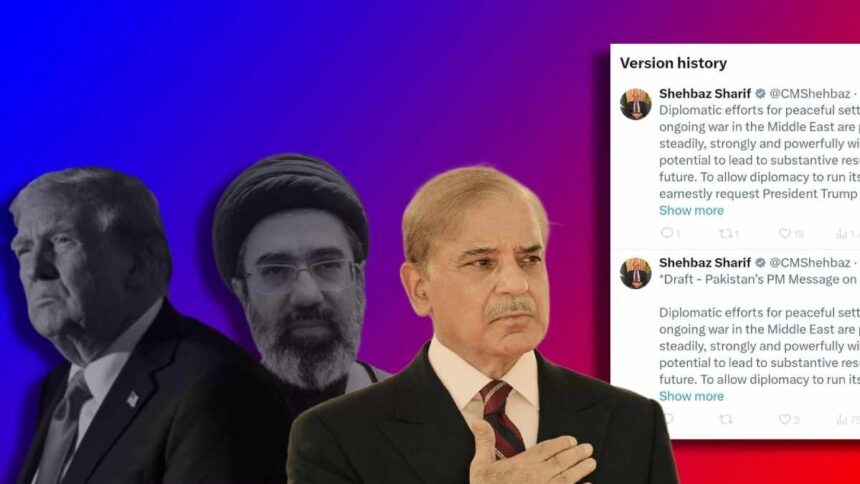
Sharif’s tweet announcing these diplomatic efforts came under scrutiny after it was revealed that the content appeared to be a draft, potentially indicating a lack of independent agency. Indian fact-checker Mohammed Zubair pointed out that the initial version of the tweet included a note suggesting it was a draft message. This led to a flurry of social media activity, where users mocked the situation, suggesting external influence over Pakistan’s communications. Many comments reflected skepticism about the authenticity of Sharif’s diplomatic voice, with some even questioning the proficiency in English as a leadership metric.
Iran’s Conditions for Peace
As part of the ceasefire negotiations, Iran has put forth ten conditions that the U.S. has deemed “workable.” These stipulations include non-aggression commitments, acceptance of Iran’s control over the Strait of Hormuz, lifting sanctions, and ensuring the cessation of all military operations against various factions in the region. The acceptance of these terms by the U.S. is a significant step, indicating a willingness to shift from an aggressive stance to one of negotiation and dialogue—a move that could reshape regional geopolitics.
Why This Matters
For Indian readers, the implications of these developments are profound. The Middle East’s stability directly influences India’s energy security and economic interests. Additionally, Pakistan’s role as a mediator and its relationships with both Iran and the United States could recalibrate regional alliances. India must navigate these complex dynamics, especially given its own interests in preventing a rise in proxy conflicts and fostering constructive relationships with its neighbors. The outcome of this ceasefire and the proposed negotiations could set the tone for future engagements in South Asia and beyond.
Frequently Asked Questions
What caused the recent conflict between the U.S. and Iran?
The conflict escalated due to a combination of military provocations and longstanding geopolitical tensions, involving issues like nuclear enrichment and regional influence.
What is the significance of Pakistan mediating this ceasefire?
Pakistan’s role as a mediator showcases its ambitions to play a larger diplomatic role in the region, reflecting its historical relationships with both Iran and the U.S.
What are the potential consequences of the ceasefire?
The ceasefire could lead to a more stable regional environment, provide an opportunity for reconstruction efforts in Iran, and reshape alliances in the Middle East.
How does this affect India’s position in the region?
India’s interests in energy security, trade routes, and regional stability may be impacted by shifts in alliances and the outcomes of U.S.-Iran negotiations, necessitating cautious diplomatic engagement.