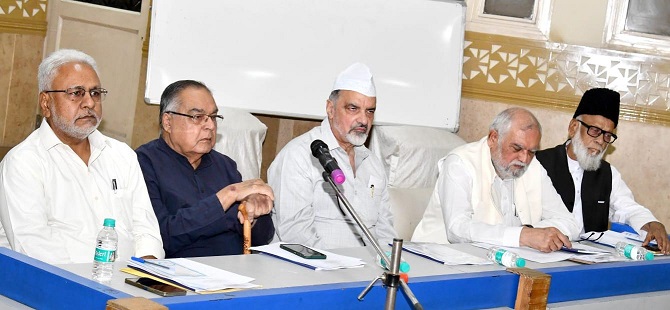

The All India Muslim Majlis-e-Mushawarat has raised concerns about rising discrimination and hostility towards Muslims in BJP-ruled states. During a recent meeting in New Delhi, the organization emphasized the implications of current political dynamics on communal harmony and the social fabric of the country.
Concerns Over Political Polarization
During their General Body meeting, attended by numerous representatives from across the country, members of the All India Muslim Majlis-e-Mushawarat (AIMMM) voiced their apprehensions about the escalating hate politics, particularly in states governed by the Bharatiya Janata Party (BJP). The chairperson, former MP Mohammad Adeeb, along with President Dr. Zafarul Islam Khan and other distinguished members, noted that the political atmosphere in India has become increasingly polarized, which poses a significant threat to the nation’s unity.
The resolutions passed during this meeting outlined a collective worry that the ongoing social and political divisions could potentially escalate into greater conflict if left unaddressed. Participants called for a collective response rooted in patience and wisdom, urging the Muslim community to resist provocations that might lead to unrest.
Electoral Rights and Representation
One of the most urgent resolutions addressed the Special Intensive Revision (SIR) of electoral rolls, which the organization fears could negatively impact the voting rights of Muslims. AIMMM raised alarms about alleged manipulations in electoral processes, particularly in West Bengal, where significant numbers of Muslim voters reportedly found their names removed from the electoral list.
The organization encouraged affected individuals to seek legal remedies and ensure their electoral representation. The call for engagement with electoral authorities underlined a broader struggle for political representation, especially in the face of rising communal tensions that could further marginalize an already vulnerable community.
Cultural and Religious Identity at Risk
The demolition of mosques and shrines, seen as an infringement on the religious and cultural identity of Muslims, was another area of concern highlighted in the meeting. AIMMM described these actions as detrimental to the very essence of religious freedom, urging legal avenues to be pursued to halt such demolitions. This ongoing issue has been a flashpoint in communal relations, raising questions about the treatment of minority identities in the current political landscape.
Moreover, the encounter policy of the Uttar Pradesh government came under fire, with allegations that it disproportionately impacts the Muslim community. The resolutions emphasized accountability and adherence to constitutional protections, advocating for transparent governance frameworks that safeguard minority rights.
Why It Matters
The systemic issues raised by AIMMM during their meeting underscore a critical juncture in Indian society. The pervasive nature of discrimination against Muslims, coupled with the politicization of religious identities, threatens to fracture the country’s social unity. For the global audience, this represents a significant human rights concern. As communities grapple with these tensions, understanding the socio-political landscape will be vital for international stakeholders interested in India’s democratic health and communal relations.
Frequently Asked Questions
What is the All India Muslim Majlis-e-Mushawarat?
The All India Muslim Majlis-e-Mushawarat is a prominent Muslim organization in India that addresses issues of concern for the Muslim community and advocates for their rights in various socio-political contexts.
What concerns does the AIMMM need to address?
The AIMMM is currently focused on rising hate politics, the impact of electoral roll revisions on voting rights, and the demolition of mosques, all of which affect the Muslim community in India significantly.
What is the Special Intensive Revision of electoral rolls?
The Special Intensive Revision (SIR) of electoral rolls is a process aimed at updating and correcting electoral lists. AIMMM has raised concerns that this process could undermine the voting rights of Muslims if not managed fairly.
How does the AIMMM suggest Muslims respond to these challenges?
The AIMMM advocates for restraint, patience, and wisdom, urging the Muslim community to foster dialogue with non-Muslim communities to maintain social cohesion and unity amidst rising tensions.