
In a troubling incident highlighting the dangers faced by manual scavengers in India, two workers recently suffocated to death while cleaning sewers in Faridabad. A tweet from local journalist Mihika Shah underscores the lack of safety equipment and protective measures for these workers, raising questions about accountability and systemic negligence in the sector.
Context of Manual Scavenging in India
Manual scavenging, the practice of cleaning human waste from septic tanks and sewers without protective gear, is a deeply entrenched issue in India. Despite being outlawed since 1993, this inhumane practice continues to persist, often underreported and ignored. Workers in this field typically come from marginalized communities and are compelled to undertake this dangerous work due to economic necessity.
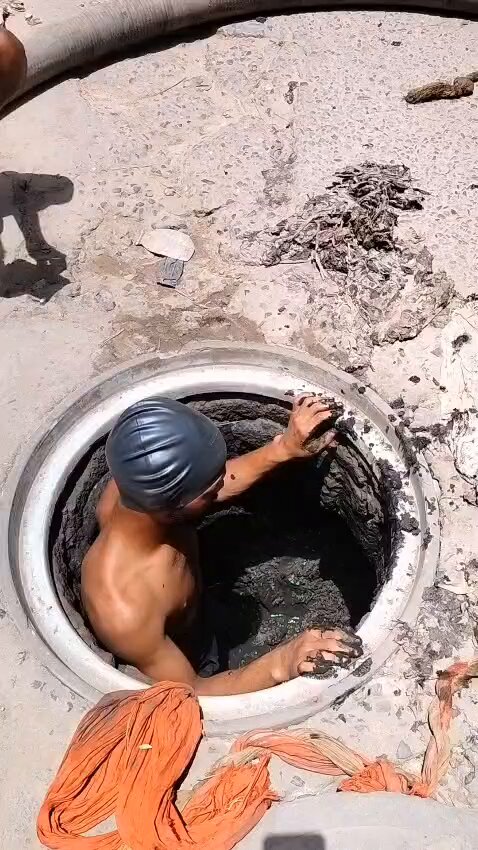
The recent tragedy in Faridabad is not an isolated incident but a manifestation of a broader systemic problem facing manual scavengers across the country. In this case, the two workers suffocated while performing their duties, highlighting the risk involved and the inadequate measures taken to protect these laborers.
The Incident and Aftermath
The tweet by Mihika Shah details how workers in Gurugram’s Ashok Vihar Phase 3 were sent into sewers without any safety gear, emphasizing a blatant disregard for human life. Following the deaths in Faridabad, the question of accountability looms large. The Municipal Corporation of Gurugram (@MunCorpGurugram), responsible for the maintenance and sanitary services, has yet to provide a formal response to the incident.
This serves as a stark reminder of the everyday realities faced by manual scavengers who are often forced into hazardous work environments without any means of protection or recourse for the dangers they encounter. The lack of oversight exacerbates the situation, contributing to a culture of impunity among municipal bodies.
Poor Enforcement of Existing Laws
Although the Prohibition of Employment as Manual Scavengers and their Rehabilitation Act of 2013 prohibits manual scavenging, enforcement remains weak. Many promises by the government to rehabilitate manual scavengers and provide them with alternative livelihoods have yet to materialize, leaving these workers vulnerable to the same old threats of life and death.
This incident may trigger calls for more stringent enforcement of existing laws and improved safety measures for workers in hazardous environments. However, the cultural and socio-economic factors that perpetuate manual scavenging practices complicate the implementation of effective reforms.
Why This Matters
The significance of this incident extends beyond the immediate loss of life. It serves as a critical juncture for understanding the socio-political dynamics surrounding labor rights in India. As the nation strives towards economic development and modernization, these realities call into question the ethics of progress that overlooks the most vulnerable members of society.
For Indian readers, this incident is a wake-up call to engage in conversations around labor rights, municipal accountability, and the urgent need for reforms in how India treats its sanitation workers. Activism aimed at ending manual scavenging could find renewed energy in stories such as this, pushing the government and society at large to confront uncomfortable truths.
Frequently Asked Questions
What is manual scavenging?
Manual scavenging is the practice of cleaning human waste from toilets, sewers, and septic tanks without any protective gear. It is a dehumanizing job primarily undertaken by marginalized communities in India.
Is manual scavenging legal in India?
No, manual scavenging has been legally prohibited since the Prohibition of Employment as Manual Scavengers and their Rehabilitation Act of 2013. However, the enforcement of this law is inconsistent.
What are the main risks faced by manual scavengers?
Manual scavengers face numerous risks, including exposure to toxic gases, injuries from tools, and health hazards associated with unsanitary conditions. They often work without any safety equipment, making their tasks extremely dangerous.
What can be done to improve conditions for these workers?
Improving conditions for manual scavengers requires strict enforcement of existing laws, providing alternative employment opportunities, and raising public awareness about human rights abuses in this sector. Activism and governmental initiatives focusing on rehabilitation and safety can help address this issue.