
The recent assault on a Muslim man by Hindutva activist Daksh Chaudhary, known as Akku Pandit, has sparked significant outrage and highlighted ongoing issues related to communal tensions and vigilantism in India. This incident serves as a troubling example of the social exclusion and discrimination faced by Indian Muslims, particularly under the watch of political entities such as the BJP and affiliated groups.
Alarming Incident of Vigilantism
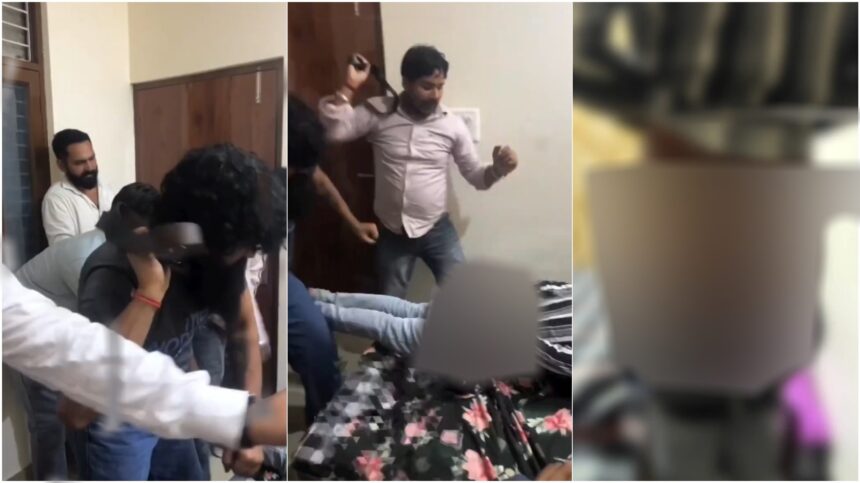
On June 8, a video surfaced showing Daksh Chaudhary and his associates brutally attacking a Muslim man in Ghaziabad. The footage, shared by the Hindu Raksha Dal, shows the victim being beaten with belts, his face blackened, while being coerced into making a public apology. The underlying accusation was that he had made derogatory remarks about Hindu women and issued threats towards Hindus.
The graphic video illustrates the violent nature of this assault, with the victim visibly wounded and bruised. Chaudhary justified the attack, labelling it as a “treatment for a jihadi,” arguing that the victim had used inflammatory language that warranted such extreme measures. The incident raises pertinent questions about the legitimacy of such vigilante justice and its implications for community relations.
Social Media Influence and Public Reactions
Chaudhary has cultivated a social media following of nearly 3.2 million, utilizing platforms to portray himself as a protector of Hindu values. His videos often feature confrontations with Muslim men, aimed at challenging what he terms “love jihad.” The virality of the latest video has resonated widely, eliciting a range of responses.
While many condemn the assault as unlawful vigilantism, calling out Chaudhary for stepping outside the bounds of the law, there remains a faction that views such actions as necessary in sending a message against perceived anti-Hindu sentiments. This split in public opinion underscores the divisive climate surrounding religious identity in India, particularly in a country marked by complex communal histories.
Institutional Response and Implications
Despite the severity of the incident, the Ghaziabad police claimed to be unaware of the assault video and its repercussions. This lackluster response from law enforcement raises concerns about state complicity or inability to address rising vigilantism. The repeated occurrence of such incidents highlights a worrying trend of social exclusion and economic boycotts targeting Indian Muslims by radical groups.
The government’s apparent inaction towards these incidents can perpetuate a cycle of marginalization, stoking fears among Muslim communities and questioning their safety and security. The continued rise in such episodes fosters an environment of distrust and hostility, complicating efforts towards integration and social cohesion across diverse communities in India.
Why It Matters
The incident involving Daksh Chaudhary is significant as it exemplifies the increasing polarization within Indian society, particularly affecting Muslim communities. Such events create far-reaching consequences, not only for the individuals directly involved but also for broader societal dynamics. The normalization of violence as a recourse for conflict resolution raises alarms about the erosion of the rule of law, which is vital for a functioning democracy.
From an international perspective, incidents like this can impact India’s global image, challenging perceptions of secularism and tolerance within one of the world’s largest democracies. Stakeholders, including rights organizations and foreign governments, may need to address these issues to promote peace and equity in the region.
Frequently Asked Questions
What does the term “gau rakshak” mean?
“Gau rakshak” translates to “cow protector,” referring to individuals who advocate for the protection of cows in India, often intertwined with Hindu nationalist ideologies that oppose cow slaughter.
Who is Daksh Chaudhary?
Daksh Chaudhary, also known as Akku Pandit, is a Hindutva activist recognized for his self-proclaimed role in protecting Hindu interests, particularly against alleged threats posed by Muslim individuals and groups.
What has been the reaction from the Indian government regarding vigilantism?
The Indian government has faced criticism for an apparent lack of accountability when it comes to incidents of vigilantism, particularly those targeting religious minorities. Responses have often been seen as inadequate, leading to increased calls for urgent reforms to address communal violence and discrimination.
How has social media impacted this incident?
Social media has played a dual role in this incident; it facilitated the rapid spread of the video and subsequent public backlash while also enabling platforms for individuals like Chaudhary to gain prominence and advocate for extremist views.