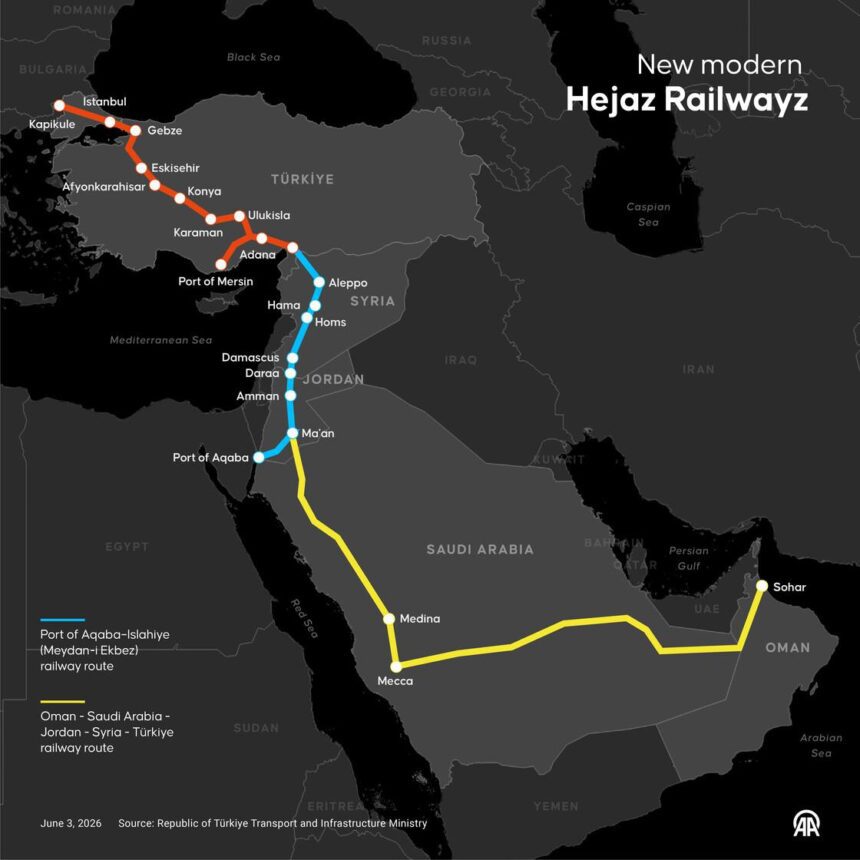

Saudi Arabia and Türkiye Revive Hejaz Railway Project
Saudi Arabia and Türkiye have initiated significant efforts to revive the historic Hejaz Railway, signing key agreements that aim to enhance rail connectivity and logistics cooperation. This initiative is part of a broader endeavor to modernize regional transport infrastructure, highlighting the importance of overland trade routes in a rapidly evolving geopolitical landscape.
Agreements and Talks in Riyadh
During a recent visit to Riyadh, Turkish Transport and Infrastructure Minister Abdulkadir Uraloğlu engaged in discussions with Saudi officials, leading to the signing of memorandums of understanding that focus on railway development and transportation services. These agreements are expected to facilitate a collaborative approach to upgrading and restoring the historic railway network that once connected Damascus to Medina, traversing through Syria and Jordan.
The Vision for Regional Connectivity
The proposed revitalization project seeks to assess the technical requirements necessary to rebuild the corridor, which is projected to bolster trade relations and enhance overland logistics across the region. Current studies aim to identify the infrastructure needs for resurrecting a rail link that played a crucial role in the early 20th century. The strategic importance of these railways is underscored by the fact that they are being seen as a viable alternative to disrupted maritime trade routes, thus aiming to stabilize transport corridors for goods and energy within the region.
Broader Transportation Collaborations
This initiative not only involves Saudi Arabia and Türkiye but is also part of a larger trilateral transport agreement that includes Syria and Jordan. This collaboration is aimed at re-establishing rail connections and integrating various regional infrastructure networks. The plan envisions re-establishing the Turkish-Syrian rail link through Aleppo, subsequently tying it to existing rail routes extending through Damascus to Jordan, which will form the core of this proposed logistics backbone.
Why It Matters
This revival of the Hejaz Railway could have profound implications for regional trade dynamics. By improving rail connectivity, Saudi Arabia and Türkiye aim to enhance economic integration among Middle Eastern nations, creating more robust pathways for the flow of goods and energy. In a time where maritime routes face challenges, the focus on overland transport reflects a strategic pivot to secure and diversify trade routes. Furthermore, this initiative may serve to solidify diplomatic relations between the involved countries, potentially opening doors for future collaborative projects across various sectors.
Frequently Asked Questions
What is the Hejaz Railway?
The Hejaz Railway was originally constructed in the early 20th century under the Ottoman Empire to facilitate travel and trade from Damascus to Medina, serving as a crucial transport link until it was damaged during World War I.
Why is the revival of the Hejaz Railway important?
The revival seeks to modernize an essential transport corridor, boost regional trade, and provide an alternative to disrupted maritime routes, enhancing economic stability and cooperation among Middle Eastern nations.
Which countries are involved in this project?
The primary countries involved in the revival of the Hejaz Railway include Saudi Arabia and Türkiye, with additional collaborations from Syria and Jordan through a trilateral transport agreement.
What are the expected benefits of this railway project?
The project aims to strengthen trade links, improve logistics, and integrate regional infrastructure, which may also enhance economic ties and political cooperation among the involved nations.