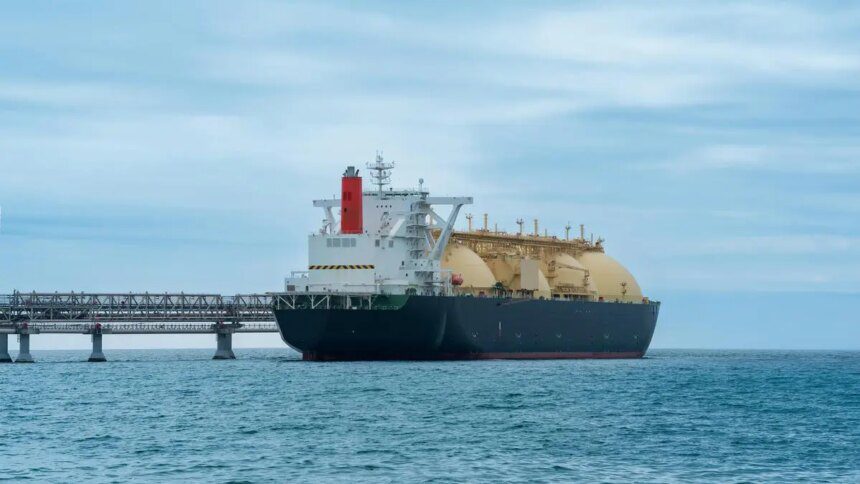

India has turned down Russia’s proposal to sell liquefied natural gas (LNG) that falls under U.S. sanctions, despite facing supply challenges due to tensions in the Middle East, according to sources familiar with the situation. This decision has left a tanker intended for India stranded while discussions about allowable cargoes continue.
This position reflects the delicate balance India, the world’s third-largest oil importer, is trying to maintain between securing its energy needs and avoiding LNG shipments that are subject to sanctions by the U.S., which are more challenging to mask and carry a higher compliance risk. It also highlights the limitations of Russia’s ability to redirect its LNG exports to alternative markets.
India’s hesitance has left an LNG shipment from Russia’s Portovaya plant, which is under U.S. sanctions, unable to unload despite having indicated India as its destination in mid-April. According to one source, this vessel was tracked even though its documentation suggested the cargo was not Russian.
In mid-April, Reuters reported that the 138,200-cubic-meter tanker Kunpeng was en route to India’s Dahej LNG terminal. The vessel is now located near Singapore with no destination publicly available, as per data from LSEG.
During a visit by Russia’s Deputy Energy Minister Pavel Sorokin on April 30, Indian officials, including Petroleum Minister Hardeep Singh Puri, were informed of India’s refusal to accept LNG subject to sanctions. This meeting was the second of its kind in two months, and Sorokin may return in June for further discussions.
India’s Oil and Gas Ministry and the Russian embassy in Delhi have yet to respond to inquiries regarding this matter.
India continues to import crude oil from Russia, taking advantage of a temporary waiver of U.S. sanctions put in place to assist countries dealing with an energy crisis stemming from the ongoing U.S.-Israeli conflict with Iran that began on February 28.
The Arctic LNG 2 is another Russian export facility impacted by U.S. sanctions; these measures were intensified in early 2025 due to Russia’s military actions in Ukraine. Unlike crude oil, which can be concealed through ship-to-ship transfers, LNG shipments are much more difficult to conceal from satellite surveillance, according to one source.
India is open to acquiring authorized Russian LNG, but most of that supply is already contracted to Europe. The source also noted that China remains a significant purchaser of both sanctioned and non-sanctioned Russian LNG.
Moscow is also pursuing long-term agreements to supply India with LNG and fertilizers, including potash, phosphorus, and urea.
Prior to the disruptions caused by the Iran conflict, India met approximately half of its gas requirements through imports, with over 60% of that volume transiting through the Strait of Hormuz. More than half of its crude oil supplies similarly relied on this route.
On Sunday, Indian Prime Minister Narendra Modi called on citizens to conserve fuel and foreign exchange by encouraging remote work, reducing foreign travel, and minimizing imports of gold and edible oils.
Published on May 12, 2026.