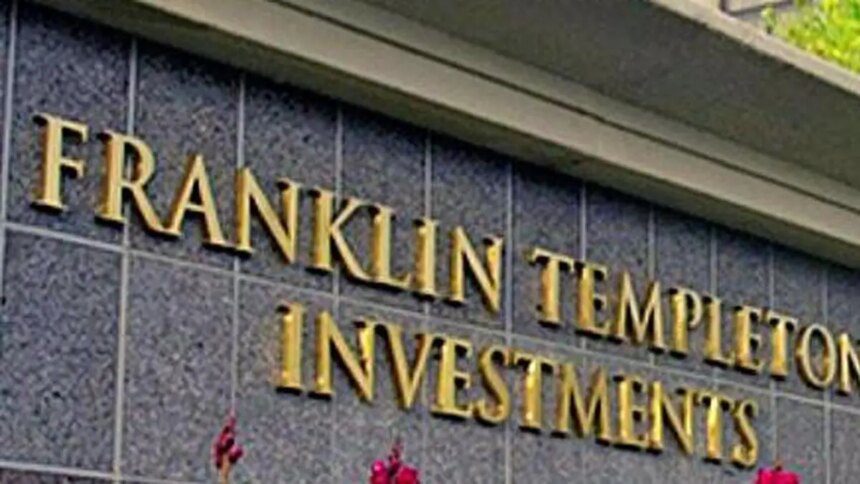

Franklin Templeton is banking on increasing interest in fixed income among Indian investors to drive its next phase of growth in the country. The firm is in the process of reviving its reputation following the credit crunch of six years ago.
Managing over ₹1.2 lakh crore ($12.6 billion) in assets in India, Franklin Templeton is expanding its fixed income product offerings, alongside launching new products catering to retirement schemes, specialized investment funds, and alternative investments, according to Avinash Satwalekar, president of Franklin Templeton Asset Management (India) Pvt Ltd. Currently, equity investments comprise approximately 90% of Franklin’s mutual fund assets. The firm aims to reduce this proportion to about 60%, while maintaining its overall equity exposure, necessitating significant growth in fixed income assets.
This strategy comes in the wake of the fallout from a difficult period in 2020, during which the firm closed six debt funds after halting investor withdrawals due to liquidity challenges. The local regulator subsequently restricted the firm from launching new debt funds for two years and imposed a financial penalty.
Franklin Templeton faces considerable competition in the sector. Local entities such as HDFC Asset Management Company Ltd. and ICICI Prudential Asset Management possess extensive distribution networks. Global competitors, including BlackRock Inc. and Jefferies Financial Group Inc., have also entered the market, intensifying the competitive landscape.
The renewed focus on debt funds is set to unfold in the next three to five years. The firm plans to increase assets in money markets and corporate bonds with medium- to long-term maturities, as reported by Satwalekar, who has been with the US-based company for 30 years. Over the past year, the asset manager has developed its credit strategy into a long-term alternatives business, raising over ₹5 billion for its credit alternatives fund and intending to further expand this segment. The firm seeks to attract new customer demographics from smaller towns and enhance its offerings through Gujarat’s International Finance Tec-City, or GIFT City.
Analysts suggest that Franklin Templeton may encounter challenges in gaining a substantial foothold in fixed income schemes, given the fierce competition stemming from a limited pool of institutional investors and major bank-backed mutual funds. Moreover, the firm may need to persuade some potential investors to acknowledge the value of fixed income, as equity mutual funds continue to enjoy strong popularity in India. Recently, inflows for equity funds surged in March, with individual investors contributing substantial amounts through monthly recurring plans, undeterred by geopolitical tensions and market instability.
Nevertheless, Satwalekar expresses confidence that investors have become underallocated in debt instruments following a prolonged boom in the stock market and will eventually recognize the benefits of investing in the relative stability of debt markets. “People forget fixed income is a critical part of a portfolio — it acts as a shock absorber,” he commented.
In recent years, Franklin Templeton has increased its hiring efforts in India, launching a debt fund in 2024 that is managed by Rahul Goswami, who was appointed chief investment officer after joining from ICICI Prudential Asset Management Co.
For more news and updates, visit bloomberg.com.
Published on May 12, 2026.