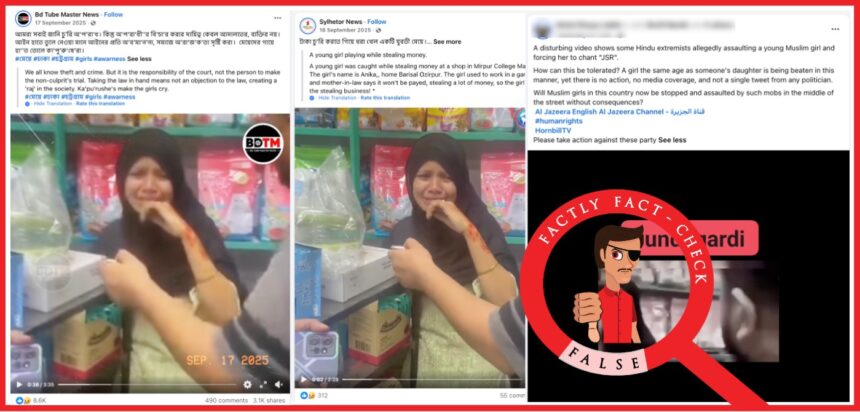

Recent social media activity has showcased a video that falsely claims to depict Hindu extremists assaulting a Muslim girl in India, forcing her to chant “Jai Shree Ram.” However, investigations reveal that the video originates from Dhaka, Bangladesh, where the girl was allegedly beaten for stealing. This incident underscores growing concerns about the use of misinformation to fuel communal tensions.
The Misinformation Spread
The controversial video gained traction on platforms like Facebook and X, with users sharing it under the pretext of showcasing religious extremism in India. The claims center around a brutal incident involving a young Muslim girl who was supposedly coerced into chanting a Hindu slogan. However, detailed investigations into the video have clarified that it is not set in India, but in Bangladesh, and concerns a theft that escalated into violence.
According to reports dated September 2025, the girl, identified as Anika from Barisal, was attacked after being caught stealing money from a shop in the Mirpur College Market area of Dhaka. The circulated video is edited, and the full version lacks any audio of her being compelled to chant religious slogans, indicating opportunistic use of the footage to foster discord.
The Context of Discrimination
This incident fits into a broader pattern of societal discrimination and marginalization against Muslims within the region. Under the current political climate in India, there have been heightened sentiments and instances of anti-Muslim rhetoric, often weaponized by nationalist groups to garner support and justify acts of violence. This case acts as a reminder of how misinformation can exploit existing religious tensions, leading to further stigmatization of Muslim communities in the subcontinent.
Economic boycotts and social exclusion have increasingly defined the reality for many Indian Muslims. The narratives surrounding such incidents are vital, as they reflect on the conditions under which communities live, and how they are portrayed in the media.
Lessons from the Viral Incident
The implications of the viral video’s misrepresentation extend beyond immediate community reactions. It highlights the urgent need for media literacy among social media users who may unwittingly contribute to the spread of false information. This mishandling reinforces prejudices and fosters intolerance when left unchecked.
Furthermore, the ease with which misinformation can travel on platforms exacerbates the challenges faced by marginalized groups like Muslims in India, who often find themselves on the receiving end of hostility in polarized environments. This incident calls for a critical examination of content shared online and its potential ramifications.
Why It Matters
The significance of this situation stretches into multiple spheres, including social stability, media ethics, and communal harmony. Misinformation concerning religious communities can exacerbate tensions and contribute to societal fractures. For the AI industry, including developers and users of information-sharing platforms, the need for advanced tools to identify misinformation is paramount. Algorithms need to be refined, and policies should enforce checks against the dissemination of harmful content.
This incident also signals the responsibility of social media platforms as double-edged swords in free speech and content moderation. Building systems that accurately flag misleading content could mitigate harm and foster a more informed public discourse, essential for peace and coexistence in diverse societies.
Frequently Asked Questions
What does the viral video actually depict?
The video shows a girl being assaulted for allegedly stealing money in Dhaka, Bangladesh, not a Muslim girl being forced to chant “Jai Shree Ram” in India.
Why is this misinformation significant?
Misinformation like this can exacerbate existing communal tensions, leading to social unrest and increased discrimination against marginalized communities.
How can misinformation affect communities?
Misinformation can lead to social exclusion, economic boycotts, and heightened tensions, often putting vulnerable groups at risk of violence and discrimination.
What steps can be taken to combat misinformation?
Promoting media literacy, developing advanced detection algorithms, and enforcing stricter guidelines for content moderation on social media platforms are essential steps to combat misinformation.