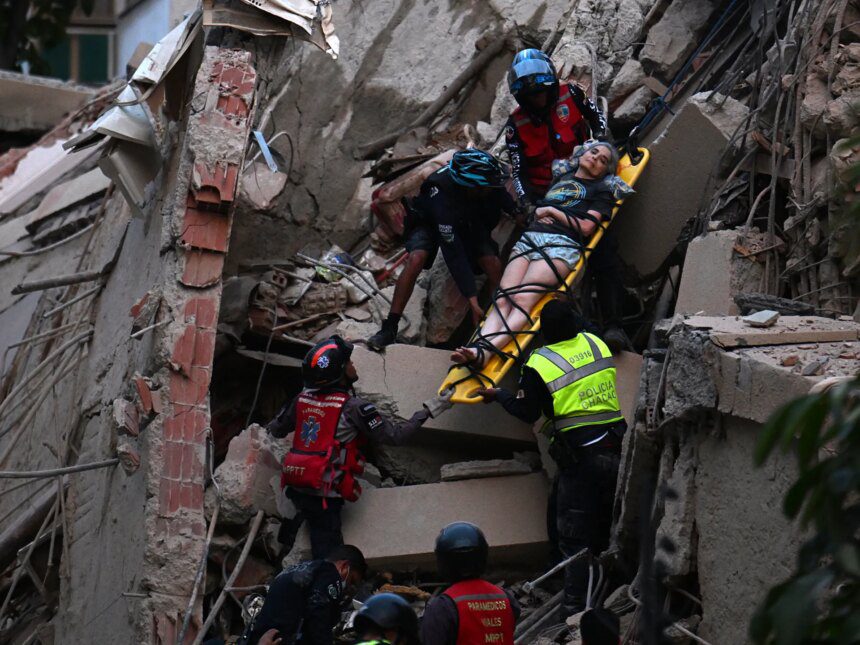

At least 32 people have lost their lives, and more than 700 have been injured following two powerful earthquakes hitting Venezuela. The tremors struck near the coastal town of Moron, leading to widespread chaos, including building collapses and disruptions to air travel throughout the country. The acting president of Venezuela, Delcy Rodriguez, has declared a state of emergency as rescue operations continue.
Details of the Earthquake Events
The earthquakes registered magnitudes of 7.2 and 7.5, occurring within a minute of each other. Located approximately 170 km west of Caracas, these quakes are among the most powerful to hit the nation in over a century. Such significant seismic activity is rare in Venezuela, contrasting sharply with countries like Chile and Mexico that frequently experience major earthquakes.
Emergency services are currently mobilized as authorities assess the damage. Buildings in urban areas have collapsed, leading to fears that the death toll will rise as rescue teams continue to search through the rubble. International aid may be required as efforts to stabilize the situation progress.
Impact on Daily Life and Infrastructure
The earthquakes have severely disrupted daily life in Venezuela. The country’s main airport has been shut down, limiting domestic and international flights. Citizens are reported to have fled their homes in fear, with many spending the night outdoors. The state of emergency declared by Rodriguez allows the government to coordinate resources and aid more efficiently amid the ongoing crisis.
In addition to casualties, local economies have also been affected. Businesses have temporarily closed, and public services are strained due to the disaster response efforts. Hospitals are busy treating the injured, which raises concerns about healthcare capabilities in the already struggling nation.
Venezuelan Context: A Challenge for Recovery
Venezuela’s socio-economic landscape complicates recovery efforts. The country has been facing a long-standing economic crisis that has made it challenging to respond to emergencies efficiently. International aid and support may be crucial as the nation grapples with the dual burden of tragic loss and systemic inadequacies.
For comparison, India has faced its share of natural disasters, including seismic events in regions such as Uttarakhand and Gujarat. Understanding the impact of such disasters on infrastructure and health can aid in formulating adequate responses both domestically and internationally.
What This Means
The recent earthquakes in Venezuela highlight the importance of preparedness in facing natural disasters, especially in regions not accustomed to seismic activity. For Indian readers, this serves as a reminder of the need for robust disaster management strategies and urban planning, especially in disaster-prone areas. The geopolitical ramifications may also extend to aid and diplomatic relations with countries willing to assist Venezuela in its recovery efforts, which is an area of interest for India as it builds its role in international aid and cooperation.
Frequently Asked Questions
What caused the earthquakes in Venezuela?
The earthquakes are a result of tectonic activity typical in regions near fault lines, which are present even in parts of Venezuela, though major quakes are uncommon.
What is the current situation regarding rescue efforts?
As of now, rescue teams are actively searching for survivors in the debris of collapsed structures. The acting government has mobilized local resources and is expected to seek international assistance.
How can international communities support Venezuela during this crisis?
International communities can provide financial aid, medical support, and humanitarian resources as Venezuela faces a state of emergency, aiming for a swift recovery following the earthquakes.
Comparative seismic activity between Venezuela and India?
While Venezuela experiences fewer major earthquakes compared to parts of India, both nations must be prepared for their unique seismic risks due to their geographical locations. India has a robust disaster management framework in place, which could serve as a model for disaster resilience for nations like Venezuela.