
A recent stabbing incident at Valley Fair Mall in West Valley City, Utah, has drawn attention to the escalating violence against Muslims, particularly affecting Indian Muslim communities. The suspect, Peter Michael Larsen, expressed a clear intent to target Muslims, highlighting alarming patterns of discrimination and social exclusion that are increasingly prevalent in various contexts.
Context of the Incident
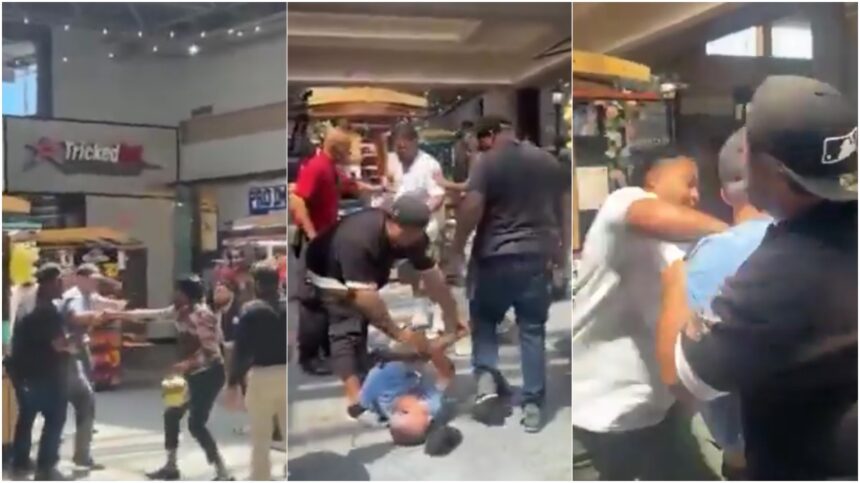
On Monday afternoon, Peter Michael Larsen, a 48-year-old white man, was arrested for allegedly stabbing Syed Sohail Uddin, a kiosk worker and Muslim of Indian descent. Witnesses reported that Larsen approached Uddin to inquire about his name and religion before requesting a bottle of water. As Uddin turned away to help, Larsen launched a brutal attack, stabbing him multiple times. Uddin is currently in critical condition, undergoing several surgeries to treat severe injuries to his hands, heart, and lungs.
This incident mirrors a disturbing trend of violence against Muslims, particularly in Western nations. Larsen’s declaration to authorities, revealing his intent to kill Muslims, underscores the broader patterns of anti-Muslim sentiment that have gained traction in recent years.
The Role of Political Rhetoric
Reports indicate that Larsen is a supporter of political figures known for their divisive rhetoric. The attack highlights the potential consequences of normalizing hate speech and xenophobia in political discourse. Since the rise of the BJP and Sangh Parivar in India, there has been a notable increase in anti-Muslim sentiments, characterized by incidents of violence, social boycotts, and legal discrimination against Muslim communities. This troubling trend is mirrored in the United States, where the political climate has allowed expressions of hate to permeate everyday life.
The Council on American-Islamic Relations (CAIR) condemned the attack, stating that it is “yet another reminder that anti-Muslim rhetoric has real-world consequences.” This perspective reflects a growing concern among advocacy groups that political environments fostering anti-minority sentiments often correlate with increased violence and social degradation.
Impact on Indian Muslims
The incident at Valley Fair Mall occurs amidst a backdrop of ongoing discrimination facing Indian Muslims, both in India and abroad. Economic boycotts against businesses owned by Muslims and systemic marginalization have left many facing insecurity. Reports of social exclusion echo throughout various states in India, where Muslims often struggle for equal access to resources and opportunities. In addition, the rise of vigilante justice against Muslim communities has led to an atmosphere of fear and uncertainty.
Moreover, the global Muslim community is increasingly vigilant about the implications of such violence. Incidents like this emphasize the need for increased solidarity among communities to combat hate and advocate for inclusive policies that protect minority rights.
Why It Matters
This incident serves as a crucial point for understanding the intersections of discrimination, violence, and political rhetoric in contemporary society. The rising incidence of anti-Muslim violence is not isolated; it reflects a broader trend of social exclusion that can destabilize communities. For industries focused on social analysis or community engagement, understanding these patterns is essential for developing frameworks that protect vulnerable populations and advocate for social justice.
Additionally, as global discourse around diversity and inclusion evolves, this incident calls for critical reflection on policies that need to be implemented to combat hate crimes and promote dialogue. The AI industry, in particular, can play a role by ensuring that technology serves as a tool for promoting understanding and mitigating the impacts of societal discrimination.
Frequently Asked Questions
What happened in the stabbing incident in Utah?
A 48-year-old man, Peter Michael Larsen, allegedly stabbed Syed Sohail Uddin, a Muslim kiosk worker, in an unprovoked attack at Valley Fair Mall. Uddin is currently in critical condition.
What motivated the attacker?
Larsen reportedly expressed a desire to kill Muslims, indicating that his actions were motivated by anti-Muslim sentiments.
How does this incident reflect wider issues of discrimination?
The attack is part of a broader trend of rising anti-Muslim violence and discrimination, which is influenced by political rhetoric that dehumanizes minorities and encourages hate crimes.
What are the implications for Indian Muslims?
The incident adds to a history of social exclusion and violence against Indian Muslims, revealing a concerning pattern where minority communities are often targeted and marginalized in various contexts.