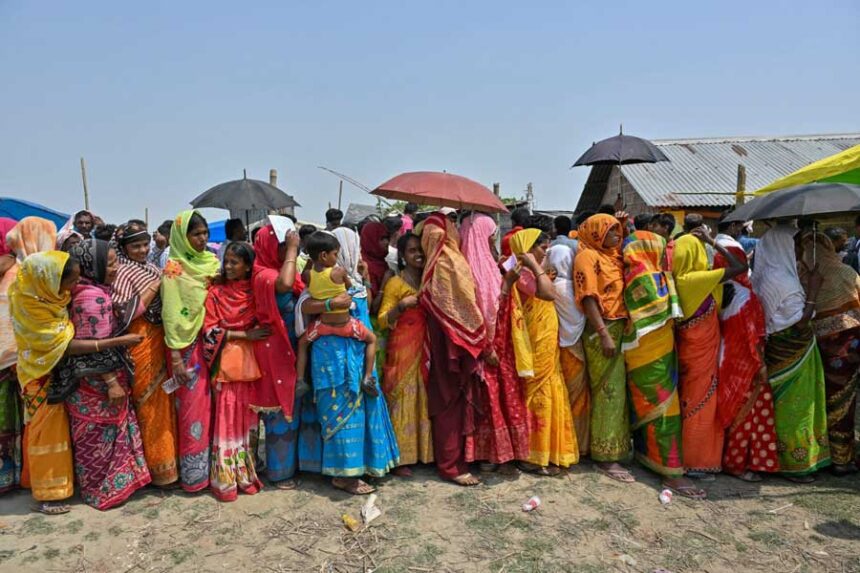

UN Rapporteurs Raise Alarm Over Voter Disenfranchisement in India
Recent allegations have emerged regarding the systematic removal of millions of voters, particularly from Muslim communities, from electoral rolls in India. This action has triggered concern from three independent United Nations special rapporteurs, who have sought clarification from the Indian government on these troubling developments. Reports indicate that approximately 52 million voters may have been wrongfully excluded ahead of significant state elections in early 2026.
The Scale of the Voter Deletion Exercise
In a formal communication dated May 1, 2026, the UN experts expressed serious apprehensions about a massive voter purge conducted by the Election Commission of India. This operation reportedly affected around 52 million individuals across 12 Indian states and union territories. The experts pointed out that while other linguistic and religious minorities experienced some impact, Muslim citizens were disproportionately affected by these administrative exclusions.
One of the most alarming instances noted in the report came from West Bengal, where nearly 9.1 million names were deleted from electoral rolls just before assembly elections held in April 2026. The joint mandate-holders believe that conditions in constituencies such as Nandigram illustrated the severity of the situation, with an alarming 95 percent of deleted voters identified as Muslim, even though this community represents only 25 percent of the local electorate. This imbalance suggests a targeted approach to voter removal that raises concerns about electoral integrity.
Concerns Over Methodology and Rhetoric
The voter deletion exercise was framed by the authorities as a “Special Intensive Revision,” initiated on November 4, 2025. However, evidence surfaced implying that the process disproportionately aimed at marginalized groups, including Muslims and Bengalis, raising questions about the motives behind this claim to improve electoral roll accuracy. The UN experts highlighted worrying reports that minor discrepancies in name spellings led to the exclusion of eligible voters, including men, women, and the elderly, who held valid identification documents.
Furthermore, the rapporteurs criticized the introduction of an artificial intelligence-driven system designed to identify “irregularities” in voter data. They raised concerns that such a system could perpetuate bias and create errors in a democratic process that relies heavily on fair representation. The situation was exacerbated by troubling statements from senior officials, such as the Union Home Minister, who framed the deletions as a mechanism to target “illegal Bangladeshi immigrants.” This type of rhetoric risks reinforcing discriminatory attitudes towards Muslim citizens and further polarizing communities in India.
The Legal Battle and its Implications
The issue has reached India’s Supreme Court, which initially resisted calls to halt the voter purge. However, on April 16, 2026, the court permitted individuals removed from the rolls to contest their disenfranchisement, provided they could present their cases before impending appellate deadlines. Despite this legal relief, the rapid influx of over 3.4 million appeals strained the system, leading to a situation where many eligible voters were unable to recover their voting rights in time for the elections, particularly in West Bengal.
The UN experts cited India’s international obligations under the International Covenant on Civil and Political Rights, ratified in 1979, which explicitly prohibits the incitement of national, racial, or religious hatred. They emphasized that the methods adopted during this voter deletion exercise may represent serious violations of international human rights laws.
Why It Matters
The implications of these events are far-reaching, not only for India’s democratic process but also for a global audience keenly observing the rising influence of technology in governance. The use of algorithmic systems to influence voter eligibility raises critical questions about the fairness and transparency of electoral procedures. With the ongoing scrutiny of AI technologies, this case exemplifies the potential risks of bias and discrimination when automated systems are introduced without sufficient oversight. Policymakers, developers, and technology users must prioritize ethical considerations and enforce rigorous safeguards to protect democratic values.
Frequently Asked Questions
What are the allegations against the Indian government regarding voter deletions?
The allegations assert that millions of voters, particularly from Muslim communities, were wrongfully removed from electoral rolls, affecting about 52 million individuals during a recent electoral revision process.
How did the UN become involved in this issue?
Three United Nations special rapporteurs submitted a formal communication to the Indian government expressing grave concerns about the administrative actions that disproportionately affected minority groups, including Muslims.
What response has the Indian government provided regarding these allegations?
The Indian government has yet to provide a detailed public response to the UN inquiries, and the legal battle over voter disenfranchisement is ongoing in the Supreme Court of India.
What role did artificial intelligence play in the voter deletion process?
Reports indicate that an AI-driven system was used to identify “irregularities” in voter data, raising concerns among UN experts about potential bias and the impacts of such technology on electoral integrity.