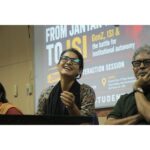
A recent discussion at the Press Club of India highlighted the themes of activist Umar Khalid’s book, ‘Fractured Communities: Adivasi Histories and the Politics of Power.’ The dialogue engaged a range of voices from academics to journalists, focusing on historical injustices faced by marginalized communities, particularly Adivasis, and broader issues of educational freedom, dissent, and social justice.
Engaging Historical Narratives
‘Fractured Communities,’ published by Juggernaut Books, delves into the complex histories of Adivasi communities, with a specific focus on the Ho community of Singhbhum. Umar Khalid’s work, grounded in his doctoral research, investigates the relationship between the political structures of Adivasis and the evolving dynamics of state power. The discussions surrounding the book served as a reminder of the historical narrative often overshadowed by mainstream accounts.
Professor Prabhu Mahapatra, part of the panel, emphasized the connection between history, power, and education. He pointed out the colonial “pacification” tactics employed against marginalized groups like Adivasis and Dalits, illustrating how historical trauma continues to inform contemporary educational debates. This historical lens invites critical inquiry into the educational structures that often perpetuate established narratives rather than challenge them.
The Personal Dimension of Activism
Umar Khalid’s mother provided personal insights, emphasizing the significance of the book not just as an academic work but as a vital means to keep her son’s intellectual contributions alive amid his ongoing incarceration. Her reflections underscored a family’s struggle against systemic injustices and the emotional weight carried by artistic and intellectual expressions in such contexts. The discussion, interspersed with poetry and other forms of expressive art, connected Khalid’s personal story to broader themes of resistance and hope.
Journalist Neha Dixit broadened the conversation to encompass the implications of labeling individuals within political narratives. She urged for a deeper engagement with ideas rather than resorting to superficial understandings shaped by media portrayals. Drawing connections between Khalid’s case and larger questions of equality, she highlighted the collective responsibility towards social justice that transcends individual experiences.
Wider Implications for Dissent and Justice
The gathering also addressed systemic issues impacting dissent and the silencing of critical voices in contemporary India. Journalist Arfa Khanum Sherwani articulated how Khalid’s case is emblematic of a more extensive narrative concerning democratic rights and civil liberties. Speakers articulated a call for sustained public engagement with themes around political expression, underscoring that the fight against injustices affecting a singular community resonates with larger struggles for freedom and equality.
Concerns about restrictions on academic freedom, as well as legal actions against students and journalists, peppered the discussion, pointing to a trend of increasing scrutiny and repression in intellectual circles. The speakers collectively emphasized that an environment conducive to dissent is essential for democracy, urging participants to remain vigilant against the normalization of such restrictions.
Why It Matters
The implications of the discussion on Khalid’s book extend far beyond academia. They highlight the continuing struggle against social exclusion and economic marginalization faced by communities such as Muslims and Adivasis in India. As significant political dynamics emerge under the current government, fostering an environment where dissent can thrive is crucial for a healthy democracy. This discourse also raises awareness about the power of historical narratives in shaping public perceptions and policies, stressing the need for diverse voices in the conversation about justice and equality.
Frequently Asked Questions
What is ‘Fractured Communities’ about?
‘Fractured Communities’ examines Adivasi histories and the interplay of power, focusing on the Ho community, through the lens of Umar Khalid’s doctoral research.
Why was the discussion at the Press Club of India significant?
The event brought together various thought leaders to discuss themes of history, education, and dissent, contextualizing Khalid’s incarceration within broader issues of social justice.
What role does poetry play in the discussion surrounding Khalid’s work?
Poetry served as an emotional medium to reflect on themes of repression and resistance, thus enriching the dialogue on freedom and activism.
How does Umar Khalid’s case relate to wider issues of social justice?
Khalid’s case is emblematic of the broader struggle against the suppression of dissent and civil liberties in contemporary India, highlighting the urgent need for public engagement in these topics.