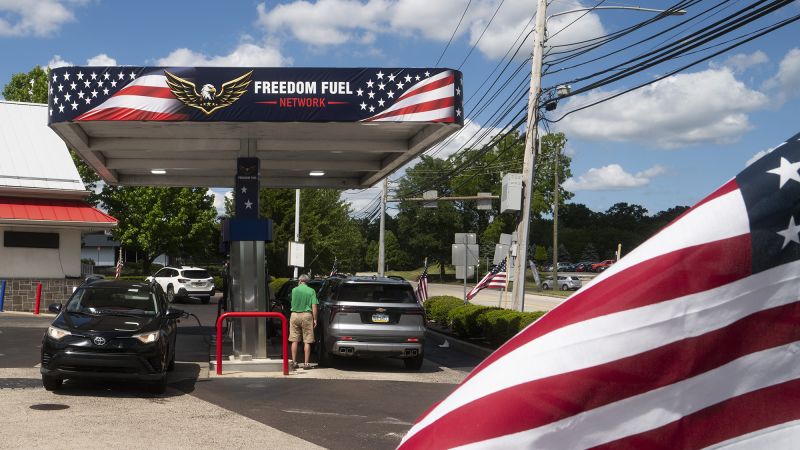

A recent initiative by President Donald Trump to promote a network of low-cost gas stations has sparked interest across the U.S., particularly as many Americans continue to grapple with high fuel prices. The launch of “Freedom Fuel” stations, which are selling gas for $3.479 a gallon—significantly lower than nearby competitors—has raised questions about the sustainability and profitability of such pricing strategies.
Freedom Fuel: A Costly Gamble?
The “Freedom Fuel” stations, with their 25 locations primarily around Philadelphia and southern New Jersey, are showcasing a drastic price cut against the national average of $3.85 per gallon. President Trump praised the initiative as a model for other retailers, stating in a Truth Social post, “Gas prices at the pump are dropping… but not as fast as they should be.”
However, industry experts have expressed skepticism about the viability of these prices. Jeff Lenard, spokesperson for the National Association of Convenience Stores, emphasized the challenges, stating, “There’s no way those stations could operate the way a traditional retailer would, without at least breaking even on fuel.”
Impact on Local Businesses
Independent gas station owners, like Muhammad Irfan of Red Lion Fuel, have reported a significant decrease in sales since the Freedom Fuel’s inception, citing that they cannot compete with such low prices. Irfan remarked, “We cannot even compete. There’s no way I can go down to $3.47 unless I’m losing money.”
Many drivers have flocked to the Freedom Fuel stations, eager to save, despite some expressing uncertainty about the long-term sustainability of these prices. James Lymer, a satisfied customer who saved around $8, shared, “I love it because I’m retired, and every little bit helps.”
Government Involvement and Market Viability
While Freedom Fuel has received considerable media attention, questions remain about the source of its financial backing. The White House clarified that Freedom Fuel Network operates independently without any government support or subsidies, which raises doubts about how it manages to offer fuel at a loss.
The lack of transparency concerning the station’s ownership and operational strategy adds to the uncertainty. Freedom Fuel has not responded to requests for comment, leaving many to speculate whether external financial backing is at play.
Why This Is Trending
This topic has garnered attention in India and around the world as people are increasingly affected by fluctuating fuel prices. Given that India is one of the largest consumers of fuel, many are curious about innovative pricing strategies and their implications for fuel supply. The Freedom Fuel initiative raises pertinent questions regarding market competition and the sustainability of such price cuts.
Furthermore, as global energy markets influence local economies, Indian consumers and businesses are becoming more interested in understanding how they can mitigate rising fuel costs. This growing fascination with alternative pricing mechanisms indicates a broader search for solutions to counteract inflation and reduce living expenses.
Frequently Asked Questions
What is Freedom Fuel?
Freedom Fuel is a network of gas stations launched in the U.S. that sells gas at significantly lower prices than the market average. President Trump has promoted these stations as a model for other retailers.
How are Freedom Fuel prices so low?
The stations are reportedly establishing low prices by reducing their profit margins, but there is skepticism about their financial sustainability.
What impact does this have on local gas stations?
Independent gas station owners have reported decreased sales as they are unable to compete with the significantly lower prices offered at Freedom Fuel locations.
Is there government support for Freedom Fuel?
The White House stated that Freedom Fuel operates independently and does not receive any government subsidies or financial support.