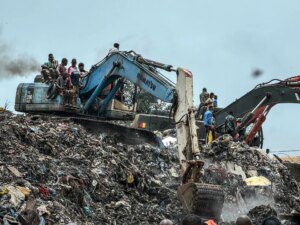
Tragedy Strikes as Landfill Collapses in Guinea
At least 30 people have been reported dead following a tragic landslide at the Dar es Salam landfill in Conakry, Guinea. The catastrophe, triggered by heavy overnight rains, occurred in the early hours of Sunday and has raised alarms about waste management and safety in urban areas, especially in developing countries like Guinea.
Details of the Incident
The landslide took place shortly after 2 a.m. (02:00 GMT) and resulted in a massive heap of garbage sliding down onto adjacent homes, leading to the destruction of several shacks. Rescue operations were quickly initiated as authorities scrambled to search for survivors under the debris. Local hospitals reported that six individuals sustained critical injuries and were rushed for treatment.
The Dar es Salam site serves as the main dumping ground for Conakry, a city with a population of around two million. Authorities had announced plans to close the site on the same day of the incident, and eviction notices had been issued to local residents. However, many families were unable to relocate before the unfortunate collapse, resulting in a severe humanitarian crisis.
Territorial Administration Minister Dienabou Toure, who visited the site, assured the public that the government would work to ensure the relocation of remaining families, emphasizing the urgency of addressing the situation.
The Broader Implications of Waste Management in Guinea
Guinea faces substantial socio-economic challenges, with nearly half of its population living below the national poverty line, despite the country being rich in natural resources, including the world’s largest reserves of bauxite. Ineffective waste management is a looming issue that is often exacerbated by inadequate infrastructure and lack of governmental accountability.
The collapse at the landfill underscores the dire consequences of neglecting urban waste management systems. As developing nations, including India, look towards rapid urbanization, the need for robust infrastructure and disaster preparedness becomes increasingly vital. Poor environmental conditions and inadequate urban planning can lead to incidents similar to what occurred in Guinea, making it a pressing concern for policymakers and urban planners around the world.
What This Means
The tragedy at the Dar es Salam landfill serves as a cautionary tale for countries like India, which, with its burgeoning urban population and considerable waste production, faces its own challenges regarding waste management and urban safety. With lessons to learn from Guinea’s missteps, India must invest in sustainable waste management solutions and ensure that people living in vulnerable conditions are protected from similar disasters. The incident reaffirms the need for cohesive urban planning and the establishment of effective emergency response strategies to safeguard lives in high-risk areas.
Frequently Asked Questions
What caused the collapse at the Dar es Salam landfill?
The collapse was primarily triggered by heavy overnight rains that weakened the structural integrity of the towering heap of rubbish.
What actions are being taken for the affected families?
Authorities, notably Territorial Administration Minister Dienabou Toure, have stated that plans are in place to relocate the remaining families from the area and address the humanitarian crisis that has arisen from the landslide.
How does waste management in Guinea compare with that of India?
Both Guinea and India face significant challenges with waste management due to rapidly growing urban populations, but India’s extensive size and diversity in waste management practices vary widely across regions, often leading to both successes and failures.
What is the economic context of Guinea?
Despite being rich in natural resources, particularly bauxite, Guinea is one of West Africa’s poorest countries, with nearly half its population living below the national poverty line, raising issues of governance and infrastructure investment.