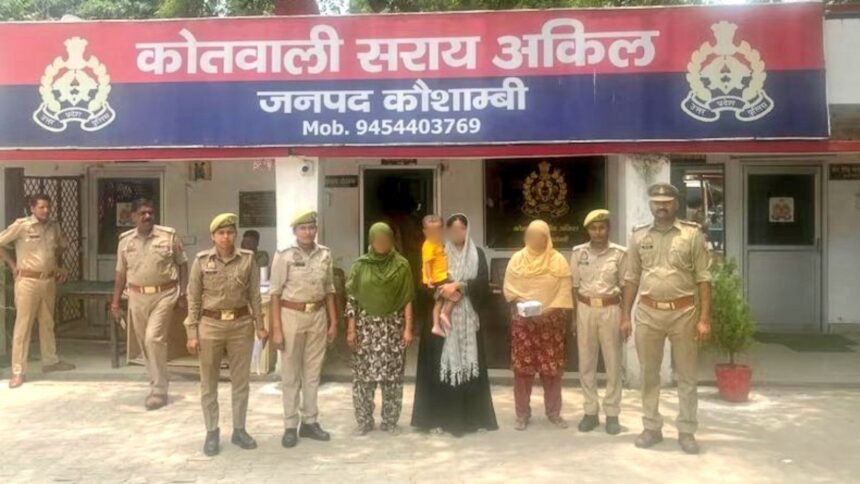

In a concerning incident reflecting ongoing societal tensions in India, three Muslim women were arrested in Uttar Pradesh’s Kaushambi district under allegations of cooking beef, a highly sensitive issue in a context where cow slaughter is prohibited. The police action, backed by local authorities, raises questions about discrimination, social exclusion, and the marginalization of Muslim communities in the region.
Details of the Incident
The arrests took place on June 24 in Panara Gopalpur village when police launched a raid after receiving a tip-off. Authorities claimed that four men allegedly fled the scene through narrow lanes, while the women—Shama Parveen, Shaista, and Fatima—were detained by female police personnel. The police reported recovering about one kilogram of cooked meat and one kilogram of raw meat, which has since been sent for forensic testing to confirm the nature of the meat.
Legislation and Implications
The case has been registered under the Uttar Pradesh Prevention of Cow Slaughter Act, which carries severe penalties for violations. Notably, while the males allegedly involved in bringing the meat escaped, the three women now face legal consequences. Deputy Superintendent of Police Abhishek Singh remarked, “During questioning, they said the meat was brought by their family members from outside,” implying the potential for familial complicity but nevertheless highlighting the gendered aspect of the arrests.
Community Reactions and Wider Context
This incident has sparked reactions from various quarters, underlining the increasing scrutiny that Muslim communities face regarding dietary practices, particularly concerning beef. As the BJP and Sangh Parivar have historically positioned cow protection as central to their ideological framework, such arrests exemplify the ongoing marginalization of Muslims and can perpetuate a climate of fear within these communities. The police’s focus on tracing the source of the meat may further stigmatize Muslims and contribute to an environment of social exclusion.
Why It Matters
The implications of such incidents are significant for social cohesion in India. Conducted within a framework of existing legal biases, these actions symbolize broader patterns of discrimination and economic boycotts aimed at Muslim businesses. A growing reliance on vigilantism to enforce dietary norms raises concerns about civil liberties and threatens the secular fabric of Indian society. Policymakers and community leaders must grapple with these realities to foster a more inclusive future.
Frequently Asked Questions
What triggered the police raid in Kaushambi?
The police raid was initiated based on a tip-off alleging that beef was being cooked in the house of three Muslim women in Panara Gopalpur village.
What charges have been filed against the arrested women?
The women were arrested under the Uttar Pradesh Prevention of Cow Slaughter Act, which prohibits the killing and consumption of cows.
What has been the community’s reaction to this incident?
The incident has drawn criticism and concern regarding the treatment of Muslim communities in India, highlighting fears of discrimination and social exclusion linked to dietary practices.
What steps are being taken following this incident?
Police are investigating the source of the meat and are attempting to apprehend the male relatives who allegedly fled during the raid.