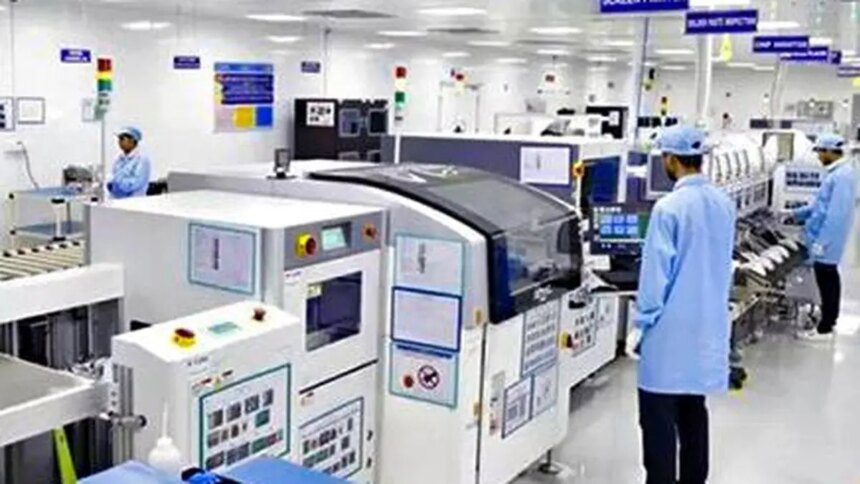

India Ratings and Research (Ind-Ra) has upgraded Syrma SGS Technology Limited’s long-term bank loan facilities rating to ‘IND AA’ with a Stable Outlook, up from ‘IND AA-’. The short-term commercial paper rating remains affirmed at ‘IND A1+’. This upgrade pertains to bank loan facilities amounting to ₹7,800 million and a commercial paper of ₹1,100 million.
This rating action coincided with Syrma SGS’s stock reaching a 52-week high of ₹1,075.95 on the National Stock Exchange (NSE) before closing at ₹1,059.35. Over the past year, the stock has delivered a return exceeding 130%, with nearly a 47% increase year-to-date, in contrast to a negative 3.25% return for the Nifty 500 during the same timeframe. The company’s total market capitalization is approximately ₹20,364 crore.
According to Ind-Ra, the upgrade is attributed to sustained revenue growth and improving profitability. On a consolidated basis, Syrma SGS reported revenue growth of 20% year-on-year, reaching ₹37,867 million in FY25. In the first nine months of FY26, revenue further increased by 17% year-on-year to ₹33,540 million, while EBITDA margins rose significantly to 11.3% in 9MFY26, up from 6.8% in the same period of the previous year.
Ind-Ra noted that Syrma SGS has become net cash positive following a qualified institutional placement of approximately ₹10,000 million in August 2025, which was utilized to pay down debt. As a result, net leverage stood at 1.0x in FY25.
The company has announced several significant investments aimed at expansion, including a ₹15,950 million plant for multi-layer printed circuit boards to be developed over six years, the acquisition of a majority stake in Elcome Integrated Systems, and joint ventures with KSolare Energy and Italy’s Elemaster SPA. Ind-Ra indicated that the staggered nature of these investments, combined with strong internal cash accruals, will help maintain comfortable credit metrics.
However, the agency flagged potential risks, including the working capital-intensive nature of operations, the company’s reliance on imports for 60% of its materials, which exposes it to foreign exchange risk, and the execution risks related to the large PCB plant.
Published on May 6, 2026.